



Interview with BCN3D CTO Eric Pallarés: Unlocking the Power of IDEX 3D Printing Technology
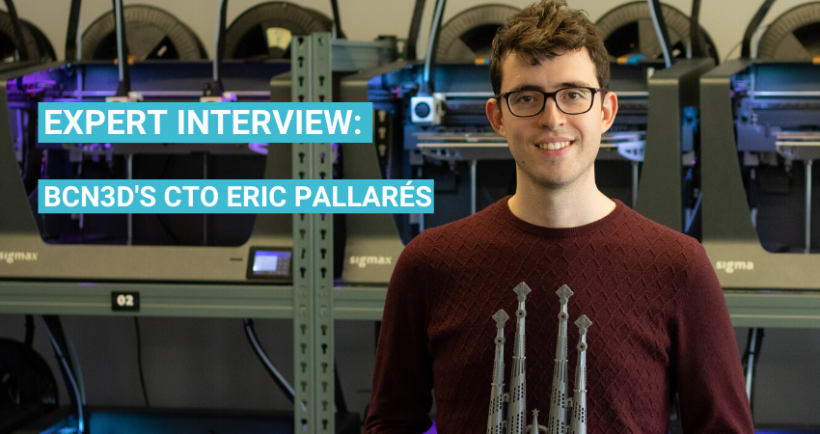
The Fused Filament Fabrication (FFF) segment of 3D printing is rapidly evolving, and BCN3D Technologies is at the forefront of this innovation.
Originating from the CIM-UPC research centre at the Technical University of Catalonia, BCN3D became an independent company in 2019, headquartered in Barcelona. Its flagship Independent Dual Extruder (IDEX) technology enables dual‑extrusion printing, delivering higher productivity and the capacity to print with two distinct materials in a single build.
In this expert interview, we sit down with Eric Pallarés, Co‑Founder and CTO of BCN3D, to discuss the new Epsilon printer, groundbreaking IDEX applications, and the future trajectory of the 3D printing industry.
Can you tell me a bit about BCN3D and your mission as a company?
BCN3D began as a project in 2011 within the CIM-UPC research centre, which has been a leading hub for advanced manufacturing technologies in Southern Europe since the 1990s.
When the open‑source RepRap project surfaced, we saw a natural alignment with our centre’s mission. We launched a business unit dedicated to low‑cost, open‑source 3D printing and assembled kits that could be built from readily available models.

Within a few years, the unit had grown enough to spin off from the university. In March 2019, BCN3D became an independent company.
Our vision is to empower innovators by making industrial‑grade technology accessible and affordable. From the very beginning, we released a detailed User Guide that walks customers through every step of printer assembly, and we pioneered the first desktop IDEX solution.
Today we are extending into the workbench segment—a market that bridges desktop and industrial printers—providing high‑value, cost‑effective solutions that do not sacrifice quality.
How are your solutions different from other similar technologies currently available on the market?
We occupy the professional desktop market, and our edge lies in IDEX. Unlike most dual‑extrusion printers that mount both toolheads on a single carriage, BCN3D’s IDEX lets each extruder move independently. This unlocks simultaneous use, effectively doubling production capacity.
Since 2015, when we introduced IDEX, it has become the benchmark that other manufacturers now follow. Our independent architecture remains the most versatile and reliable on the market, and it supports multi‑material printing within a single part.
The demand for end‑use parts and short production runs has surged, and IDEX gives us twice the productivity of comparable FFF solutions, making it highly attractive for serial production.
Could you talk about the industries that you’re targeting with your technology?
AM is inherently versatile, and our printers serve a broad spectrum of verticals. Key applications include jigs, fixtures, prototypes, and end‑use parts across engineering, manufacturing, product design, and architecture.
BCN3D has recently launched the BCN3D Epsilon 3D printer. Could you explain how the technology works and what the benefits are of the new system?
We identified a gap between low‑cost desktop printers (<€5 000) and high‑end industrial units (€20 000+). The Epsilon fills the workbench niche with a robust, affordable solution.
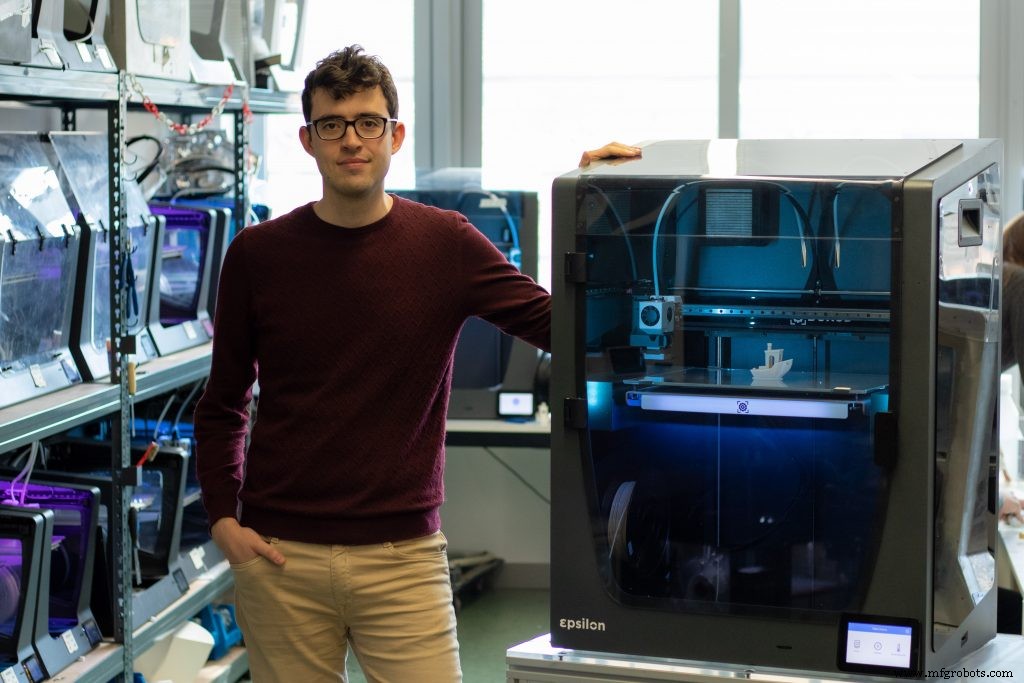
The Epsilon is engineered for technical thermoplastics—ABS, polyamide, polypropylene—materials that are often overlooked due to print reliability challenges. By incorporating an enclosed, temperature‑controlled chamber and pre‑optimized print profiles, we deliver consistent, high‑quality builds.
Safety is paramount. The machine features built‑in filters and a “safety pause” function, meeting industrial standards for emissions and user protection.
With built‑in Internet connectivity, the Epsilon is Industry 4.0 ready, enabling multi‑user management and cloud data analytics for continuous process improvement.
Can you share any successful applications that your customers have been able to achieve with your 3D printers?
Camper, the Spanish shoe brand, uses our Sigma and Sigmax printers to produce visual aids and prototypes. 3D printing has accelerated their design cycle, reduced costs, and allowed in‑house validation of complex geometries.
NGNY Devices, a Catalan healthcare‑equipment manufacturer, swapped CNC machining for 3D printing on the Sigmax. They now produce custom parts—70 per machine—at under €100 each, cutting lead times and saving up to €40 000 annually. The parts are printed in PLA and nylon, demonstrating the printer’s material flexibility.
IED (Istituto Europeo di Design) has employed our printers since 2017 for prototyping and functional testing. Students benefit from rapid iteration and the ability to print multi‑material parts, including water‑soluble supports that eliminate manual removal.
How would you describe the current state of AM in Spain?
Spain’s digital‑manufacturing momentum is strongest in Catalonia, where BCN3D is headquartered. The region hosts a robust automotive cluster that has embraced FFF for both prototyping and production, indicating healthy industry adoption.
What would you consider the key challenges facing 3D printing more generally?
Material availability remains a bottleneck. While high‑performance polymers are in vogue, affordable engineering materials—such as diverse polyamides and flexible filaments—are needed to unlock niche applications.
Software must evolve to support larger parts and more demanding workflows. Advanced simulation and pre‑processing tools will be essential to optimize orientation, parameters, and dimensional accuracy.
Finally, productivity must catch up with traditional manufacturing. Enhancing volume, repeatability, and quality will determine the rate at which companies adopt digital manufacturing.
How do you see the industry evolving over the next five years?
The past few years have seen a surge of entrants offering accessible hardware, making AM usable beyond prototyping. Over the next five years, we expect early‑majority adoption in manufacturing, with the remaining market still ripe for discovery.
Growth will shift from hardware to materials and software. Advanced software will unlock Industry 4.0 integration, connecting processes, data, and services into a cohesive ecosystem, ultimately fostering new business models.
What does the year ahead look like for BCN3D?
After a transformative 2019, when we spun off and launched the Epsilon, 2020 will be a year of consolidation and realization of our investments. We have grown from 40 to over 100 employees and are poised to deliver on our promise of accessible, high‑performance 3D printing.
To learn more about BCN3D, visit: www.bcn3d.com
3D printing
- Nanoe CEO Guillaume de Calan Discusses the Future of Ceramic 3D Printing
- John Kawola on Ultimaker’s Transition to Enterprise 3D Printing
- Carbon Co-Founder Philip DeSimone on Scaling 3D Printing for High‑Volume Production
- AMendate’s CEO Thomas Reiher on Revolutionizing 3D Printing with Automated Topology Optimization
- Interview with VELO3D’s VP of Technology Partnerships: Advancing Metal 3D Printing Capabilities
- Fortify CEO Josh Martin Discusses Revolutionary Fluxprint™ Digital Composite Manufacturing
- Interview with Petar Stefanov, Founder & CTO of Spectroplast AG: The Advantages of Silicone 3D Printing
- Inkbit CEO Davide Marini Discusses the Future of Multi‑Material Inkjet 3D Printing
- Interview with Jan Tremel: How Bosch Leverages 3D Printing in Its Powertrain Center of Competence
- 3D Printing: Empowering Communities in the Developing World