



Interview with VELO3D’s VP of Technology Partnerships: Advancing Metal 3D Printing Capabilities
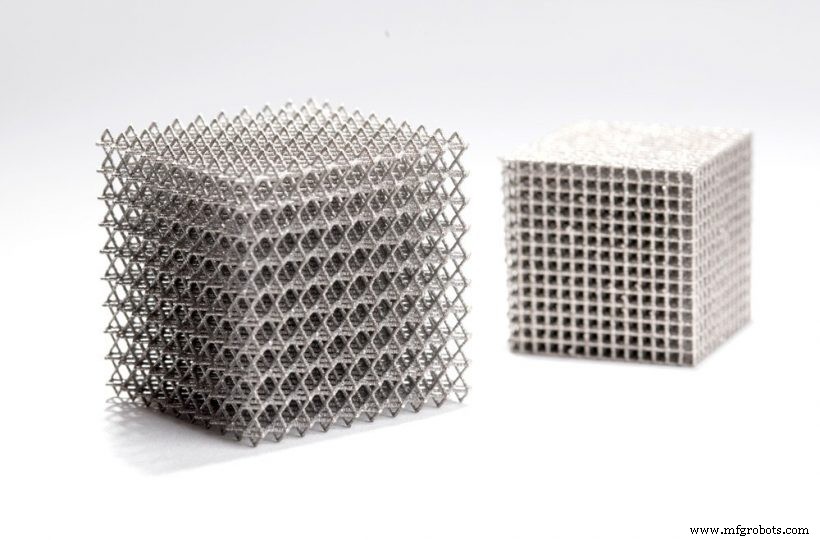

Metal 3D printing promises rapid, complex fabrication, but it still demands meticulous design, post‑processing, and iterative testing. California‑based VELO3D addressed these pain points by introducing its laser‑based Sapphire printer last year, a culmination of four years of focused R&D.
The Sapphire platform couples two standout assets: Intelligent Fusion™ technology and Flow print‑preparation software. Together, they deliver unprecedented repeatability and support‑free builds—enabling extreme overhangs without auxiliary supports, thanks to precise process control.
In this interview, Zachary Murphree, VP of Technology Partnerships at VELO3D, discusses how Intelligent Fusion unlocks new design horizons, its most impactful applications, and the future trajectory of metal additive manufacturing.
Could you tell me a bit about VELO3D?
VELO3D was founded to broaden the practical use of metal additive manufacturing. Founder Benny Buller noticed that the technology often fell short of its promises—complexity without cost, faster product cycles—and set out to resolve those frustrations by reexamining the process fundamentals.
By dissecting the physics of metal AM, the team created a system capable of printing geometries once deemed impossible, expanding the range of cost‑effective designs.
These breakthroughs materialized as the Sapphire printer and Flow software, forming an integrated solution that enables parts that other systems cannot produce.
VELO3D emerged from stealth with the Sapphire printer last year. What value does your system bring to the market?
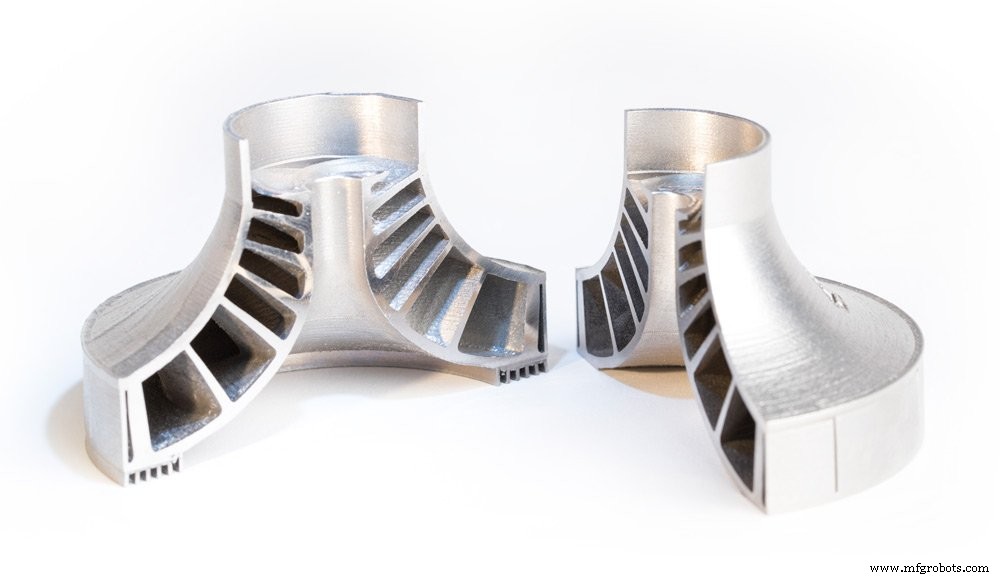
Our value proposition extends beyond the hardware. While the Sapphire printer is the visible component, it is the Flow software that unlocks its full potential. The synergy of hardware and software permits support‑free manufacturing, a direct result of tightly controlled process windows.
By mastering temperature, atmosphere, powder bed, and gas flow, we achieve low‑angle overhangs without the need for supports—something conventional systems struggle to deliver.
How does the technology work?
The journey begins with a CAD model, which Flow ingests directly—eschewing tesselated STL files. Engineers orient the part and define supports, but Flow’s real strength lies in its process awareness, built through co‑development with the Sapphire hardware.
The software predicts deformation, support failures, and offers pre‑print guidance. Its thermal simulation engine adjusts the geometry to counteract expected distortions, ensuring dimensional fidelity in the final part.
Parameter assignment is equally refined: tool‑path variables are tailored to each geometry, far beyond the generic settings of typical metal AM systems. The resulting print file carries rich process intelligence—hence the name Intelligent Fusion™.
Sapphire executes these instructions with a closed‑loop melt‑pool control system and a non‑contact recoater, enabling builds that other machines cannot perform.
What specific challenges does your technology solve?
Engineers routinely express a desire to adopt metal AM, yet the industry’s maturity lags behind traditional methods. Key barriers include restrictive overhang limits—commonly 45°, sometimes 40° or 35°—and the difficulty of removing supports from complex geometries like volutes, turbo housings, or shrouded impellers.
By enabling supports‑free printing at angles as low as 5–10°, we unlock a wide array of applications that were previously impractical, from turbine blades to aerospace fuel system components.
How do you position your technology alongside other metal 3D printing solutions?
Our focus is on niche, high‑impact applications where support‑free capabilities yield tangible benefits. While many parts already perform well on existing systems, the ability to accelerate production and reduce post‑processing gives VELO3D a distinct advantage.
Metal AM’s growth trajectory ensures ample room for multiple players; our goal is to broaden the overall market rather than displace competitors.
Which industries present the greatest growth opportunities for VELO3D?
Aerospace remains the primary target—propulsion, gas turbines, rocket engines, and structural components all demand lightweight, intricate parts. Satellite and RF enclosures, as well as heat exchangers, also benefit from our capabilities.
Industrial sectors mirror aerospace in complexity and value. Fluid‑power components, pumps, manifolds, and heat exchangers represent promising markets where our support‑free technology can reduce tooling costs and cycle times.
What pain points do customers report most frequently?
Geometry constraints and part‑to‑part variation dominate concerns. Engineers must often design for the weakest possible outcome, inflating tolerances and sacrificing performance gains.
Our built‑in metrology and process control reduce build‑to‑build and machine‑to‑machine variability, giving manufacturers confidence in material consistency and mechanical properties.
What advice would you give to companies considering metal AM?
Adoption should be driven by clear, compelling use cases—complex geometries, difficult tooling, or the need for new functions that conventional methods cannot provide. Cost comparison alone rarely justifies the transition; the value lies in the unique design freedom and reduced lead times metal AM offers.
How would you describe the current state of the AM industry and its evolution over the next five years?
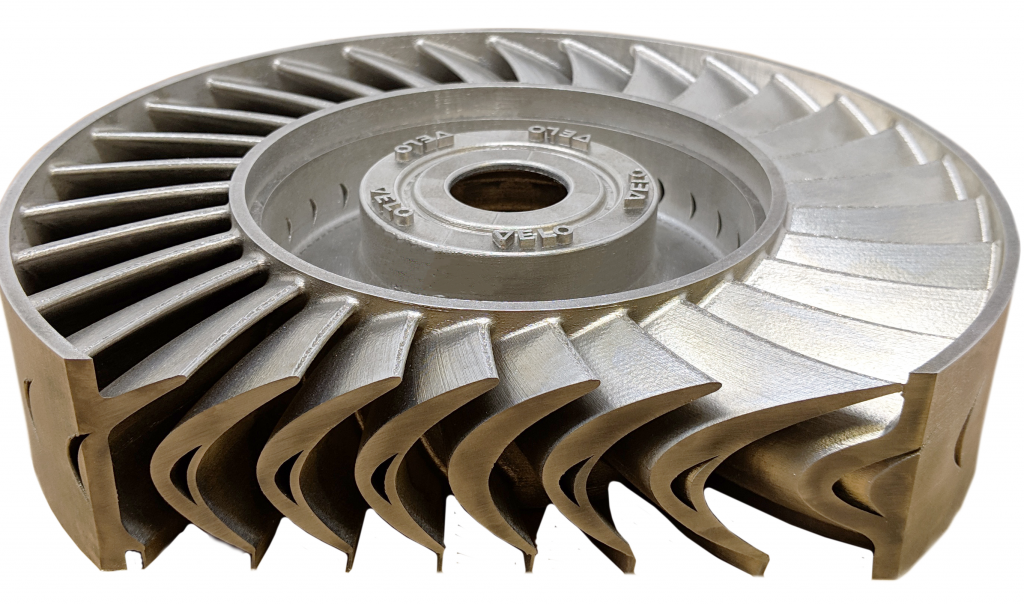
Metal AM is maturing, with an increasing number of parts moving into production. Over the next five years, contract manufacturers are expected to scale up, deploying dozens of systems to support long‑term production contracts.
VELO3D’s focus on accelerated, reliable production will help build confidence, opening doors to applications currently considered too risky for additive manufacturing.
Which trends excite you most?
The small‑satellite and rocket market stands out—rapid iteration cycles and high‑value parts align perfectly with the Sapphire platform’s strengths. As these companies mature, they will likely collaborate with larger aerospace and defense contractors, broadening the AM ecosystem.
What does your materials development strategy look like, and are you expanding your portfolio?
We currently print Inconel 718 and Ti‑6Al‑4V. Future material choices will be guided by strong business cases—customer demand for specific titanium alloys or aluminum grades—rather than a pursuit of novelty alone.
How does your partnership with Praxair influence your offerings?
Praxair Surface Technologies supplies high‑quality powder and collaborates on alloy development. This partnership ensures that our customers receive consistent, reliable feedstock and that new alloys meet their stringent performance requirements.
What has been the customer reaction since launch?
Feedback has been overwhelmingly positive. Customers appreciate the integrated hardware–software solution that addresses long‑standing software and process challenges. Visits to the VELO3D facility consistently generate enthusiasm, with many expressing eagerness to bring the technology in‑house.
What does 2019 look like for VELO3D?
2019 marks a pivotal year: demand for both the Sapphire system and the parts it produces is rising. We anticipate a surge in support‑free adoption, with engineers integrating our technology into final product designs.
To learn more about VELO3D, visit: www.velo3d.com
3D printing
- Digital Alloys CEO Duncan McCallum Discusses Joule Printing and the Future of Metal 3D Manufacturing
- Nanoe CEO Guillaume de Calan Discusses the Future of Ceramic 3D Printing
- John Kawola on Ultimaker’s Transition to Enterprise 3D Printing
- Inside 3DEO: President Matt Sand Explains How Intelligent Layering Drives High‑Volume Metal 3D Printing
- Interview with APWORKS CEO Joachim Zettler: Unlocking Business Value in Metal 3D Printing
- Interview with Petar Stefanov, Founder & CTO of Spectroplast AG: The Advantages of Silicone 3D Printing
- Inkbit CEO Davide Marini Discusses the Future of Multi‑Material Inkjet 3D Printing
- Interview with BCN3D CTO Eric Pallarés: Unlocking the Power of IDEX 3D Printing Technology
- HP’s 3D Printing Journey: From Polymer Innovation to Metal Additive Manufacturing
- 3D Printing: Empowering Communities in the Developing World