



MELD Manufacturing CEO Nanci Hardwick on Revolutionizing Metal 3D Printing
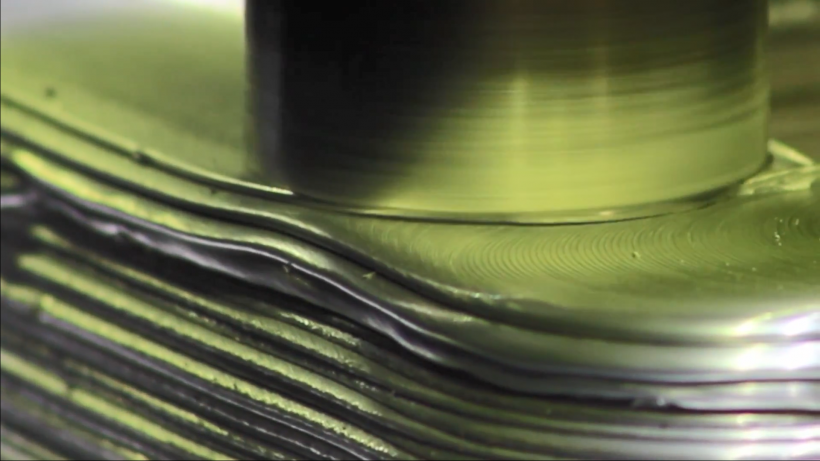
MELD Manufacturing Corporation is pioneering a breakthrough in metal additive manufacturing—printing metal parts without melting. Developed over a decade with Aeroprobe and spun out in 2018, MELD’s large‑scale B8 machine entered the market in April 2018, using a solid‑state process based on friction stir welding. This unique approach delivers superior material properties, reduced residual stress, and unparalleled flexibility across a wide range of metals.
Vision and Mission
MELD is a woman‑owned, Virginia‑based small business that finished 2018 with an R&D 100 Award, honoring the most innovative products worldwide. Our mission is to transform manufacturing by enabling solutions that were previously impossible—such as repairing the unrepairable—and by offering a broader spectrum of additive manufacturing applications that span material creation, part fabrication, and post‑manufacturing enhancement.
How MELD Technology Works
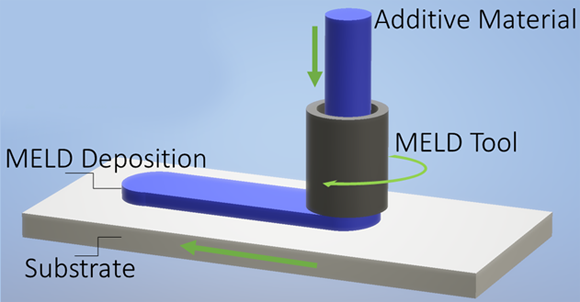
MELD’s core advantage is that it operates entirely in the solid state. Metal powders, flakes, chips, or solid bars are fed into a rotating tool where extreme pressure and friction plastically deform both the deposited material and the substrate. The resulting “additive friction stir” process refines grain structure, yielding parts with enhanced strength, corrosion resistance, and impact fatigue performance.
- Material Flexibility: No strict input specifications—any metal form is acceptable.
- Open‑Atmosphere: Eliminates the need for inert gas chambers, reducing cost, complexity, and environmental impact.
- Scalability: Unlike closed‑system machines, MELD can build or repair large components—ideal for ships, aerospace, and infrastructure.
- Energy Efficiency: No lasers or high‑power heat sources; deposition rates are high and parts are fully dense, eliminating post‑processing steps like HIP.
Comparing MELD to Other Metal AM Processes
While each additive technology serves distinct use cases, MELD stands out as the only solid‑state system that can:
- Scale to large parts without requiring larger build chambers.
- Repair or add features to existing components.
- Minimize residual stress and distortion.
- Accept a broader range of materials—including unweldable alloys.
- Recycle scrap and machining chips directly into new parts.
These advantages position MELD for critical applications in automotive, aerospace, defense, and power generation—where lightweight, high‑performance, and on‑site repair are essential.
Industry Benefits of Metal 3D Printing
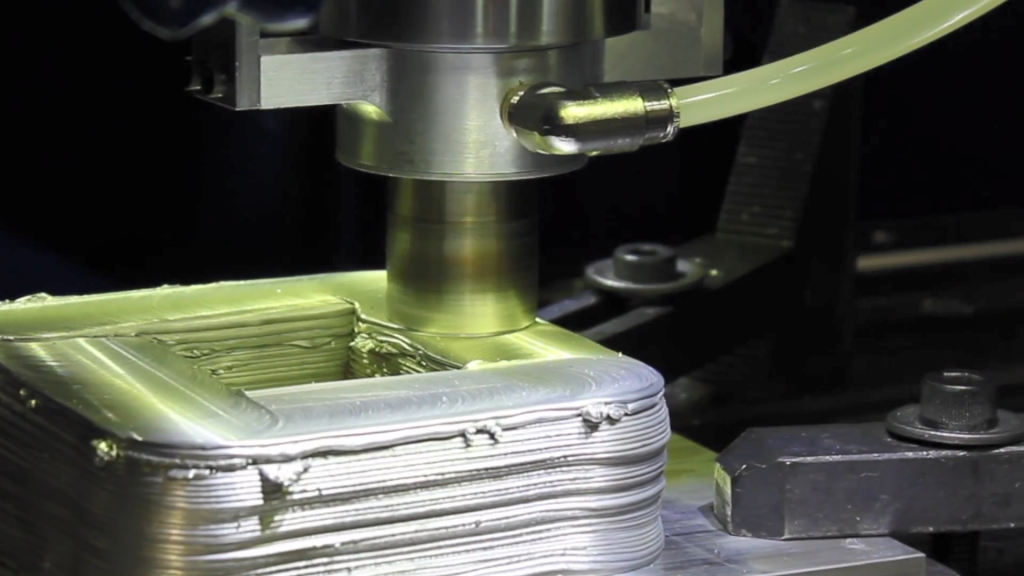
Metal additive manufacturing offers efficiency, cost savings, performance gains, and reduced logistics for virtually every sector that uses metal in its production. By integrating material design with part geometry, companies can achieve custom solutions that traditional manufacturing cannot.
Future Outlook: Industry 5.0
We are moving beyond Industry 4.0 toward an integrated, collaborative ecosystem—Industry 5.0—where material science, mechanical and electrical engineering converge. MELD will enable the creation of alloy recipes on the fly, adding wear or ballistic coatings, and producing truly customized components that adapt to specific operational demands.
Adoption Challenges and Recommendations
Success hinges on dedicated internal champions and clear evaluation criteria: part size, material, and performance requirements. Companies should assess whether a solid‑state, low‑heat process can reduce cycle time, cost, and part weight while enhancing durability.
Future Developments
Upcoming milestones include a larger‑build‑space platform, a certified operator training program, and the launch of a research consortium—all aimed at accelerating adoption and expanding the technology’s reach.
Women in 3D Printing
With growing participation at industry events, MELD’s leadership highlights the strength, resilience, and collaborative spirit that women bring to manufacturing innovation.
Learn more at meldmanufacturing.com
3D printing
- Digital Alloys CEO Duncan McCallum Discusses Joule Printing and the Future of Metal 3D Manufacturing
- How PostProcess Technologies CEO Jeff Mize is Removing the Post‑Processing Bottleneck in Additive Manufacturing
- Jabil’s Rush LaSelle Explains How Additive Manufacturing is Revolutionizing Global Production
- Interview with FIT AG CEO Carl Fruth: Driving Radical Innovation through Additive Manufacturing
- Avi Reichental Interview: From 3D Systems CEO to XponentialWorks Founder
- John Barnes, Founder of The Barnes Group Advisors, Discusses Additive Manufacturing’s Future and Workforce Development
- Inkbit CEO Davide Marini Discusses the Future of Multi‑Material Inkjet 3D Printing
- Additive Manufacturing Explained: From Design to Finished Part
- Metal Additive Manufacturing: Transforming Production for Aerospace and Beyond
- How Selective Laser Sintering (SLS) Converts 3D CAD Designs into Solid Parts