



Interview with FIT AG CEO Carl Fruth: Driving Radical Innovation through Additive Manufacturing

With more than two decades of experience, FIT Additive Manufacturing Group is a leading provider of rapid prototyping and additive manufacturing services.
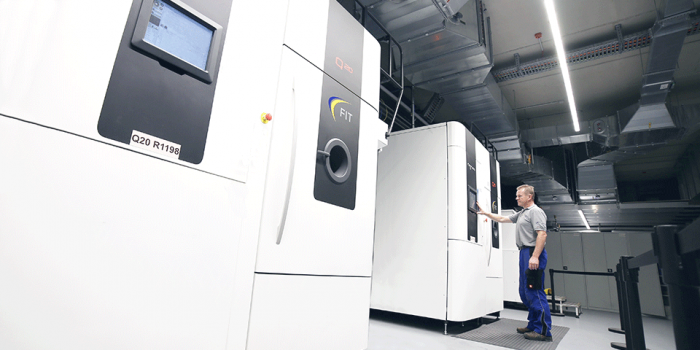
Based in Germany, FIT serves automotive, medical, and machinery customers. Its Lupburg plant houses the world’s largest aluminium AM facility, enabling a broad portfolio of metal and plastic solutions.
This week, we speak with founder and CEO Carl Fruth to explore FIT’s services, success stories, and how AM empowers radical innovation.
Could you tell me a bit about FIT and the services you provide?
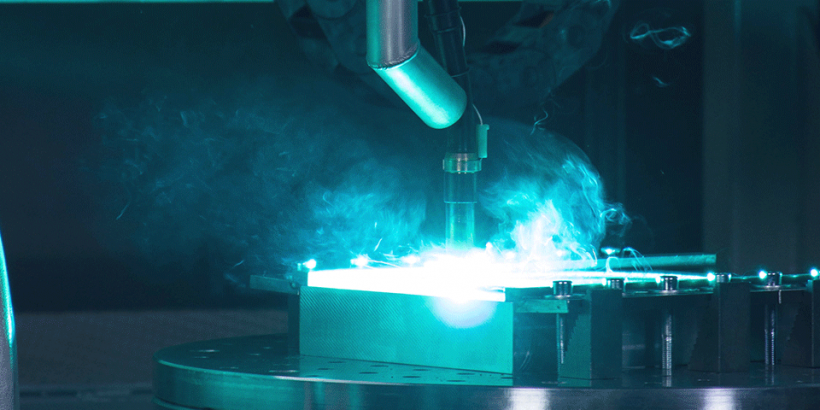
FIT is primarily an additive manufacturing company offering a wide array of services. We operate multiple AM technologies in-house—laser melting, EBM, PolyJet, SLA, SLS, binder jetting, and WAAM—for producing plastic and metal parts. Beyond AM, we deliver injection moulding, additively manufactured tooling, vacuum casting, and CNC milling, as well as design, engineering, scanning, and post‑processing services.
Currently, which industries are you seeing the most demand from?
We provide both prototyping and production services. Prototyping supports every development department across industries, while production of functional components is strongest in medical, motorsport, and industrial machinery.
You’ve recently invested in the LightSpeed metal 3D printing system, alongside the network of EOS machines you already have. How are all of these technologies transforming your business?
FIT’s strategy is to host a diverse suite of AM technologies under one roof because no single solution dominates the market. Each technology has distinct strengths and limitations, so offering a full spectrum empowers us to recommend the best fit for each customer’s application. Adding the LightSpeed system, for instance, expands our capabilities in high‑speed metal printing, enhancing value for clients.
FIT has also recently announced its Spare Parts on Demand services. Could you tell me a bit more about what you’re offering here, and why AM is ideal for producing spare parts?
Not every spare part is a candidate for 3D printing, but when a legacy component becomes unavailable, AM can quickly supply replacements and reduce costly downtime. Our Spare Parts on Demand service enables customers to request, design, and receive custom spare parts—particularly for critical equipment like trains—within a short turnaround.
Leading on from that, how can you identify applications which are suitable for AM?
Identifying AM‑suitable parts requires deep knowledge of the technology. At FIT, our experienced team evaluates customer requirements and guides them in selecting the appropriate AM process, ensuring that final parts meet functional, quality, and cost criteria.
Are there any success stories you can share?
One notable project involved producing a titanium sandbox housing for Deutsche Bahn. After the original manufacturer stopped production, we re‑engineered the part and used EBM to 3D‑print it, dramatically reducing train downtime.
Innovation is something that FIT speaks a lot about. What does innovation mean to you?
Innovation, for us, starts with the customer’s objectives. While we provide manufacturing expertise, the true breakthrough comes when customers use AM to create entirely new products or business models—a concept we call radical innovation, distinct from incremental, linear improvements.
You recently announced a subsidiary in Japan. Why did you pick Japan as a location, and what does the AM market look like there?
Japanese manufacturers, especially large automakers, are increasingly seeking to incorporate AM into their production lines. Though many firms excel at incremental innovation, they often lack experience with radical AM applications. By establishing a Japanese subsidiary, FIT aims to bridge that gap and unlock AM’s potential across Asia.
How do you see additive manufacturing evolving and for the next five years?
I expect a broader adoption of AM for final‑part production, with components outperforming their traditionally manufactured counterparts. Large corporations will drive early uptake, while emerging startups will push radical innovations.
What’s next for FIT?
With the AM industry expanding and new applications emerging, FIT will continue to guide clients through technology selection, design, and production, helping them create radically new products and components.
About FIT Additive Manufacturing Group
The FIT Additive Manufacturing Group is an international leading industry partner in the field of Additive Manufacturing. As a technology pioneer with around 25 years of experience, the company manufactures prototypes, production tools, 3D printed spare parts, as well as additively manufactured end components for a rich variety of verticals. The AM expert makes the entire chain of 3D printing available, from additive design and engineering through to production and professional finishing options. In addition, FIT also provides numerous conventional technologies such as CNC‑milling, injection moulding, vacuum casting, or elastomer manufacturing. Group revenue in 2018 was around EUR 25 million. FIT Additive Manufacturing Group currently employs 280 people, most of them at the company’s headquarters in Lupburg, Germany, but also in Brasov (Romania), Zhukovsky (Russian Federation) as well as in Nagoya (Japan), and Peoria (USA).
To learn more about FIT AG, visit: www.fit.technology
3D printing
- How PostProcess Technologies CEO Jeff Mize is Removing the Post‑Processing Bottleneck in Additive Manufacturing
- Interview with Sintavia President Doug Hedges: Scaling Serial Production of Metal Parts via 3D Printing
- Jabil’s Rush LaSelle Explains How Additive Manufacturing is Revolutionizing Global Production
- Interview with ANSYS Chief Technologist on Driving Metal 3D Printing Success Through Simulation
- MELD Manufacturing CEO Nanci Hardwick on Revolutionizing Metal 3D Printing
- Avi Reichental Interview: From 3D Systems CEO to XponentialWorks Founder
- How Graphite AM’s Jonathan Warbrick Drives Success in Industrial 3D Printing
- Aconity3D’s Yves Hagedorn on Empowering Metal 3D Printing Innovation
- Why Post‑Processing Is the Key to Scalable 3D Printing – Insights from AMT CEO Joseph Crabtree
- Expert Interview: nTopology CEO Discusses Advancing Additive Manufacturing with Generative Design Software