



Why Post‑Processing Is the Key to Scalable 3D Printing – Insights from AMT CEO Joseph Crabtree
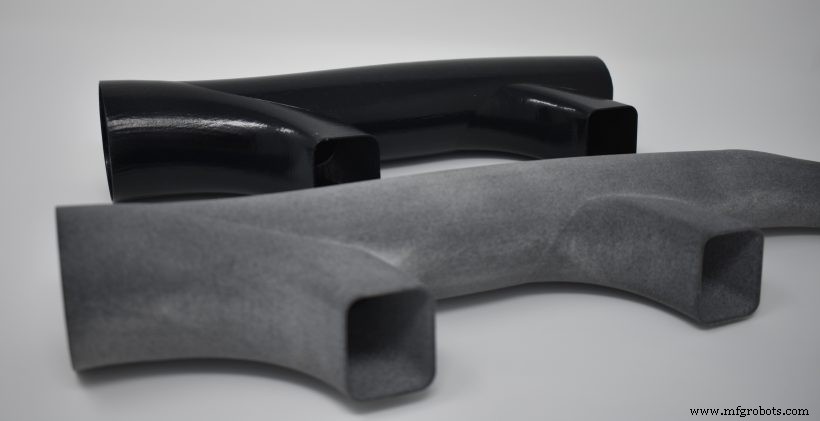
Post‑processing is often dubbed 3D printing’s "dirty little secret" – a manual, labour‑intensive step that can derail scaling efforts. Yet, advances in automation are turning this bottleneck into a competitive advantage.
In this week’s Expert Interview, we sit down with Joseph Crabtree, CEO of Additive Manufacturing Technologies (AMT), a UK‑based pioneer in automated post‑processing solutions. Joseph explains why post‑processing is essential, how AMT’s technology works, and what the future holds for the industry.
About AMT Technologies

Founded in 2017 in Sheffield, AMT combines R&D, sales, technical support, and applications development under one roof. We operate a fully owned manufacturing plant in Hungary for engineering, design, and production, and have recently opened a 20,000‑sq‑ft facility in Austin, Texas, to serve the U.S. market. Our first APAC employee underscores our rapid global expansion.
AMT’s mission is to make industrial‑grade additive manufacturing (AM) a viable alternative to conventional manufacturing. While prototypes and low‑volume production have been common, true scalability demands a seamless end‑to‑end process that includes robust post‑processing.
Today’s biggest hurdle is that parts emerging directly from 3D printers rarely meet end‑use criteria. Whether for medical devices, aerospace interiors, automotive engines, or space components, post‑processing is non‑optional. When post‑processing can account for up to 60 % of a part’s cost, manual approaches become unsustainable at higher volumes.
AMT tackles the entire post‑processing chain—de‑powdering, surface modification (smoothing, sealing, colouring), and final inspection—through an integrated, technology‑agnostic solution. We focus on thermoplastic polymers, having validated over 95 materials, and are expanding into quasi‑metal components.
With investment from DSM Venturing, Foresight Group, and Williams Advanced Engineering, we are completing our “polymer‑to‑part ecosystem,” aligning material science, mechanical engineering, and automation to deliver parts that outperform their printed counterparts.
Current Post‑Processing Challenges
Awareness is the first obstacle. Many new users are unaware that post‑processing is a necessary step, and printer manufacturers rarely highlight this. The hidden costs of manual finishing can eclipse the speed benefits of advanced printers.
Education is critical—users need to understand that post‑processing is not a series of separate machines but a digital, end‑to‑end workflow. Most available solutions are manual and lack automation. Dep‑powdering, in particular, remains a major unmet need, requiring machine‑learning‑driven sorting and extraction.
Moving Toward Fully Automated Dep‑Powdering
AMT is partnering with industry leaders to develop a truly automated dep‑powdering system. This will eliminate the need for manual intervention, reduce cycle time, and cut costs for powder‑bed AM technologies.
PostPro3D Technology Overview
PostPro3D, the cornerstone of AMT’s offering, is a chemical‑vapour smoothing process that seals porosity and enhances mechanical properties. Developed over eight years of research and backed by a University of Sheffield IP license and Innovate UK funding, it can process highly engineered polymers such as ULTEM, nylon, TPU, and TPE.
The flagship machine features a 100‑litre chamber for high‑volume production, while the PostPro3D Mini offers a cost‑effective option for research labs and small service bureaus.
All processes undergo cycle toxicity testing and are FDA‑compliant, ensuring suitability for regulated applications. Complementary technologies include a patent‑pending colouring system that simultaneously adds colour and smooths parts, as well as de‑powdering and inspection modules developed in partnership with the University of Nottingham.
These components converge in AMT’s Digital Manufacturing System (DMS), delivering full end‑to‑end automation.
Future Material Scope
While our core expertise lies in polymers, we have filed IP for metal post‑processing and have solutions for quasi‑metal components, such as smoothing Desktop Metal’s polymer‑carried metal parts before sintering.
Impact of Recent Investment
The new funding round is transformative, enabling rapid global growth, completion of our Austin facility, and expansion into APAC and Europe. It also preserves our technology‑agnostic stance, granting access to DSM’s materials chemistry expertise and Foresight Group’s analytics, engineering, and capital resources.
Industry Barriers Beyond Post‑Processing
Many companies still view AM as a niche or experimental technology, lacking the reliability of CNC or injection moulding for large‑scale production. Achieving repeatability and reproducibility across thousands of identical parts remains a significant challenge.
AMT’s Formnext stand—built from 6,600 3D‑printed parts in a 4 m × 6 m × 14 m lattice—demonstrates the feasibility of large‑scale, lightweight structures only possible with advanced post‑processing.
Upcoming Milestones
In the next 12 months, AMT will launch its end‑to‑end DMS, uniting de‑powdering, smoothing, colouring, and inspection. The company anticipates rapid revenue growth and continued expansion.
Learn more about AMT at https://amtechnologies.co.uk/.
3D printing
- How PostProcess Technologies CEO Jeff Mize is Removing the Post‑Processing Bottleneck in Additive Manufacturing
- Solvay’s Brian Alexander on Building High‑Performance Polymers for Additive Manufacturing
- MELD Manufacturing CEO Nanci Hardwick on Revolutionizing Metal 3D Printing
- Interview with FIT AG CEO Carl Fruth: Driving Radical Innovation through Additive Manufacturing
- Avi Reichental Interview: From 3D Systems CEO to XponentialWorks Founder
- How Graphite AM’s Jonathan Warbrick Drives Success in Industrial 3D Printing
- Interview with Eckhart Additive Manufacturing Engineer Robert Heath: 3D Printing, Automation & Industry 4.0
- Interview with Timm Kragl: Why Additive Manufacturing Execution Systems (MES) Drive Success in 3D Printing
- Why Composite 3D Printing Is a Game Changer – Insights from Anisoprint CEO Fedor Antonov
- Design for Additive Manufacturing (DfAM): 3D Printing Strategies That Cut Costs and Boost Efficiency