



3D‑Printed Eyewear: From Prototyping to Customization—Industry Trends & Case Studies
3D printing is rapidly reshaping the eyewear industry, moving from rapid prototyping to direct manufacturing of frames and lenses.
According to SmarTech Analysis, the global 3D‑printing market for eyewear is projected to hit $3.4 billion by 2028, with final‑parts production alone expected to reach $1.9 billion.
This article explores why 3D printing is gaining traction in eyewear production and showcases real‑world examples.
Explore other applications in our series:
3D Printing for Heat Exchangers
3D Printing for Bearings
3D Printing for Bike Manufacturing
3D Printing for Digital Dentistry & Clear Aligner Manufacturing
3D Printing for Medical Implants
3D‑Printed Rockets and the Future of Spacecraft Manufacturing
3D Printing for Footwear Manufacturing
3D Printing for Electronic Components
3D Printing in the Rail Industry
3D Printing for End‑Part Production
3D Printing for Brackets
3D Printing for Turbine Parts
How 3D Printing Enables Better‑Performing Hydraulic Components
How 3D Printing Supports Innovation in the Nuclear Power Industry
Benefits of 3D printing for eyewear
Greater design possibilities
3D printing liberates designers from the constraints of traditional manufacturing, allowing them to experiment with complex geometries, novel textures, and lightweight structures that would be prohibitively expensive or impossible to produce otherwise.
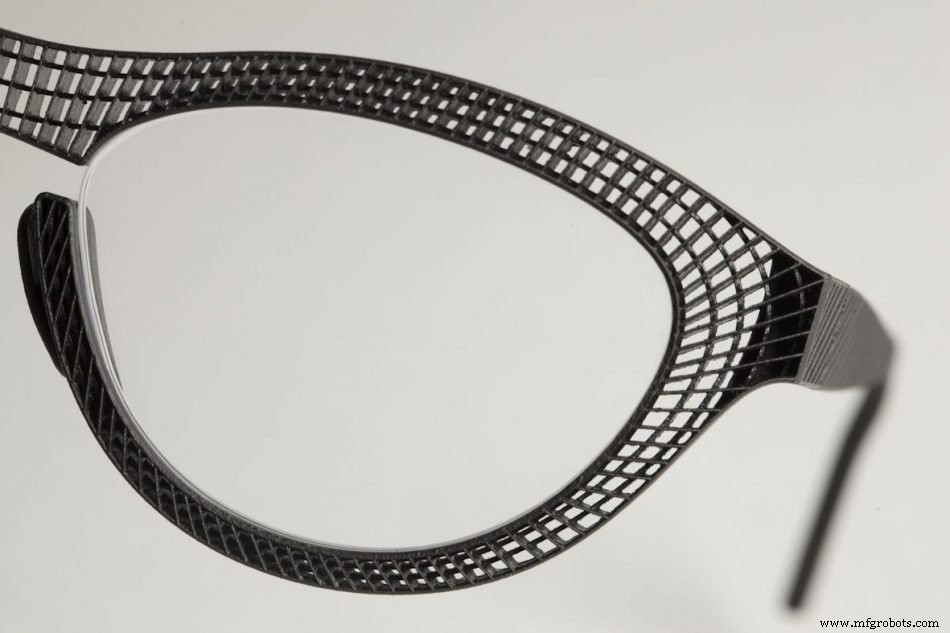
Hoet Design Studio, a Belgian high‑end brand, leveraged laser‑melting 3D printing to launch its Hoet Couture collection. The five models feature titanium front portions with a mesh‑like geometry that could only be fabricated using additive manufacturing.
Customization made simple
Today’s consumers demand eyewear that fits perfectly and reflects their personal style. Traditional production requires a separate fitting stage, often resulting in discomfort or costly adjustments.
With integrated 3D scanning and printing, opticians can capture a patient’s facial geometry during the first visit and produce a frame that is engineered for a seamless fit—eliminating the need for post‑production adjustments.
Beyond fit, 3D printing opens a palette of color, shape, and texture options, enabling brands to offer truly personalized frames.
Rapid market responsiveness
Fashion cycles in eyewear are short, and stocking outdated styles can erode margins. Additive manufacturing eliminates the need for expensive tooling, allowing brands to pivot quickly to new trends and limited‑edition releases.
Technologies and materials used in eyewear 3D printing
The dominant additive process for eyewear is Selective Laser Sintering (SLS), which fuses nylon powder with a laser beam. SLS excels at producing complex parts without support structures, though it typically yields a slightly rough surface finish that may require post‑processing.
Some manufacturers complement SLS with SLA (stereolithography) for creating high‑resolution patterns that serve as molds for investment casting. Metal printing via Selective Laser Melting (SLM) is also explored, albeit at higher cost.
Examples of eyewear 3D printing
MONOQOOL’s screwless eyeglasses
Danish brand MONOQOOL pioneered screwless frames by using SLS‑printed polyamide (nylon) with a spiral hinge that eliminates screws, welding, or bolts. The result is a lightweight 4‑gram frame that is both durable and comfortable.
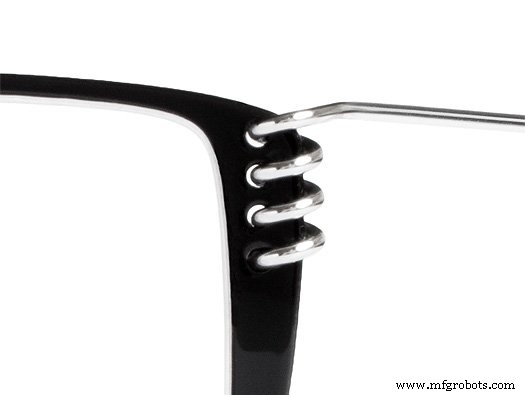
MONOQOOL’s production requires minimal upfront investment, especially when partnered with a service provider, and the frames are now sold in roughly 1,000 retail outlets worldwide.
Specsy’s customised eyewear frames
Canadian startup Specsy combines augmented reality, 3D scanning, and multi‑colour SLS printing to deliver truly bespoke frames in-store. An optician uses the Specsy app to capture a live facial scan, designs the frame, and the company prints the piece in about 8 hours.
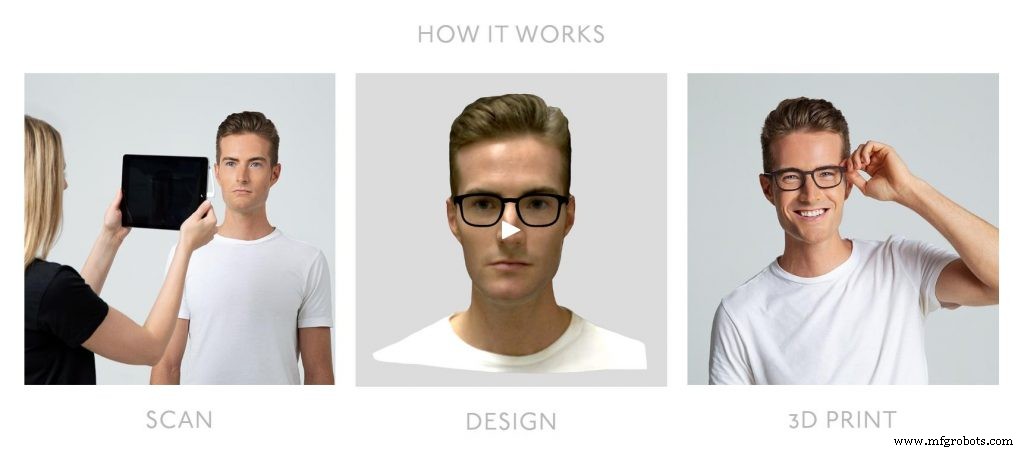
After printing, frames undergo a three‑day assembly and hand‑inspection cycle, ensuring quality while maintaining the custom feel.
Luxexcel’s 3D‑printed lenses
Luxexcel, a Dutch company, introduced a VisionPlatform that integrates industrial‑grade 3D printers, proprietary lens‑design software, and workflow tools to produce ophthalmic‑quality lenses that comply with ANSI, ISO, and FDA standards.
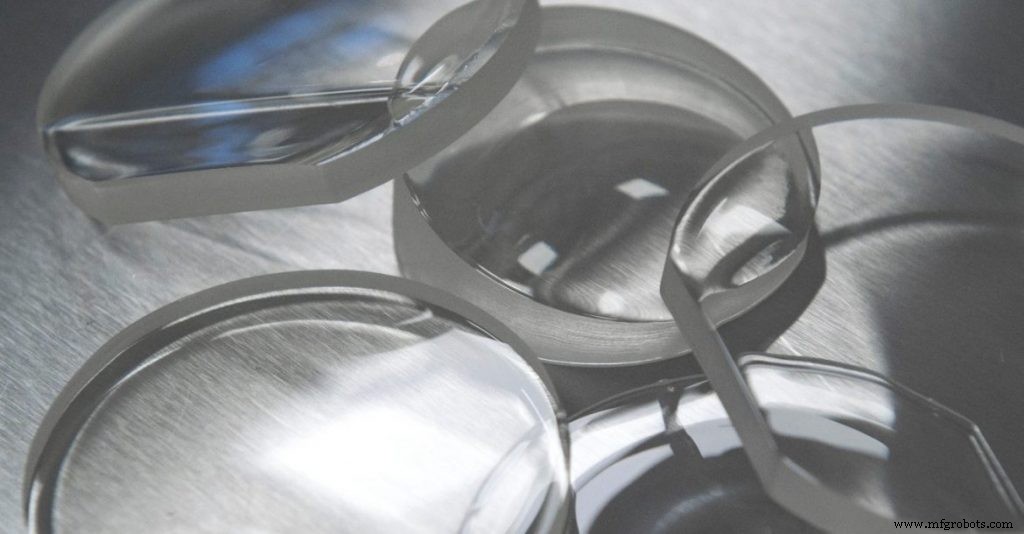
Compared to conventional subtractive manufacturing, which wastes about 80 % of material, Luxexcel’s additive process uses UV‑curable resin droplets to build lenses layer‑by‑layer, drastically reducing waste and production time. In the past year, the company has printed 5,000 lenses across multiple VisionPlatform units, enabling daily commercial shipments.
The future of eyewear 3D printing
While additive manufacturing currently excels at small‑batch, high‑value products, it is poised to scale as material costs fall and printer reliability improves. Manufacturers that adopt 3D printing early can differentiate themselves through unique designs, on‑demand customization, and faster time‑to‑market.
Ultimately, 3D printing will empower consumers with better‑fitting, personalized eyewear and give brands the agility to meet evolving style demands.
3D printing
- Revolutionizing Bone Implants: How 3D Printing Enhances Fit, Longevity, and Performance
- Application Spotlight: 3D Printing Transforms Bike Manufacturing
- Application Spotlight: 3D Printing Revolutionizes Bearing Design and Production
- 3D Printing Revolutionizes Heat Exchangers: Lighter, Smarter, Faster
- 3D Printing Revolutionizes the Rail Industry: Case Studies & Benefits
- Revolutionizing Footwear: 3D Printing Drives Innovation, Customization, and Faster Time to Market
- 3D Printing for Turbine Parts: Accelerating Development, Performance, and Sustainability
- 3D‑Printed Brackets: Optimizing Strength, Weight, and Production Efficiency
- How 3D Printing Is Revolutionizing Aircraft Cabin Interiors
- Revolutionizing Robotic Grippers with 3D Printing: Insights and Industry Successes