



Revolutionizing Footwear: 3D Printing Drives Innovation, Customization, and Faster Time to Market
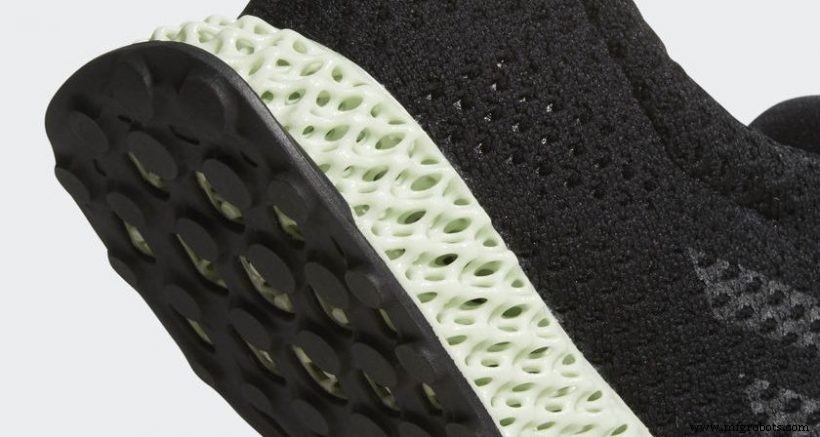
[Image credit: Adidas]
3D printing is reshaping footwear design, enabling brands to create bespoke styles and meet the surge in demand for personalized products.
SmarthTech Analysis predicts that the footwear 3D‑printing market will grow to a $9 billion revenue opportunity over the next decade, becoming the largest consumer‑product segment of additive manufacturing by 2030.
What fuels this momentum? In this week’s Application Spotlight series, we explore the benefits, use cases, and emerging trends that are setting the stage for the future of footwear production.
Explore other applications in our series:
3D Printing for Heat Exchangers
3D Printing for Bearings
3D Printing for Bike Manufacturing
3D Printing for Digital Dentistry & Clear Aligner Manufacturing
3D Printing for Medical Implants
3D‑Printed Rockets and the Future of Spacecraft Manufacturing
3D Printing for Electronic Components
3D Printing in the Rail Industry
3D‑Printed Eyewear
3D Printing for End‑Part Production
3D printing for Brackets
3D Printing for Turbine Parts
How 3D Printing Enables Better‑Performing Hydraulic Components
How 3D Printing Supports Innovation in the Nuclear Power Industry
Why Footwear Brands are Embracing 3D Printing
Today, 3D‑printed footwear accounts for about 0.3% of global footwear revenue, projected to rise to 1.5% by 2029 (SmarTech Analysis). While still modest, this growth signals a clear shift toward digital manufacturing.
Two key drivers are propelling this trend:
1. The Rise of Personalized Products
Modern consumers expect tailored experiences. 3D printing unlocks true customization, allowing shoes to be designed around an individual’s foot geometry.
Brands are testing mass‑customization models, and as confidence in the technology grows, a wider range of personalization options will become mainstream.
2. Digital Manufacturing and Process Automation
Traditional shoemaking is labor‑intensive, involving multiple steps and bespoke tooling. 3D printing eliminates the need for separate molds, replacing them with digital design files that drive the build directly.
This reduces labor, shortens lead times, and enables localized production—an attractive proposition for brands seeking agility.
What 3D‑Printing Technologies Are Used in Footwear?
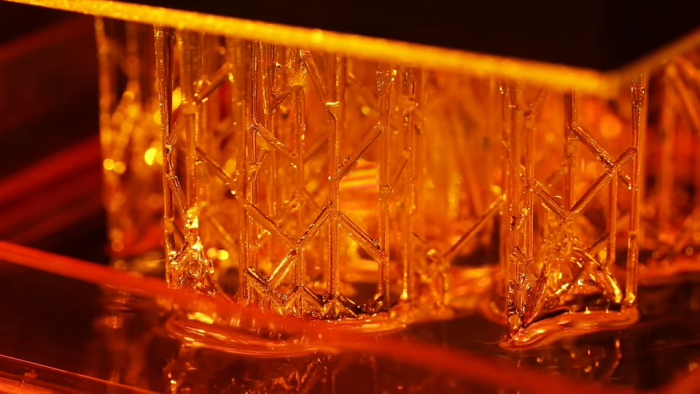
The most prevalent technologies are vat photopolymerization methods—Stereolithography (SLA), Digital Light Processing (DLP), and Carbon’s Digital Light Synthesis (DLS). These processes use light to cure liquid resin layer by layer, offering high resolution and speed.
They are ideal for flexible materials such as TPU, silicone, and elastic polyurethane, which are common in sports‑shoe midsoles.
Powder‑based systems like Selective Laser Sintering (SLS) and HP’s Multi‑Jet Fusion (MJF) also play a role, particularly for insole production, where they provide fast build times and robust elastomeric properties.
Material Innovations for 3D‑Printed Footwear
Production‑grade materials have been a bottleneck, but collaborations between manufacturers and material scientists are closing that gap. Carbon’s partnership with Adidas yielded an elastomeric polyurethane for the FutureCraft midsoles. New Balance and Formlabs developed Rebound Resin, a photopolymer that delivers springy lattice structures with durability comparable to injection‑molded EVA.
The Advantages of 3D Printing in Footwear
Faster Time to Market
Conventional molding requires separate molds for each size—an expensive, time‑consuming process. 3D printing bypasses molds entirely, allowing direct conversion from digital files to finished parts.
Adidas’ Speedfactories in Germany and North America illustrate this advantage: 3D‑printed midsoles for FutureCraft and Alphaedge 4D shoes enable a launch cycle three times faster than traditional methods.
Innovative Design Freedom
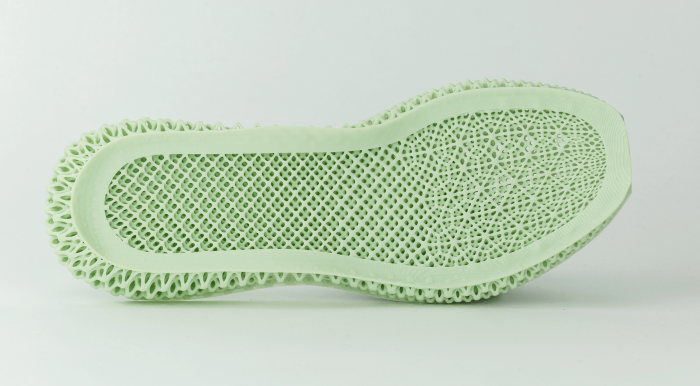
With 3D printing, midsoles can feature internal lattice structures that vary in density, optimizing cushioning while reducing weight—capabilities unattainable with injection molding.
Personalization at Scale
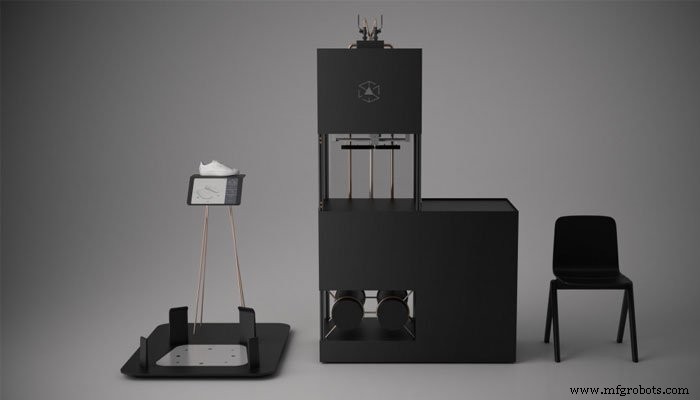
Brands like ECCO use 3D scanning and on‑site printing to deliver custom midsoles in hours. The QUANT‑U project at ECCO’s W‑21 concept store demonstrates how data collection, design, and printing can coalesce into a seamless customer experience.
Real‑World Applications
3D‑Printed Midsoles
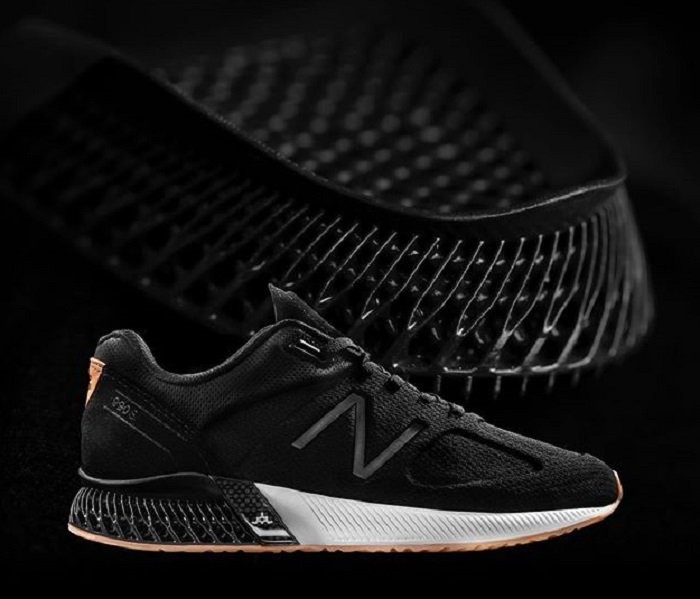
Adidas has produced over 100,000 pairs of 3D‑printed midsole shoes since 2019, while New Balance’s 990 Sport features a 3D‑printed heel built with Formlabs’ SLA technology and Rebound Resin. These examples showcase how variable lattice density can enhance performance and durability.
3D‑Printed Uppers
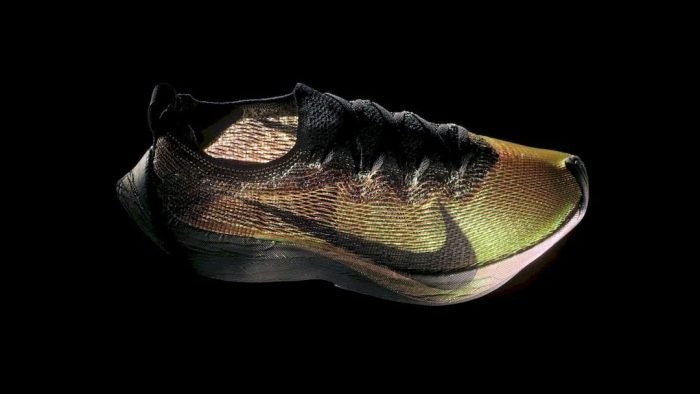
Nike’s Flyprint uppers employ Solid Deposit Modeling (SDM) with TPU, delivering a seamless, breathable, and stronger textile than traditional knit construction. Oliver Cabell’s Phoenix sneakers repurpose recycled PET bottles into yarn for 3D‑printed uppers, illustrating sustainability potential.
Approaching Fully 3D‑Printed Shoes
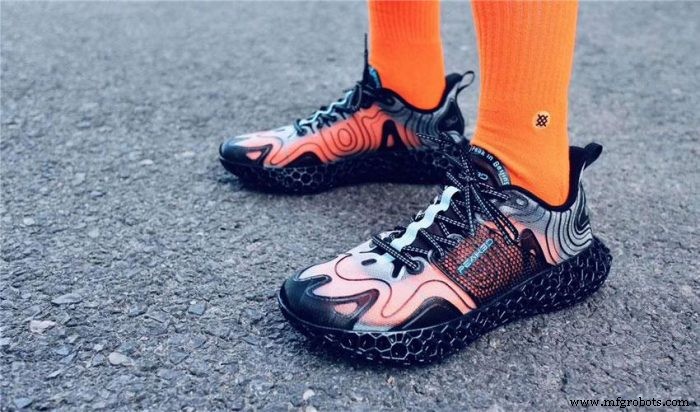
While a complete 3D‑printed shoe remains elusive, Chinese brand PEAK Sports has released a near‑complete model using SLS for the midsole and outsole, extrusion for the upper, and TPU. The main challenge lies in economics and the need to re‑engineer the entire supply chain.
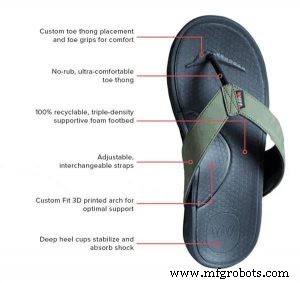
Projects like Wiivv’s 3D‑printed sandals demonstrate partial component printing, but full assembly remains out of reach due to scale, cost, and supply‑chain constraints.
Future Outlook
By integrating advanced materials and digital workflows, 3D printing opens avenues for high‑performance sports footwear, fully customized sandals, and rapid prototyping. Though scalability is a current limitation, ongoing technological improvements and market demand for personalization suggest a bright future for additive manufacturing in footwear.
Adopting 3D printing will pose supply‑chain challenges, but the potential for unique product offerings and operational efficiencies makes it a compelling strategic investment.
3D printing
- Revolutionizing Bone Implants: How 3D Printing Enhances Fit, Longevity, and Performance
- 3D Printing Revolutionizes Clear Aligners in Digital Dentistry
- Application Spotlight: 3D Printing Transforms Bike Manufacturing
- Application Spotlight: 3D Printing Revolutionizes Bearing Design and Production
- 3D Printing Revolutionizes Heat Exchangers: Lighter, Smarter, Faster
- 3D‑Printed Eyewear: From Prototyping to Customization—Industry Trends & Case Studies
- 3D Printing for Turbine Parts: Accelerating Development, Performance, and Sustainability
- 3D‑Printed Brackets: Optimizing Strength, Weight, and Production Efficiency
- How 3D Printing Is Revolutionizing Aircraft Cabin Interiors
- Revolutionizing Robotic Grippers with 3D Printing: Insights and Industry Successes