



3D Printing Revolutionizes Heat Exchangers: Lighter, Smarter, Faster
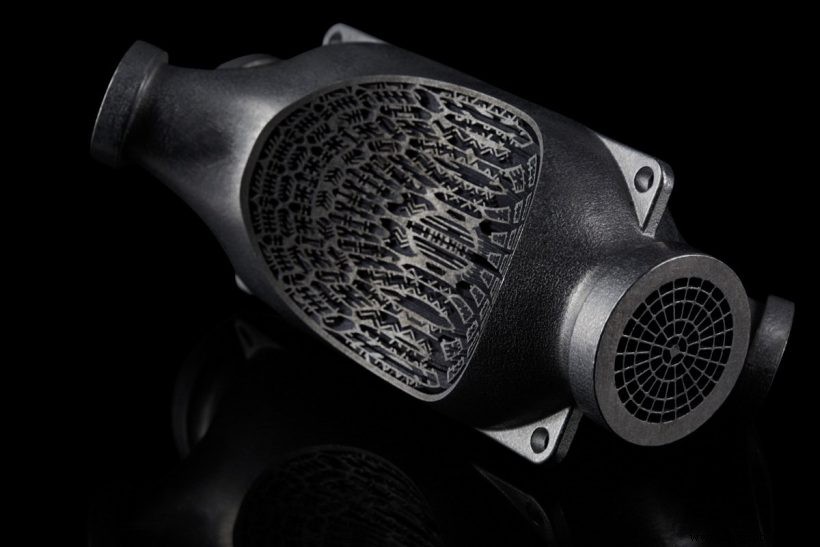
[Image credit: Conflux Technology]
The industrial potential of 3D printing is expanding rapidly.
Despite this growth, many still underestimate the true capabilities of additive manufacturing. AMFG’s 2019 State of the 3D Printing Industry Survey highlights that a lack of knowledge remains a top barrier for service providers.
To clarify how 3D printing is being leveraged today, we launch a weekly Application Spotlight series. Each post examines a specific application, outlining key benefits and real-world examples.
In this inaugural episode, we explore 3D printing for heat exchangers—a field where the technology delivers lighter weight, smaller size, and superior performance.
Before diving into the advantages, let’s define what a heat exchanger is and why it’s a natural fit for additive manufacturing.
- 3D Printing for Bearings
- 3D Printing for Bike Manufacturing
- 3D Printing for Digital Dentistry & Clear Aligner Manufacturing
- 3D Printing for Medical Implants
- 3D-Printed Rockets and the Future of Spacecraft Manufacturing
- 3D Printing for Footwear Manufacturing
- 3D Printing for Electronic Components
- 3D Printing in the Rail Industry
- 3D-Printed Eyewear
- 3D Printing for End-Part Production
- 3D printing for Brackets
- 3D Printing for Turbine Parts
- How 3D Printing Enables Better-Performing Hydraulic Components
- How 3D Printing Supports Innovation in the Nuclear Power Industry
What Is a Heat Exchanger?
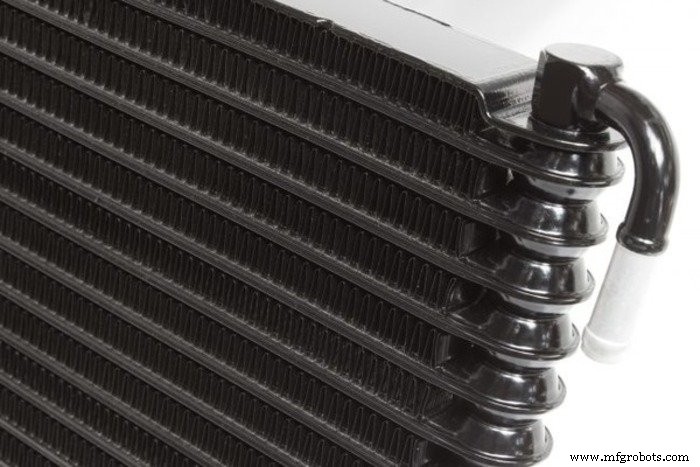
Heat exchangers are vital for temperature regulation in industry, transferring heat between two fluids to either warm or cool components. They are ubiquitous—from automotive engines and ship cooling systems to household refrigerators and industrial air‑conditioning units.
Designs vary widely, but most conventional heat exchangers feature either a coil or plate configuration. Coil exchangers use one or more coiled tubes to separate the fluids, while plate exchangers employ thin metal plates, often forcing the fluids to flow in opposite directions to maximize heat transfer.
Why 3D Printing Is Ideal for Heat Exchangers
Traditional manufacturing of heat exchangers is labor‑intensive, involving multiple steps such as forming, brazing, and welding. As demand for higher performance, smaller footprints, and reduced lead times grows, conventional methods struggle to keep pace.
3D printing offers a solution by enabling rapid prototyping and direct part fabrication, eliminating many intermediate steps and allowing designers to explore complex geometries previously impossible to manufacture.
Key Benefits of 3D‑Printed Heat Exchangers
Enhanced Performance Through Complex Geometries
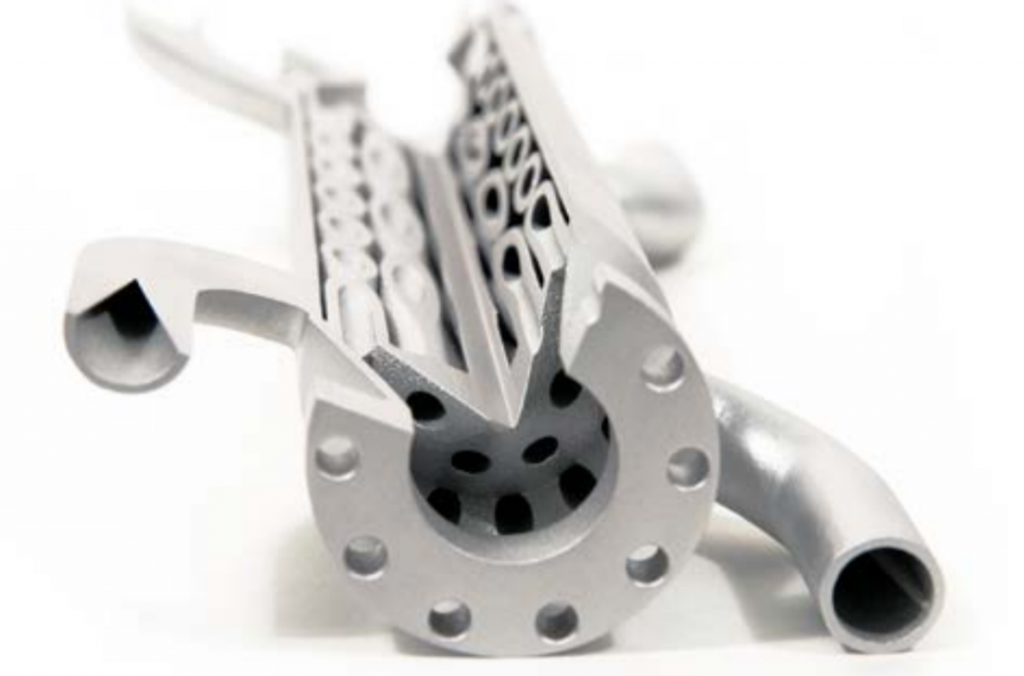
3D printing allows walls as thin as 200 µm and intricate internal flow channels, significantly increasing the heat‑transfer surface area. A larger surface area directly translates to more efficient heat removal, boosting overall performance.
Reduced Weight and Size
Conventional heat exchangers are often bulky and rigid, limiting integration into tight spaces. Additive manufacturing lets engineers design lightweight, compact components—sometimes up to 22% lighter and 55 mm shorter—without sacrificing performance.
Simplified Production
By printing the part in a single operation, 3D printing eliminates costly and time‑consuming steps like brazing and welding, reducing both production time and cost.
Improved Quality and Reliability
One‑piece fabrication eliminates seams and joints that can leak or fail. The streamlined process also reduces variability, resulting in higher quality and more reliable heat exchangers.
Real‑World Examples
The aerospace, motorsports, and energy sectors are leading the adoption of 3D‑printed heat exchangers.
Conflux Core: A New Benchmark
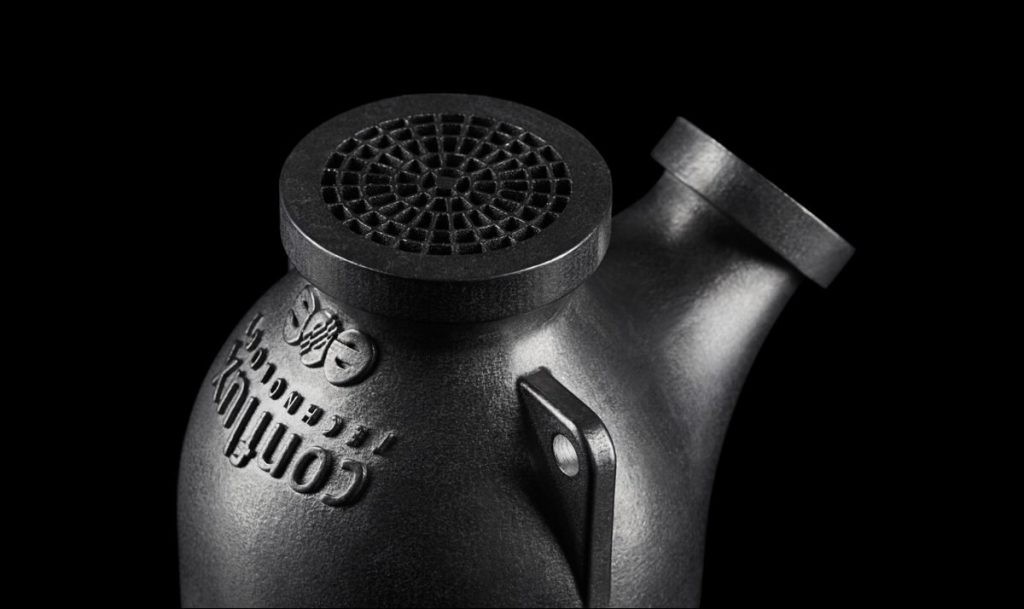
Australian firm Conflux Technology specializes in metal 3D printing of thermal and fluid components. Their patented Conflux Core heat exchanger showcases how additive manufacturing can create highly complex geometries that triple surface area, yielding three‑fold heat rejection.
Compared with a Formula 1 benchmark, the Conflux Core is 22% lighter and 55 mm shorter, while the entire development cycle completed in just six months. By consolidating sub‑components into a single part, the design reduces material usage, assembly time, and potential failure points.
GE’s Lung‑Inspired Heat Exchanger
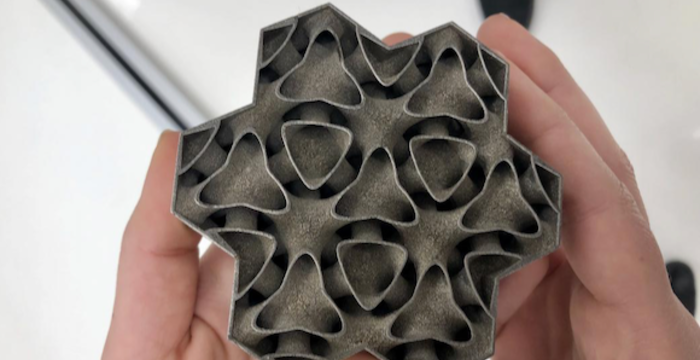
GE Research is pioneering a heat exchanger that operates at 1,650 °F (871 °C), surpassing current systems by over 450 °F (232 °C). The design, inspired by human lungs, features a trifurcating network of channels that allow hot air and cold fluid to exchange heat without mixing.
Only 3D printing can produce the required intricate geometry. GE’s custom, high‑temperature, crack‑resistant nickel superalloy further ensures that the component withstands extreme operating conditions.
Meeting Advanced Requirements with Advanced Technology
3D printing’s design flexibility unlocks more compact, higher‑performance heat exchangers. As industries demand ever smaller, more efficient solutions, additive manufacturing will become a cornerstone of future heat exchanger production.
In our next article, we’ll explore 3D printing for bearings. Stay tuned!
3D printing
- Revolutionizing Bone Implants: How 3D Printing Enhances Fit, Longevity, and Performance
- 3D Printing Revolutionizes Clear Aligners in Digital Dentistry
- Application Spotlight: 3D Printing Transforms Bike Manufacturing
- Application Spotlight: 3D Printing Revolutionizes Bearing Design and Production
- Revolutionizing Footwear: 3D Printing Drives Innovation, Customization, and Faster Time to Market
- 3D‑Printed Eyewear: From Prototyping to Customization—Industry Trends & Case Studies
- 3D Printing for Turbine Parts: Accelerating Development, Performance, and Sustainability
- 3D‑Printed Brackets: Optimizing Strength, Weight, and Production Efficiency
- How 3D Printing Is Revolutionizing Aircraft Cabin Interiors
- Revolutionizing Robotic Grippers with 3D Printing: Insights and Industry Successes