



Revolutionizing Robotic Grippers with 3D Printing: Insights and Industry Successes
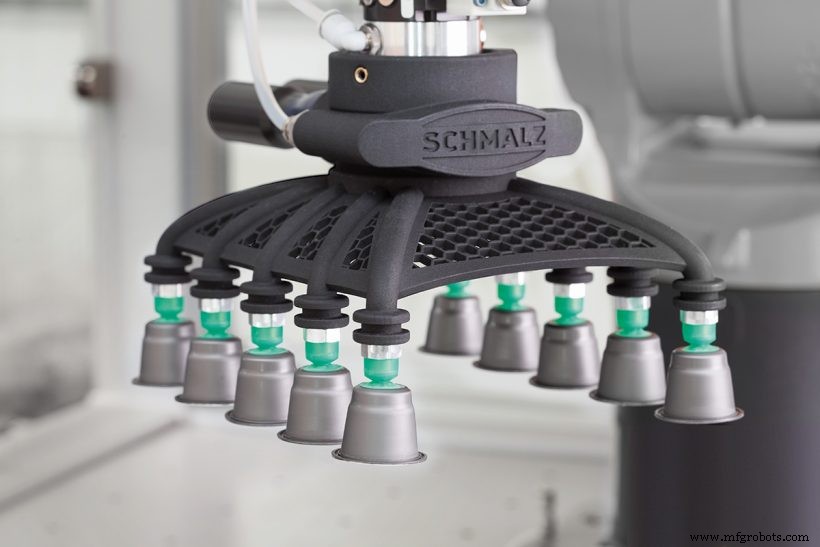
[Image credit: Schmalz]
3D printing is a cornerstone of modern industrial robotics, offering unparalleled design freedom, cost efficiency, and rapid turnaround for custom grippers and end‑effectors.
In an era where customization is becoming the norm in automation, additive manufacturing delivers tailored grippers without the heavy upfront costs of molds or CNC machining.
Below we examine the key benefits of 3D‑printed grippers and showcase how leading companies are leveraging this technology to create advanced, faster, and cheaper solutions.
Explore other 3D‑Printing applications in our series:
- 3D Printing for Heat Exchangers
- 3D Printing for Bearings
- 3D Printing for Bike Manufacturing
- 3D Printing for Digital Dentistry & Clear Aligner Manufacturing
- 3D Printing for Medical Implants
- 3D‑Printed Rockets and the Future of Spacecraft Manufacturing
- 3D Printing for Footwear Manufacturing
- 3D Printing for Electronic Components
- 3D Printing in the Rail Industry
- 3D‑Printed Eyewear
- 3D Printing for End‑Part Production
- 3D Printing for Brackets
- 3D Printing for Turbine Parts
- How 3D Printing Enables Better‑Performing Hydraulic Components
- How 3D Printing Supports Innovation in the Nuclear Power Industry
- 3D Printing for Aircraft Cabins
Evolution of Robotic Grippers Through Additive Manufacturing
As robotics proliferate across automotive, electronics, and food processing, grippers must evolve to meet new performance demands. They are becoming lighter, custom‑engineered, and safer—capabilities that traditional manufacturing struggles to deliver at scale.
Conventional methods such as injection moulding or machining are expensive for low‑volume, high‑customization runs. Additive manufacturing’s flexibility and speed close this gap, enabling rapid iteration and cost‑effective production.
Core Advantages of 3D‑Printed Grippers
Lightweighting
Smaller robots require smaller, lighter grippers to maintain agility. 3D printing allows designers to craft intricate geometries that use minimal material and incorporate lightweight composites like carbon‑fibre, reducing weight while preserving—or even enhancing—load capacity.
Lower mass translates to faster robot motions and shorter cycle times, directly boosting throughput.
Customisation
High‑mix, low‑volume production demands bespoke gripper solutions. 3D printing eliminates the need for expensive tooling, enabling companies to produce one‑of‑a‑kind designs on demand and at a fraction of the cost.
Part Consolidation
Traditional grippers often comprise dozens of parts. Additive manufacturing can consolidate these into a single component, cutting manufacturing time, reducing assembly steps, and lowering inventory complexity.
Enhanced Safety
Collaborative robots (cobots) require grippers that are safe around human operators. 3D printing’s design freedom allows for rounded housings free of sharp edges, and rapid prototyping facilitates iterative safety testing without costly tooling changes.
Case Studies: 3D Printing in Action
1. An 86% Lighter, 50% Cheaper Gripper
Kuhn‑Stoff GmbH & Co KG achieved an 86% weight reduction and a 50% cost saving for a bronchial gripper used by Wittmann Robot Systeme GmbH by switching from a multi‑component aluminium assembly to a single nylon part produced with Powder Bed Fusion (PBF).
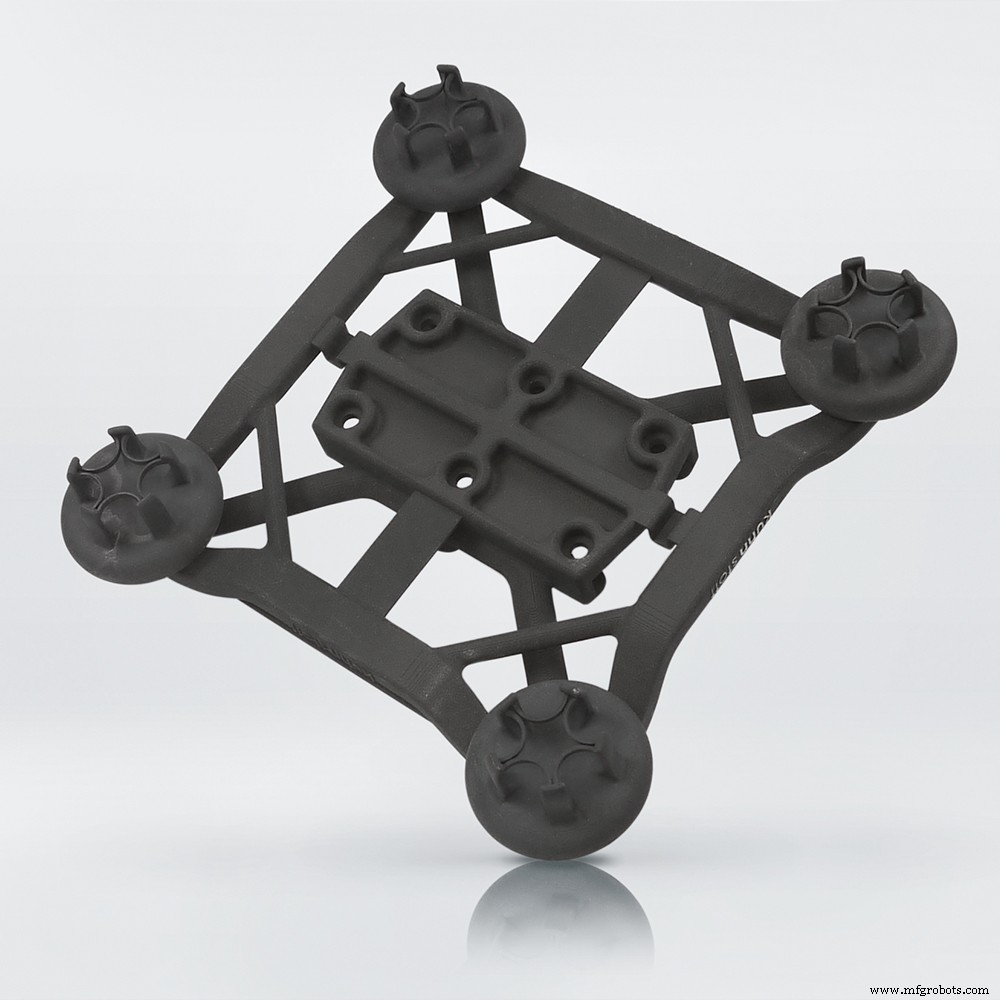
The redesign cut the component count from 21 to just 2, integrated pneumatic ducts directly into the base plate, and withstood five million cycles without failure.
2. Simplifying Automotive Grippers with Multi‑Jet Fusion
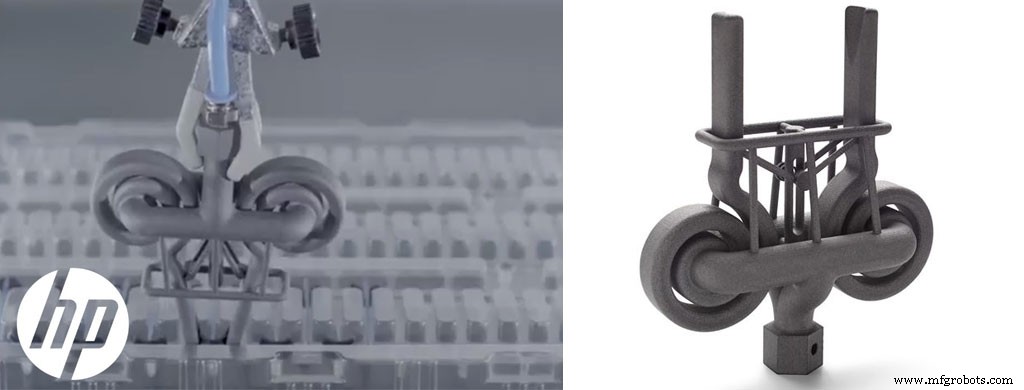
IAM 3D Hub leveraged HP’s Multi‑Jet Fusion to reduce part count by 80%, streamline the coupling mechanism, and cut installation time by 40% for automotive production grippers.
3. Schmalz: Rapid, Custom Vacuum Grippers
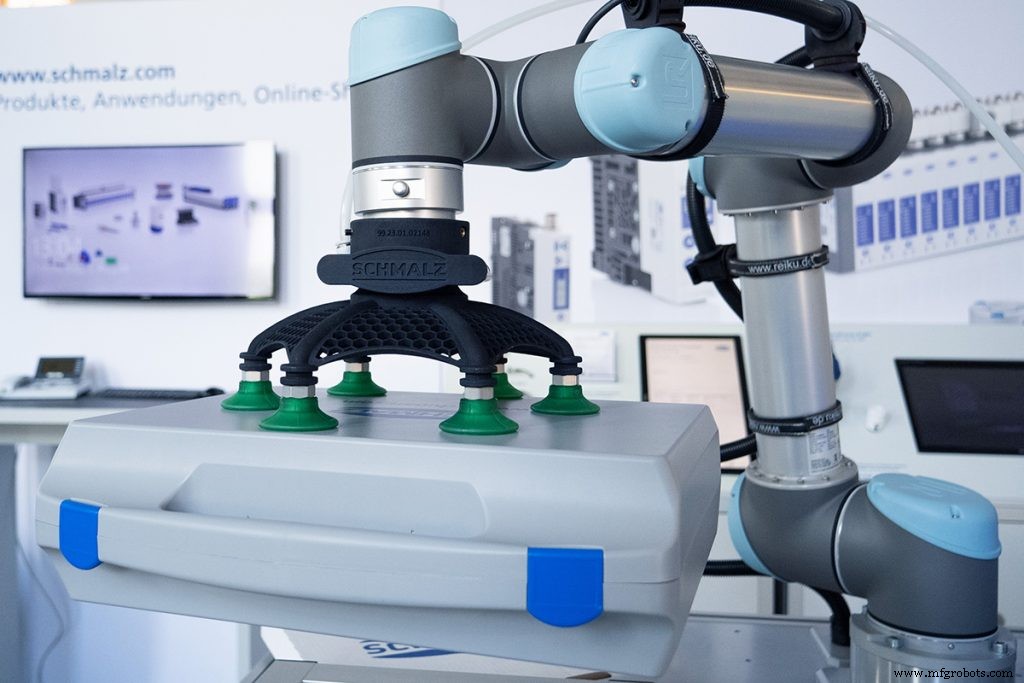
Schmalz partnered with Trinckle 3D to develop an app that configures custom vacuum grippers in about 10 minutes, without requiring CAD expertise. 3D printing turns these designs into lightweight, robust units that can lift up to 10 kg.
4. Accelerating Packaging Line Change‑Overs
Carecos Kosmetic GmbH faced lengthy lead times for aluminium grippers that cost up to €10,000 each. Switching to material extrusion 3D printing produced a new gripper in 12 hours, saving 85% of cost and 70% of manufacturing time, while producing a plastic part seven times lighter.
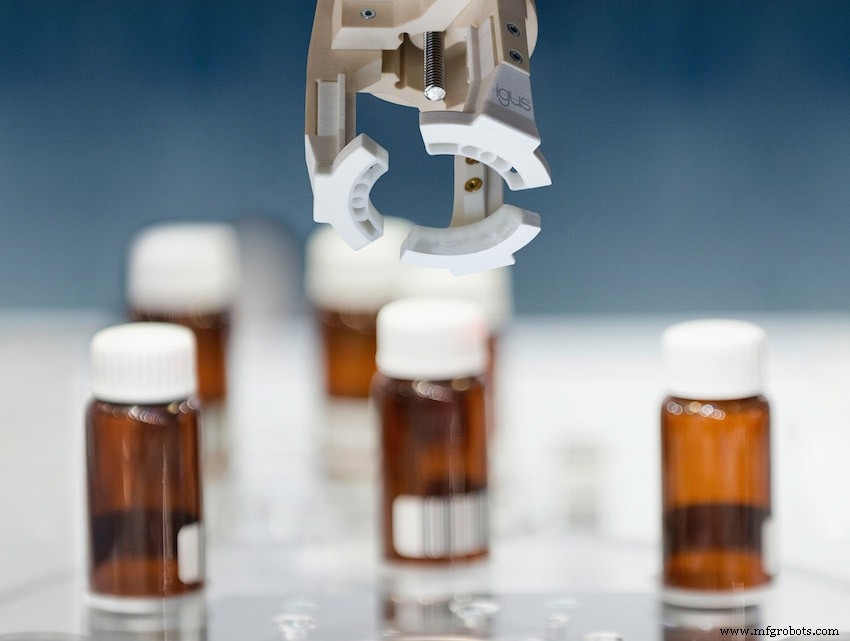
5. Soft‑Robotic Grippers for Next‑Gen Applications
ACEO, a division of Wacker Chemie AG, pioneered a drop‑on‑demand silicone 3D printing process that cures UV‑sensitive droplets layer by layer. This technology enabled Formhand to prototype versatile soft grippers quickly and cheaply.
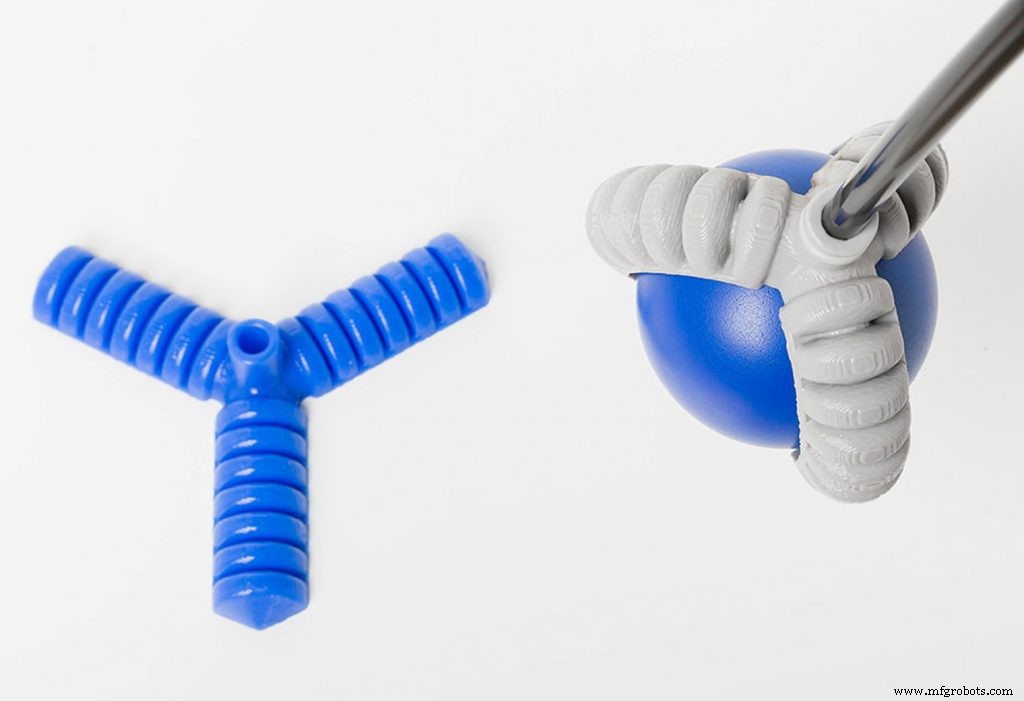
Soft‑grippers open doors to micro‑gripping, multi‑material designs, with future applications ranging from jet‑engine maintenance to minimally invasive surgery.
Future Outlook: 3D Printing as the Catalyst for Advanced Gripper Design
As manufacturing trends shift toward digital, smart, and flexible production, 3D printing will remain the most efficient path to create dexterous, lightweight, and custom grippers. The technology not only reduces cost and lead time but also enhances robot performance by lowering overall system weight.
Continued innovation in materials, process speed, and integration with digital design tools will further expand the possibilities for robotic gripping solutions.
3D printing
- Revolutionizing Bone Implants: How 3D Printing Enhances Fit, Longevity, and Performance
- 3D Printing Revolutionizes Clear Aligners in Digital Dentistry
- Application Spotlight: 3D Printing Transforms Bike Manufacturing
- Application Spotlight: 3D Printing Revolutionizes Bearing Design and Production
- 3D Printing Revolutionizes Heat Exchangers: Lighter, Smarter, Faster
- Revolutionizing Footwear: 3D Printing Drives Innovation, Customization, and Faster Time to Market
- 3D‑Printed Eyewear: From Prototyping to Customization—Industry Trends & Case Studies
- 3D Printing for Turbine Parts: Accelerating Development, Performance, and Sustainability
- 3D‑Printed Brackets: Optimizing Strength, Weight, and Production Efficiency
- How 3D Printing Is Revolutionizing Aircraft Cabin Interiors