



Application Spotlight: 3D Printing Drives Innovation in Nuclear Power
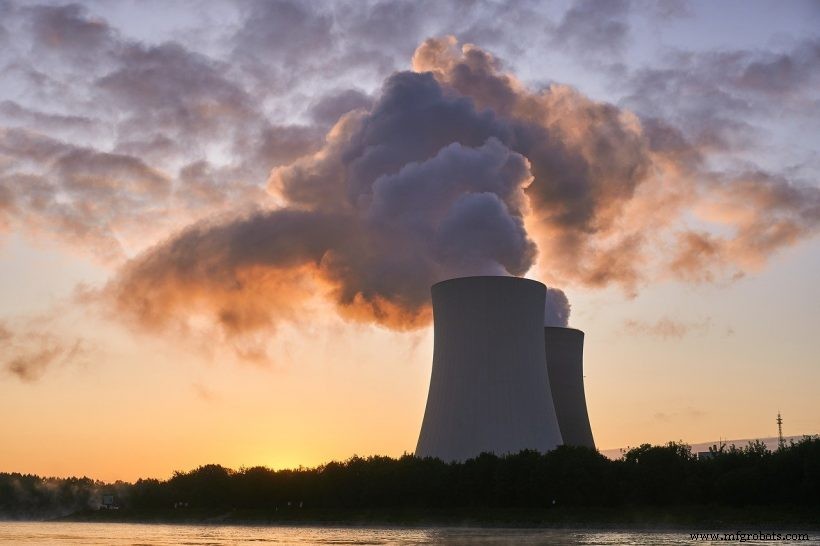
3D printing—an advanced additive manufacturing technology—is reshaping both existing and future nuclear facilities. While the nuclear sector is traditionally conservative, it is increasingly leveraging 3D printing to create spare parts, develop advanced components, and streamline decommissioning efforts.
In this article we examine the drivers behind this adoption and highlight the most exciting breakthroughs in nuclear applications of 3D printing.
- 3D Printing for Heat Exchangers
- 3D Printing for Bearings
- 3D Printing for Bike Manufacturing
- 3D Printing for Digital Dentistry & Clear Aligner Manufacturing
- 3D Printing for Medical Implants
- 3D-Printed Rockets and the Future of Spacecraft Manufacturing
- 3D Printing for Footwear Manufacturing
- 3D Printing for Electronic Components
- 3D Printing in the Rail Industry
- 3D-Printed Eyewear
- 3D Printing for End-Part Production
- 3D Printing for Brackets
- 3D Printing for Turbine Parts
- How 3D Printing Enables Better-Performing Hydraulic Components
Why Adopt 3D Printing for Nuclear Plant Parts?
The nuclear industry faces a paradox: the construction of new large reactors is stalling due to escalating costs, while older plants—many exceeding 40 years—require costly, hard‑to‑source replacement parts. Simultaneously, decommissioning is accelerating, and small modular reactors (SMRs) are emerging as a cost‑effective alternative. 3D printing offers the design flexibility and rapid production needed to meet these challenges.
Key benefits include:
- Elimination of tooling costs and time, allowing rapid turnaround.
- Complex geometries that reduce part count and improve performance.
- Potential for local material customization—e.g., hard‑facing for corrosion resistance.
- Enabling repair and refurbishment of critical components.
3D Printing Technologies for the Nuclear Power Industry
Several additive manufacturing (AM) methods are already in use or under investigation:
- Powder Bed Fusion (PBF) – lasers melt metal powders to produce intricate, high‑performance parts.
- Binder Jetting (metal and sand) – creates cost‑effective molds or final parts with complex internal channels.
- Direct Energy Deposition (DED) – melts material on‑the‑fly, ideal for large castings, forgings, and on‑site repairs.
Key 3D Printing Applications in the Nuclear Power Industry
Replacement Parts
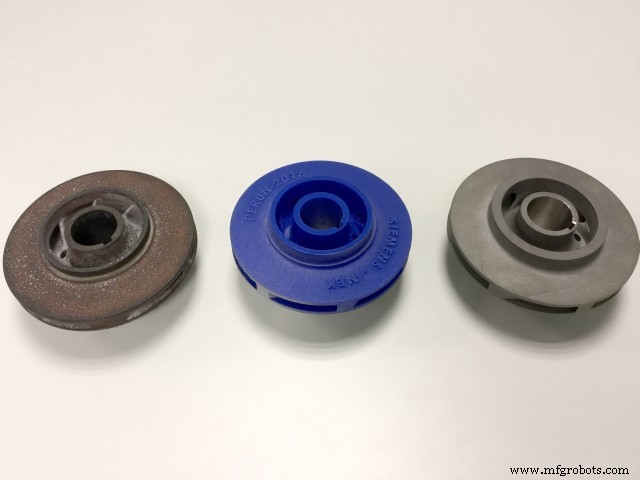
Many nuclear plants lack spare parts due to obsolescence or discontinued manufacturers. 3D printing, combined with reverse engineering, enables rapid production of missing components. For example, Hydro Inc. designed and printed a sand mold for a nuclear impeller, which a foundry then cast into metal. When an OEM could not supply a safety‑related pump in time, Hydro delivered a 3‑D‑printed replacement within 12 weeks—a fraction of the 9‑12 month lead time of conventional casting.
In 2017, Siemens successfully installed a 3‑D‑printed metallic impeller (108 mm diameter) in the Krško nuclear power plant’s fire‑protection pump, demonstrating compliance with the industry’s stringent safety and reliability standards. Such milestones prove that additive manufacturing can meet nuclear‑grade requirements.
Advanced Components
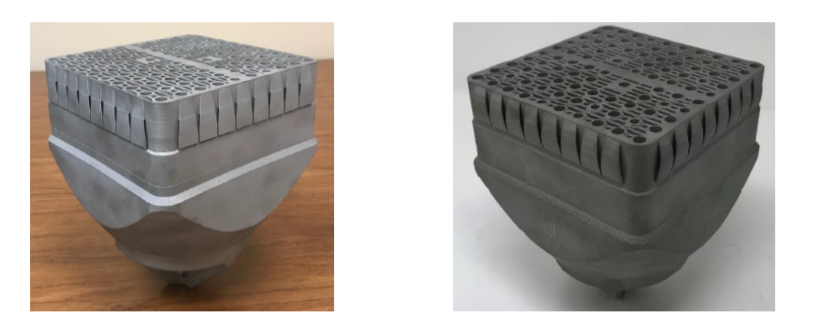
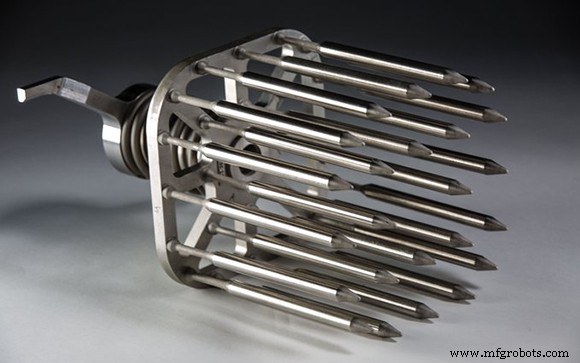
NovaTech is pioneering 3‑D‑printed parts for nuclear fuel assemblies, including bottom nozzles, hold‑down springs, top nozzles, and BWR lower tie plates. By printing lower tie plates in Inconel‑718 with tortuous flow passages, NovaTech has shown improved debris‑filtering performance and the possibility of integrating channel seals—reducing part count and simplifying assembly.
A 3‑D‑Printed Nuclear Reactor Core
Oak Ridge National Laboratory’s Transformational Challenge Reactor (TCR) program aims to build a fully 3‑D‑printed reactor core by 2023, using silicon carbide for its high‑temperature resistance. Although most reactor components remain conventional, the core—housing uranium fuel and control mechanisms—will be fabricated entirely by additive manufacturing, enabling novel sensor integration and accelerated qualification pathways.
A 3‑D‑Printed Plugging Device
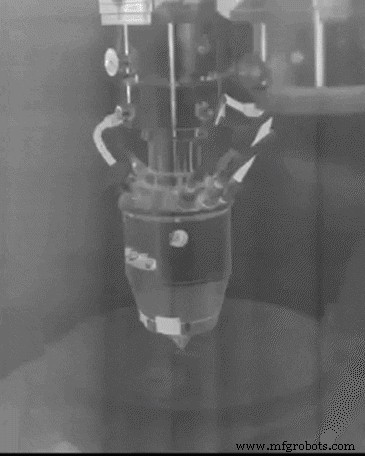
Westinghouse, in partnership with Exelon Generation, recently installed a 3‑D‑printed thimble plugging device that lowers fuel assemblies into reactor cores. Developed over three years, the device demonstrates how additive manufacturing can replace low‑risk, high‑reliability parts traditionally cast or forged.
3‑D‑Printed Parts for Nuclear Waste Management
Argonne National Laboratory has printed 1.25 cm centrifugal contactors—complex fluid devices with internal channels—to facilitate continuous reprocessing of spent nuclear fuel. While current recycling rates capture 95 % of spent fuel, these new components could reclaim an additional 2 % of the remaining 5 % long‑term waste, potentially reducing storage volumes and hazard duration.
3‑D Printing for Embedded Sensors
Embedding sensors in heat‑ and radiation‑resistant materials is critical for real‑time reactor monitoring. ORNL’s ultrasonic AM process allows integration of radiation‑hard sensors directly into components, while the University of Pittsburgh Swanson School of Engineering, funded by the DOE, has achieved a first in‑core fibre‑optic sensor test at MIT’s reactor. These advances promise more precise monitoring of temperature, pressure, and structural integrity.
New Materials for Nuclear Applications
Next‑generation nuclear plants demand materials that withstand high temperatures, corrosive environments, and intense irradiation. Additive manufacturing accelerates alloy development and enables fabrication of otherwise difficult materials, such as silicon. A recent collaboration between Additive Composite Uppsala and Add North 3D produced Addbor N25, a nylon‑based filament infused with boron carbide for effective neutron shielding. This material demonstrates how 3‑D printing can deliver tailored radiation‑shielding solutions.
Revamping the Nuclear Industry with 3D Printing
While the full potential of additive manufacturing in nuclear engineering is still emerging, the current breakthroughs indicate transformative impact: faster component turnaround, reduced part count, advanced material properties, and cost savings for both new and aging plants. As the industry embraces this technology, we anticipate further innovations that will enhance safety, sustainability, and operational efficiency.
3D printing
- Tungsten: The Backbone of Modern Aerospace Technology
- How 3D Printing Is Revolutionizing Defence – Benefits, Challenges, and Future Applications
- How 3D Printing is Revolutionizing Automotive Production – 2021 Insights
- How 3D Printing is Revolutionizing Spare Parts Management – 2021 Update
- 3D Printing Revolutionizes the Rail Industry: Case Studies & Benefits
- How 3D Printing Revolutionizes Hydraulic Component Design and Performance
- How 3D Printing is Combatting COVID‑19 Supply Shortages
- Revolutionizing Food & Beverage: How 3D Printing Drives Innovation and Efficiency
- Revolutionizing Cars: How 3D Printing Is Transforming Automotive Design and Production
- How 3D Printing is Driving Innovation in the Automotive Industry