



Tungsten: The Backbone of Modern Aerospace Technology

Tungsten: The Backbone of Modern Aerospace Technology
Tungsten is the most heat‑resistant metal and boasts the highest density and strength among refractory metals. When alloyed, it delivers exceptional wear resistance, corrosion resistance, electrical conductivity, and thermal conductivity—qualities that make it indispensable for aerospace components ranging from satellites to hypersonic vehicles.
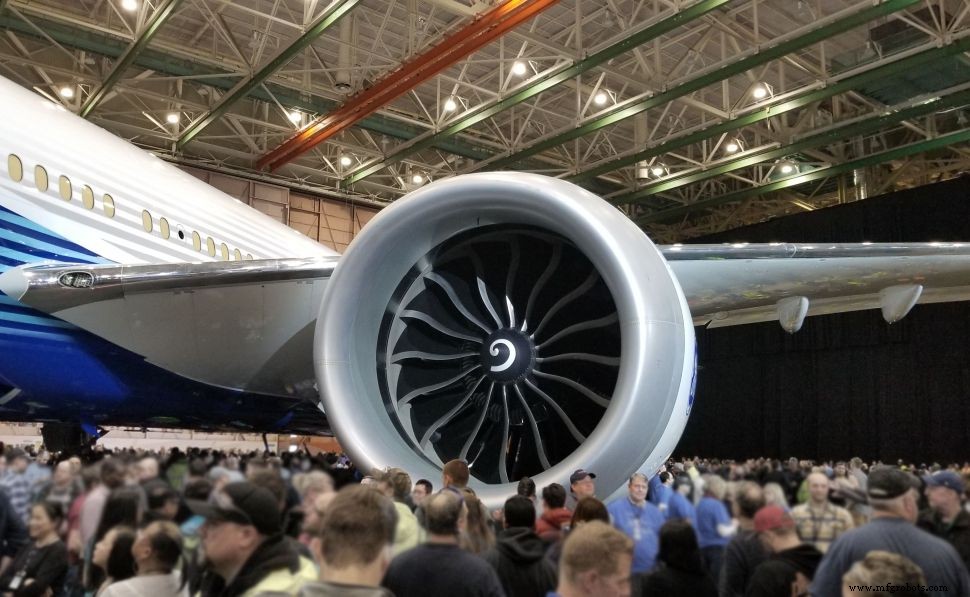
Tungsten’s role in aerospace engineering
The design and safety of aerospace systems depend heavily on the physical, chemical, and mechanical properties of their constituent materials. Tungsten’s unique combination of strength, heat tolerance, and stability fulfills these rigorous demands, enabling its widespread use in critical components of satellites, aircraft, and engines.
1. Gyroscopes
Gyroscopes are central to the navigation and control of spacecraft, missiles, aircraft, submarines, and torpedoes. Using tungsten alloy for the rotor increases the gyro’s mass, which in turn raises its stability and improves control precision. This leads to more reliable guidance systems under extreme conditions.
2. Solid Rocket Motors
Tungsten and its alloys serve in uncooled rocket nozzles, ion rings, jet blades, hot‑gas reflectors, and gas rushers. Replacing molybdenum with tungsten in inlet sleeves and throat liners can raise operational temperatures from 1,760 °C to 3,320 °C and beyond. For example, the Polaris A‑3 missile’s nozzles are fabricated from high‑temperature tungsten tubes with 10–15 % silver, and the Apollo rockets also employed tungsten components.
3. Aircraft Structures
Tungsten alloy is used for static and dynamic counterweights on ailerons, rudders, and helicopter rotors, as well as in shock absorbers and lift‑control systems. High‑density tungsten alloys are key in engines such as the Spey, where they form counterweight blocks for speed and fuel controllers. Satellites frequently use tungsten alloy balls as nutation dampers, reducing residual oscillations to below 0.1 ° and achieving international performance standards.
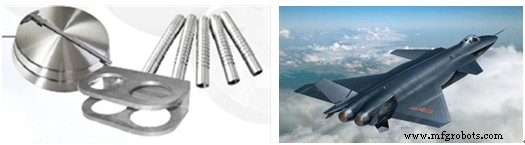
Tungsten’s critical role in aerospace components
4. Hypersonic Vehicles
The W‑Cu composite, produced through controlled pressing, sintering, and copper or silver infiltration, can withstand combustion temperatures exceeding 3,400 °C. It is suitable for rocket engine nozzle baffles, hypersonic aircraft leading edges, and re‑entry thermal shields. U.S. hypersonic prototypes have incorporated roughly 400 kg of tungsten, excluding the nose cone. The Joint Technology Center has also developed boron‑coated tungsten wire, which offers high strength, low density, and high stiffness for rocket shells and spacecraft frames.
5. Tungsten Nozzles
Adding rhenium to tungsten improves its high‑temperature performance and room‑temperature ductility, lowering the plastic‑brittle transition temperature. Tungsten‑rhenium alloys exhibit excellent wear resistance and weldability, with room‑temperature tensile strengths up to 3,260 MPa. These alloys are ideal for nuclear reactor components in space stations, and their thermal stability protects rocket nozzles from corrosion.
Summary
This overview highlights tungsten’s pivotal applications in aerospace—from gyroscopes to hypersonic vehicles. For deeper insights into tungsten and other refractory metals, visit Advanced Refractory Metals (ARM), headquartered in Lake Forest, California, and recognized for delivering high‑quality refractory metal products to engineering projects worldwide.
Metal
- Enhancing Tungsten‑Copper Alloy Performance: Proven Strategies and Processing Techniques
- Tungsten: The Backbone of Modern Aerospace Innovation
- How Ultrasonic Cleaning Machines Transform Every Industry
- How Cadmium Affects Human Health: Sources, Exposure, and Risks
- Aerospace Industry Navigates COVID-19: Strategies for Resilience and Recovery
- Revolutionizing Aerospace: How Additive Manufacturing Enhances Performance and Efficiency
- Preparing Tomorrow’s Workforce for Industry 4.0: Training Strategies for the Digital Factory
- Transforming Manufacturing: The Power of SaaS Software
- Robots Transforming Aerospace Production: Precision & Reliability
- How 3D Printing Enhances Aerospace Innovation and Efficiency