



Enhancing Tungsten‑Copper Alloy Performance: Proven Strategies and Processing Techniques
Enhancing Tungsten‑Copper Alloy Performance
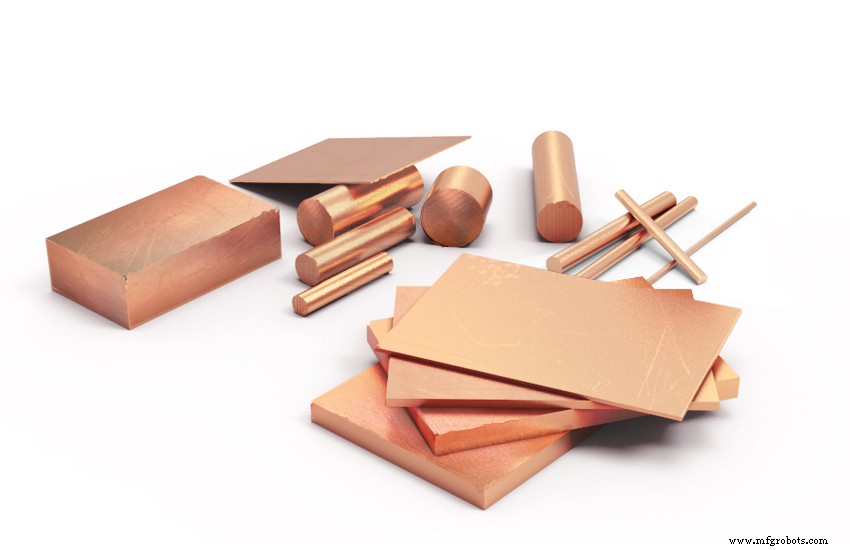
Tungsten‑copper alloy is a composite of tungsten and copper, typically containing 10%–50% copper by weight. Produced via powder metallurgy, it offers excellent electrical and thermal conductivity, high‑temperature strength, and useful plasticity. This guide explains how to elevate its performance for demanding modern applications.
How to Improve the Performance of Tungsten Copper Alloy?
Key Challenges
The alloy’s constituent metals are immiscible and do not form intermetallics, creating a pseudo‑alloy with a two‑phase microstructure. Overcoming this mutual insolubility while preserving the advantageous properties of both metals is the central engineering hurdle.
Strategies for Superior Performance
Two complementary approaches are widely used: producing ultrafine tungsten‑copper powder and refining the pressure‑densification process. Both aim to increase compactness, reduce defects, and boost mechanical and conductive properties.
Ultrafine Powder Production Techniques
Below are six established methods for generating fine, uniform tungsten‑copper powders. In practice, combinations of these techniques are often employed to meet specific production targets.
- Mechanical Alloying: Ball‑mill tungsten and copper powders at controlled speeds and durations to refine particle size.
- Sol‑Gel Method: Yields homogeneous powders with high purity and large surface area, simplifying downstream shaping.
- Spray Drying: Produces tungsten and copper oxide powders, which are then reduced to the metallic composite.
- Oxide Co‑Reduction: Pre‑mixes tungsten and copper oxides for even distribution before reduction, resulting in ultra‑fine, uniform powders.
- Mechanical–Thermochemical Synthesis: Combines mechanical alloying of oxides with a reduction step to form the composite.
- Precipitation Method: Forms the alloy from a liquid phase, followed by calcination and reduction to obtain the final powder.
Advanced Densification Processes
Improving the density and uniformity of the final product is essential for maximizing performance. The main pressure‑processing techniques are:
- Hot Isostatic Pressing (HIP): Eliminates voids and shrinkage, leveraging copper’s ductility to enhance overall properties, though it requires costly equipment.
- Hydrostatic Extrusion: Uses fluid pressure for uniform deformation, significantly increasing density, strength, and conductivity.
- Hot Forging & Rolling: Conventional deformation methods that further refine mechanical properties and microstructure.
Practical Recommendations
To achieve optimal results:
- Choose a powder synthesis route that balances particle size, purity, and scalability.
- Employ a densification method suited to the desired product geometry and performance targets.
- Control processing parameters—temperature, pressure, and dwell time—to minimize defects.
- Perform post‑processing heat treatments to relieve residual stresses and improve phase distribution.
By integrating these strategies, manufacturers can produce tungsten‑copper alloys with superior conductivity, strength, and high‑temperature stability.
Further Resources
For in‑depth technical support and high‑quality tungsten, molybdenum, tantalum, rhenium, titanium, and zirconium alloys, visit Advanced Refractory Metals (ARM), a global leader headquartered in Lake Forest, California.
Metal
- Tungsten Silver vs. Tungsten Copper Alloys: Key Differences & Applications
- Tungsten‑Copper Alloy: The Engine Behind Rocket Throat Lining Performance
- Tungsten Copper Alloy vs Tungsten Nickel‑Iron Alloy: A Technical Comparison
- Tungsten–Copper Alloys: Key Properties, Manufacturing, and Applications
- Tungsten‑Nickel‑Copper Alloy Shield: Advanced Lead‑Free Radiation Protection
- Tungsten‑Copper vs. Molybdenum‑Copper Alloys: Key Differences & Applications
- Optimizing Tungsten Powder: Key Performance Drivers
- Tungsten–Nickel–Copper Alloys: Key Properties & Industry Applications
- Maximize Efficiency: Proven Strategies to Boost Fluid System Performance
- Copper Tungsten Electrodes: Unmatched Performance for EDM Applications