



Tungsten Copper Alloy vs Tungsten Nickel‑Iron Alloy: A Technical Comparison
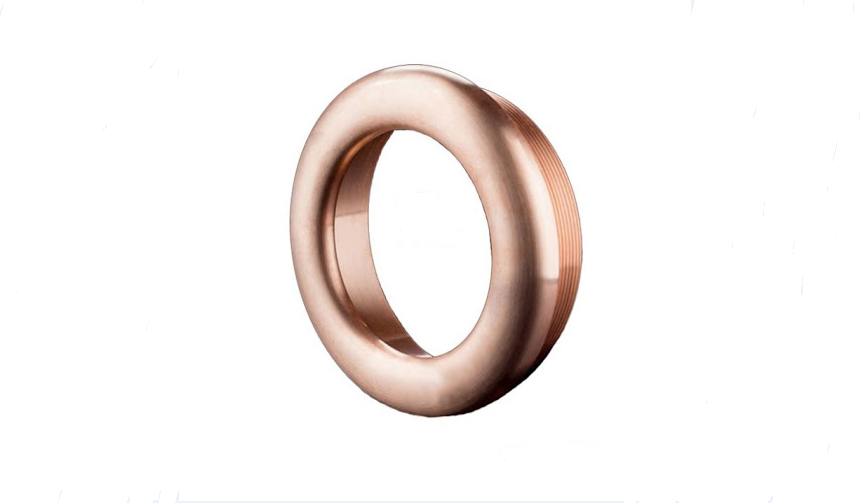
Tungsten Copper Alloy vs Tungsten Nickel‑Iron Alloy
Tungsten-based alloys are prized for their high density, strength, and low thermal expansion. Among them, tungsten‑copper (W‑Cu) and tungsten‑nickel‑iron (W‑Ni‑Fe) are the most widely used. Though both share similar core characteristics, their binder phases give them distinct mechanical, electrical, and thermal properties that make each suitable for different applications.
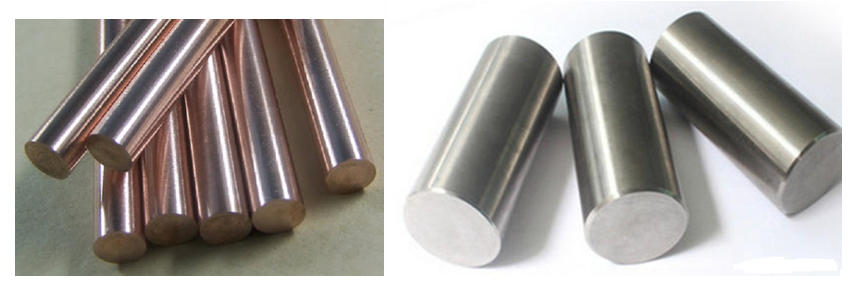
Tungsten Copper Alloy vs Tungsten Nickel Iron Alloy
1. Tungsten‑Copper (W‑Cu) Alloy
W‑Cu is a composite of tungsten (W) and copper (Cu) with copper content ranging from 6 % to 45 %. The high electrical and thermal conductivity of copper imparts excellent heat‑dissipation and electro‑chemical performance to the alloy.
- Electrical conductivity: 10–15 % IACS (copper equivalent)
- Thermal conductivity: 50–120 W m⁻¹ K⁻¹, depending on Cu content
- Applications: high‑voltage switches, electric machining electrodes, microelectronics packaging, aerospace components (missile nose cones, rocket engine nozzles, gas and air rudders)
When subjected to temperatures above 3,000 °C, the copper phase melts and vaporises, absorbing significant heat and thereby reducing surface temperature—a phenomenon known as metal sweating. This makes W‑Cu ideal for high‑temperature aerospace applications.
Manufacturing methods: powder metallurgy, injection moulding, copper‑oxide powder method, tungsten frame infiltration.
2. Tungsten‑Nickel‑Iron (W‑Ni‑Fe) Alloy
W‑Ni‑Fe consists of 90–98 % tungsten with a mixture of nickel and iron (typically 7:3 or 1:1). While its electrical and thermal conductivities are lower than W‑Cu, it offers superior tensile strength and ductility.
- Tensile strength: up to 1,800 MPa
- Ductility: 4–7 % elongation
- Applications: counterweights, radiation shielding, military equipment, high‑temperature electrical components
Because the binder phases are metallic alloys rather than pure copper, W‑Ni‑Fe does not experience the metal‑sweating effect and can maintain structural integrity at very high temperatures.
Manufacturing method: powder metallurgy.
Key Differences at a Glance
| Property | W‑Cu | W‑Ni‑Fe |
|---|---|---|
| Copper content | 6–45 % | None |
| Electrical conductivity | High (10–15 % IACS) | Low |
| Thermal conductivity | High (50–120 W m⁻¹ K⁻¹) | Moderate |
| Strength | Good | Superior |
| Ductility | Moderate | High |
| High‑temperature behaviour | Metal‑sweating above 3,000 °C | Stable |
Conclusion
Both W‑Cu and W‑Ni‑Fe are high‑performance tungsten alloys, yet their distinct binder phases tailor them to different mission profiles. Choose W‑Cu when electrical conductivity and rapid heat dissipation are critical; opt for W‑Ni‑Fe for applications demanding extreme strength, ductility, and thermal stability.
For a deeper dive into refractory metals and alloy solutions, visit Advanced Refractory Metals (ARM), a leading supplier based in Lake Forest, California.
Metal
- Tungsten‑Copper Alloy: The Engine Behind Rocket Throat Lining Performance
- Tungsten‑Nickel‑Iron Alloys: Key Applications in Modern Industry
- Tungsten‑Copper Alloys: The High‑Performance Material for Microelectronics Packaging
- Tungsten–Nickel–Iron Alloy Production: From Powder Blend to Final Sintering
- Tungsten–Nickel–Copper Alloys: The Lead‑Free Solution for Advanced Medical X‑Ray Shielding
- Tungsten–Copper Alloys: Key Properties, Manufacturing, and Applications
- Tungsten‑Nickel‑Copper Alloy Shield: Advanced Lead‑Free Radiation Protection
- Tungsten–Nickel–Iron Alloys: Properties, Applications, and Processing
- Tungsten‑Copper vs. Molybdenum‑Copper Alloys: Key Differences & Applications
- Tungsten–Nickel–Copper Alloys: Key Properties & Industry Applications