



Revolutionizing Food & Beverage: How 3D Printing Drives Innovation and Efficiency
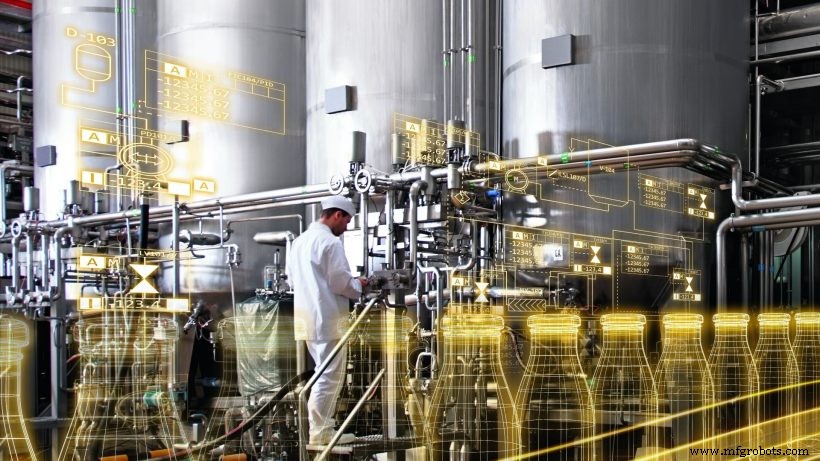
With ever‑changing consumer demands, supply‑chain volatility, and rising costs, the food and beverage sector is undergoing rapid transformation.
Small suppliers aim to reduce production costs, while large producers push for higher volumes. Both groups are seeking technologies that can help them navigate these challenges.
3D printing has emerged as a key tool in product development and production lines, enabling process optimisation and cost reduction.
Below we explore the most impactful application areas and showcase real‑world examples of 3D printing in action.
Current Applications of 3D Printing in Food & Beverage
Accelerated Packaging Development
Packaging is the first point of contact between a brand and its consumers, influencing perception and purchase decisions. Traditional packaging design requires multiple costly iterations and mould manufacturing.
3D printing eliminates the need for moulds; a digital design file can be printed within hours, producing prototypes that closely mimic the final product’s look, feel, colour, and material.
For instance, Thermos has relied on in‑house 3D printing since 2006 to prototype insulated containers. The shift from outsourced prototyping reduced prototype lead time from five days to a matter of hours, allowing rapid optimisation of cap fit and pouring performance on its flagship Thermos mugs.
On‑Demand Spare Parts for Production Lines
Downtime in beverage filling plants—operating at 40,000 to 80,000 units per hour—can cost manufacturers $4,000 to $30,000 per hour of lost production. Traditional spare‑part sourcing may take days, eroding profitability.
3D printing enables on‑demand manufacturing of critical components, cutting downtime and postponing costly capital expenditures. Rapid prototyping also facilitates iterative testing, ensuring parts meet stringent food‑industry safety standards.
Cost‑Effective Ergonomic Tools
In‑house 3D printing allows rapid creation of maintenance, safety, assembly, ergonomic, quality‑assurance, and alignment tools. Design flexibility means tools can be tailored for optimal human ergonomics, improving worker safety and task accuracy.
- Maintenance tools
- Safety tools
- (Dis)assembly tools
- Ergonomic tools
- Quality‑assurance tools
- Spacer & alignment tools
Case Studies: 6 Industry‑Leading Examples
1. Pepsi’s 3D‑Printed Black Panther Mask

Pepsi collaborated with Protolabs to produce 250 Black Panther masks for its limited‑edition soda cans. Mould production would have been prohibitively expensive, but 3D printing offered design flexibility and rapid low‑volume manufacturing.
The team first used material extrusion prototypes, then refined the design for durability. Final production employed HP’s Multi‑Jet Fusion, delivering a high‑quality finish at lower cost.
Within six months, the masks were ready, amplifying the promotional campaign’s impact and demonstrating 3D printing’s ability to accelerate innovative packaging concepts.
2. Redesigning Brewing Equipment with GE Additive
Kaspar Schulz, a heritage brewing‑equipment manufacturer, partnered with GE Additive to re‑engineer a racking arm inside a Lauter Tun. The new design features a thinner blade with internal channels, enhancing grain separation and water distribution.
GE and Kaspar Schulz used additive manufacturing to reduce the number of joints and seals, improving reliability and yield. The redesign is expected to shorten processing time and boost production efficiency.
3. 3D‑Printed Grippers for Food Processing
Robotic grippers customized via 3D printing are essential for handling delicate or irregular food items. Marel, an Icelandic food‑processing firm, partnered with the Danish Technological Institute to develop nylon grippers that safely lift meat fillets.
The lightweight design allows faster arm movements, reducing cycle time and improving throughput. Marel can produce a new gripper on demand in just three days, cutting inventory costs and enhancing flexibility.
4. Optimised End‑of‑Arm Tooling for Packaging
Langen Group, supplying equipment to a major U.S. food producer, collaborated with Anubis 3D to create a lightweight end‑of‑arm tool that picks and places stacked crackers into cartons.
Using topology‑optimisation software, the design was engineered for strength while staying under one kilogram. 3D‑printed nylon tooling delivered four times the gripping force of conventional vacuum grippers and required less air pressure.
5. Krones’ 3D‑Printed Can Twister
German packaging specialist Krones developed a thermoplastic can twister that inverts beer cans 180° after filling and sealing, enabling pasteurisation while standing upside down.
Multiple iterations were needed to refine the motion sequence, but additive manufacturing shortened the development cycle and ensured high repeatability—challenges that manual machining struggled to meet.
Testing achieved a throughput of 150,000 cans per hour, and Krones plans to standardise the component across its new canning lines.
6. Heineken’s In‑House 3D‑Printing Initiative
Heineken’s Spanish brewery adopted Ultimaker extrusion printers for two years, discovering significant savings in time and cost by producing custom plastic tools and parts.
Replacing a metal can pusher with a 3D‑printed plastic alternative reduced cost and lead time. A stopper tool for label‑applying wheels cut costs by 70% and delivery time from three days to one.
Overall, Heineken reported an 80% reduction in part costs and a 80% faster delivery, illustrating the tangible benefits of in‑house additive manufacturing.
3D Printing: A Catalyst for Efficiency in Food & Beverage
Industry leaders are turning to 3D printing to streamline packaging, secure on‑demand spare parts, and develop advanced tooling—all while cutting costs and shortening lead times.
As supply chains remain volatile and consumer expectations evolve, additive manufacturing offers a flexible, scalable solution that positions food and beverage companies to thrive in an uncertain future.
3D printing
- How 3D Printing Is Revolutionizing Defence – Benefits, Challenges, and Future Applications
- How 3D Printing is Revolutionizing Automotive Production – 2021 Insights
- The Pandemic’s Impact on 3D Printing: From Decline to Resurgence
- How 3D Printing is Driving Innovation in the Automotive Industry
- Digitalisation in Food & Beverage: Enhancing Safety, Traceability, and Efficiency
- Navigating the Food & Beverage Industry: Challenges & Opportunities for 2024
- Why Product Traceability Is Crucial for Food & Beverage Safety
- Solving the Driver Shortage: Proven Strategies for the Food & Beverage Sector
- Food & Beverage Manufacturing: From Farm to Table – Overcoming Industry Challenges
- Mastering 3D Printer Flow: Definition, Significance, and Calibration Tips