



Interview with Origin CEO Chris Prucha: Advancing Additive Manufacturing through Open Materials
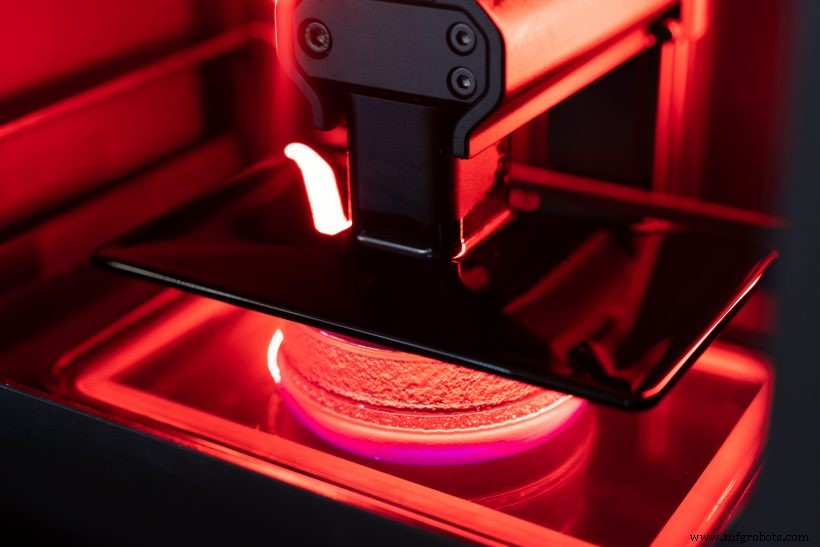
Resin‑based 3D printing has moved beyond rapid‑prototyping into true production capability. Origin, founded in 2015 by two software engineers, is leading this transition with a platform that unites software‑driven control, modular hardware, and an open‑materials philosophy.
We sat down with Origin’s CEO and co‑founder, Chris Prucha, to explore the company’s vision, the technical edge of the Origin One printer, and why an open ecosystem matters for additive manufacturing’s future.
What is Origin and the technology behind it?
Based in San Francisco, CA, Origin pioneers Open Additive Manufacturing—a model that combines extensible software, modular hardware, and a material‑agnostic approach. The flagship Origin One printer employs programmable photopolymerization (P3), giving precise control over light, heat, and force to deliver parts with unmatched accuracy and repeatability.
Origin collaborates with a network of material partners to develop commercial‑grade resins, producing some of the toughest and most resilient materials in the industry.
How does Origin’s technology compare to other vat‑polymerization systems?
While recent advances have improved part quality, many industrial printers remain locked into closed, proprietary ecosystems. This siloed approach forces customers to buy multiple machines to access different materials and limits innovation because OEMs are reluctant to expand their portfolios. Origin flips that model: we focus on building the best hardware and software, then partner with material manufacturers to unlock a broad spectrum of options—without taking a margin on the resins.
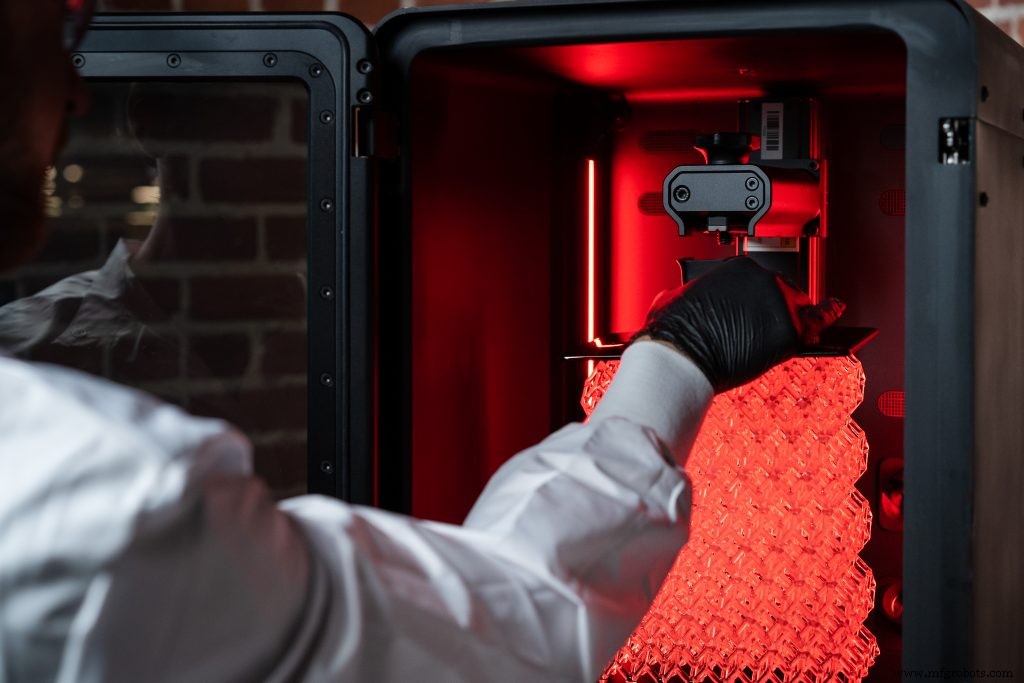
Our P3 system requires high‑temperature and inert‑environment capabilities for advanced materials, but also delivers consistency, reliability, and ease of use. Software controls every phase—from force‑sensing separation to dynamic light and temperature adjustments—enabling features like variable layer heights and region‑specific speed tuning, similar to CNC machining.
What are some real‑world applications of Origin One?
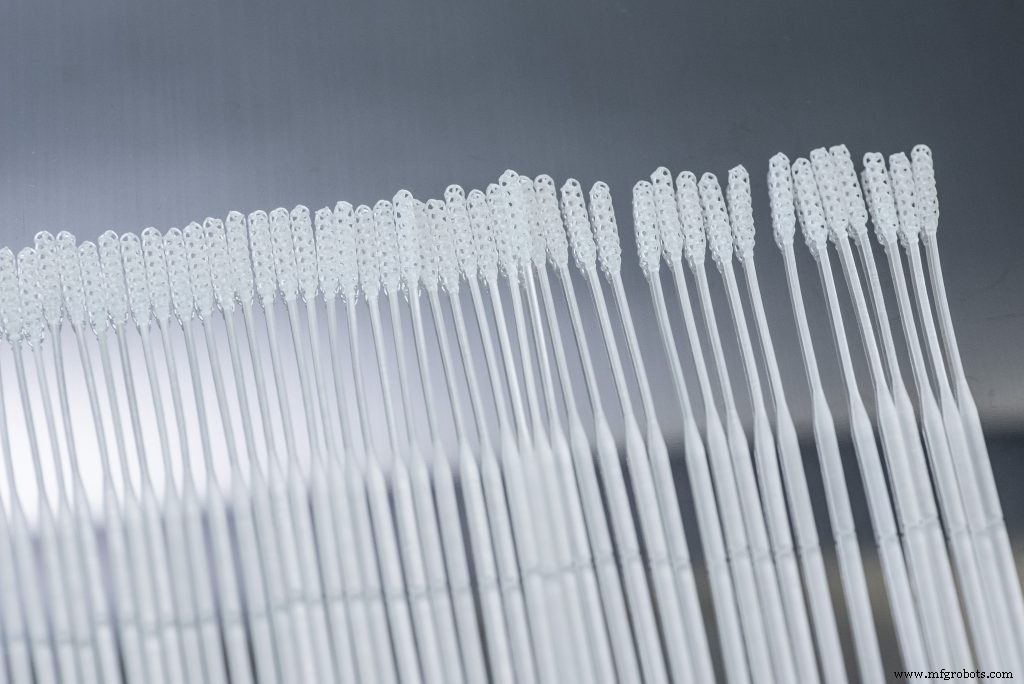
During the COVID‑19 pandemic, Origin One helped produce clinically validated nasopharyngeal swabs at a rate of half a million per week using just 40 printers. The company also printed PPE face shields, respirator adapters, and ventilator splitters for hospitals, and industrial customers produced 1,000 CAPR replacement parts in ten hours on a single machine.
Outside of COVID‑19, the dental sector remains a major success story for us.
The high‑volume model resin used for orthodontic devices and implants—priced at about $400 /kg—was replaced through a partnership with BASF. The new material offers higher accuracy, faster print speeds, and costs only $35 /kg, delivering significant savings for dental labs.
Why an open materials ecosystem matters
Closed systems often lock customers into expensive, exclusive resins, while “open but unsupported” models leave users without reliable technical assistance. Origin’s approach gives customers freedom to choose any material and co‑develop new ones with partners. For example, a flame‑retardant resin was launched with Henkel in November 2019; it remains solid at room temperature but prints at 60 °C in a controlled environment.
Open ecosystems also enable second‑source options—a critical advantage when component shortages disrupt supply chains. Customers can validate multiple resins and collaborate directly with manufacturers to find solutions when a formulation becomes scarce.
Key challenges facing additive manufacturing
1. Material cost—prototyping tolerates high resin prices, but mass production demands lower per‑unit material costs. Reducing markup and expanding supply chains are essential.
2. One‑size‑fits‑all solutions—many OEMs still design around rigid end‑to‑end systems, limiting flexibility. A modular, open ecosystem encourages a diversified ecosystem of software, post‑processing, and materials.
3. Limited process control—polymer printers often provide few tuning options, forcing redesigns on failure. Origin One’s programmable parameters—energy dosage, speed, delay, temperature—empower users to refine their builds and learn from failures.
Future outlook for additive manufacturing
COVID‑19 accelerated the adoption of 3D printing, showcasing its ability to deliver end‑use parts at scale. As supply chains recover, many industries will seek flexible, cost‑effective solutions—an opportunity for additive manufacturing to re‑enter mainstream production.
What’s next for Origin?
Origin continues to ship the commercial Origin One printer worldwide, gathering feedback to enhance both hardware and software. The company is focused on unlocking new mass‑manufacturing applications and expanding material libraries, with the goal of making additive manufacturing a standard component of production lines.
Learn more about Origin at www.origin.io.
3D printing
- Digital Alloys CEO Duncan McCallum Discusses Joule Printing and the Future of Metal 3D Manufacturing
- Nanoe CEO Guillaume de Calan Discusses the Future of Ceramic 3D Printing
- How PostProcess Technologies CEO Jeff Mize is Removing the Post‑Processing Bottleneck in Additive Manufacturing
- Roboze CEO Alessio Lorusso Discusses Cutting‑Edge Composite 3D Printing and Industry Outlook
- Inkbit CEO Davide Marini Discusses the Future of Multi‑Material Inkjet 3D Printing
- Lithoz CEO Dr. Johannes Homa Explains the Future of Ceramic 3D Printing
- Why Composite 3D Printing Is a Game Changer – Insights from Anisoprint CEO Fedor Antonov
- Why Industry 4.0 Must Be on Every CEO’s Strategic Agenda
- Why Aerospace Ranks Plastics as the Ultimate Weight‑Saving, Corrosion‑Resistant Material
- Harness Edge Computing to Drive Retail Success