



Inkbit CEO Davide Marini Discusses the Future of Multi‑Material Inkjet 3D Printing

3D printing is evolving into a smarter process as more companies integrate Artificial Intelligence. Inkbit, a U.S. start‑up, has created a multi‑material inkjet 3D printer that literally has "eyes and brains".
While multi‑material 3D printing has existed for years, it has largely been confined to prototyping. Inkbit’s goal is to transform it into a production‑grade solution.
To learn more, we spoke with Inkbit CEO Davide Marini about the technology, its applications and the company’s roadmap for the coming year.
Can you tell me about Inkbit?
I first met the inventors while they were developing a prototype at MIT. Even though I knew little about 3D printing at the time, the idea of equipping a machine with vision captured my imagination. We spun Inkbit out of MIT in summer 2017.
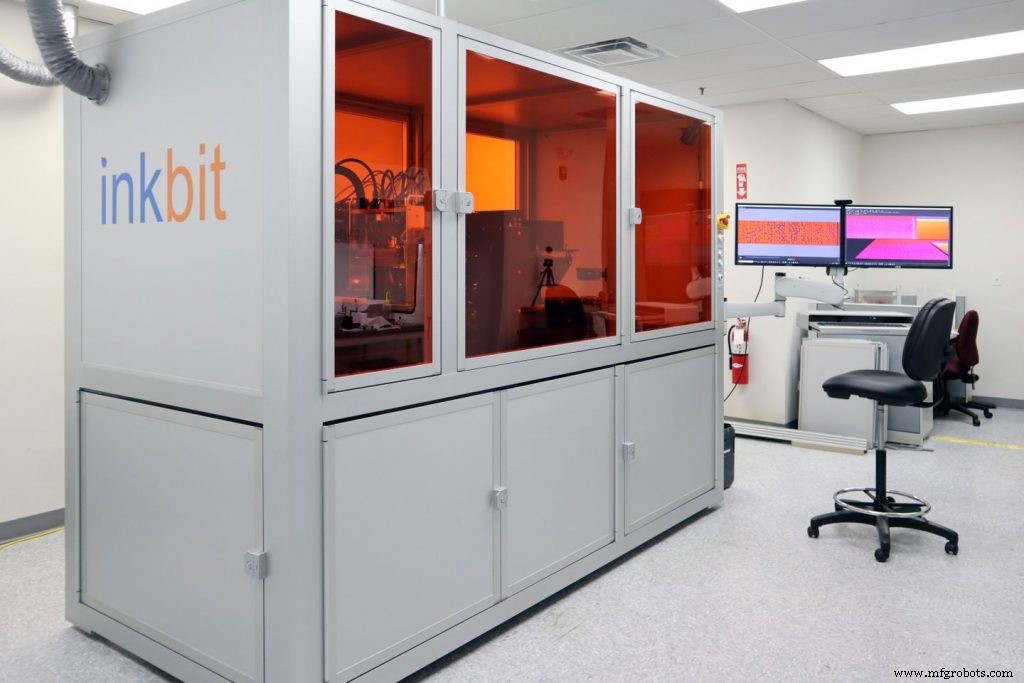
The core differentiator is an integrated vision system that gives the printer intelligence. Traditional 3D printers build layer by layer; ours scans each layer at micron resolution immediately after deposition. Any deviation from the expected geometry is detected instantly and corrected in real time by adjusting the next layer.
This real‑time correction eliminates random errors—clogged nozzles, unexpected material flow, and the like. Moreover, the data from every scan allows the machine to learn how a particular material behaves. For example, if a material shrinks, the printer can pre‑compensate by printing a slightly larger geometry in subsequent layers.
Because the printer records every layer, each finished part comes with a complete digital trace—akin to a CT scan—enabling 100 % digital quality control. The contactless manufacturing approach also eliminates the need for mechanical flattening devices, expanding the range of usable materials.
In short, all of these advantages stem from the single principle: an integrated vision system.
How does your technology differ from other solutions currently available?
No existing solution simultaneously offers multi‑material printing with production‑grade materials. Think of a two‑by‑two matrix: single‑material vs. multi‑material on the X‑axis, prototyping vs. production on the Y‑axis. Every quadrant is filled except the multi‑material/production box. PolyJet printers produce beautiful parts but are limited to prototyping because their materials lack the durability required for real‑world applications. Multi‑Jet Fusion and FDM deliver strong, single‑material parts but cannot combine materials in a single build. Inkbit harnesses inkjet technology—well established in the industry—and adapts it for production. Our printers can embed both rigid and elastomeric zones within a single part, enabling applications such as athletic footwear or medical devices that require complex material gradients. Our goal is a multi‑material platform that delivers production‑grade reliability, consistency, and full digital traceability for high‑volume manufacturing.
Could you expand on the types of materials you produce and their benefits?
We currently offer three materials, with plans to expand the portfolio.
1. **High‑temperature epoxy** – a pure epoxy that withstands high temperatures, suitable for electronics housings and high‑heat fluid channels.
2. **Rigid biocompatible resin** – ideal for structural components in medical devices.
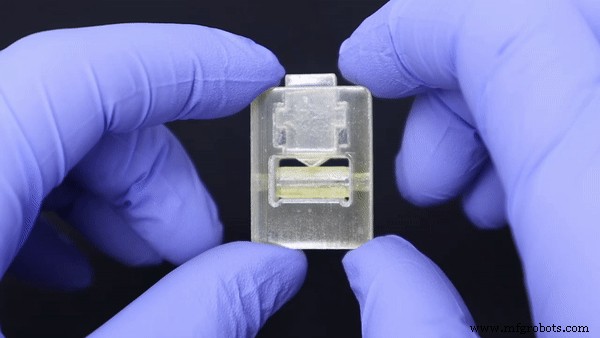
3. **Elastomeric biocompatible resin** – offers exceptional elongation at break (~800 %), perfect for soft‑tissue prosthetics and flexible connectors.
Inkbit has recently announced a $12 million funding round. What does this mean for the company?
We deliberately invited strategic investors because excellence in 3D printing requires mastery of hardware, chemistry, and AI software—essentially three different disciplines. Partnering with leaders in each area accelerates innovation. Our investors include DSM and 3M (materials), Stratasys (inkjet expertise), and Ocado (robotics and automation). Together we can bring a truly advanced machine to market faster.
What are the main challenges to wider adoption of 3D printing?
1. **Materials** – Current 3D‑printed polymers still lag behind conventional injection‑molded parts. We aim to develop materials that match or exceed these standards. 2. **Reliability & accuracy** – Machines must consistently produce parts that match the digital model over long production runs. 3. **Mindset shift** – Engineers and designers are accustomed to injection moulding. Educating them on the expanded design space of additive manufacturing is essential.
How are you addressing mindset change?
Our strategy is application‑centric: we collaborate closely with customers to develop both materials and machines tailored to their needs. For example, we worked with Johnson & Johnson to design a custom material for a product that previously relied on injection moulding, and then built a dedicated printer for that application. By staying close to end‑users, we demonstrate the tangible benefits of 3D printing and gradually shift industry thinking.
How do you see additive manufacturing evolving over the next five years?
Additive manufacturing has the potential to democratize manufacturing, giving small and large enterprises alike the power of a full production line. We anticipate broader material development, tighter integration with AI, and more widespread adoption across industries.
What will 2024 hold for Inkbit?
In the coming year we will focus on deploying our machines at customer sites. We plan to build several alpha prototypes and secure early adopters for beta installations within the next 18 months. Our target is at least five partnerships, enabling us to validate the technology in real‑world production environments. To learn more about Inkbit, visit: https://inkbit3d.com/
3D printing
- Digital Alloys CEO Duncan McCallum Discusses Joule Printing and the Future of Metal 3D Manufacturing
- Nanoe CEO Guillaume de Calan Discusses the Future of Ceramic 3D Printing
- John Kawola on Ultimaker’s Transition to Enterprise 3D Printing
- MELD Manufacturing CEO Nanci Hardwick on Revolutionizing Metal 3D Printing
- Interview with APWORKS CEO Joachim Zettler: Unlocking Business Value in Metal 3D Printing
- Interview with VELO3D’s VP of Technology Partnerships: Advancing Metal 3D Printing Capabilities
- Interview with Petar Stefanov, Founder & CTO of Spectroplast AG: The Advantages of Silicone 3D Printing
- Lithoz CEO Dr. Johannes Homa Explains the Future of Ceramic 3D Printing
- Expert Interview: nTopology CEO Discusses Advancing Additive Manufacturing with Generative Design Software
- Why Composite 3D Printing Is a Game Changer – Insights from Anisoprint CEO Fedor Antonov