



Interview with APWORKS CEO Joachim Zettler: Unlocking Business Value in Metal 3D Printing
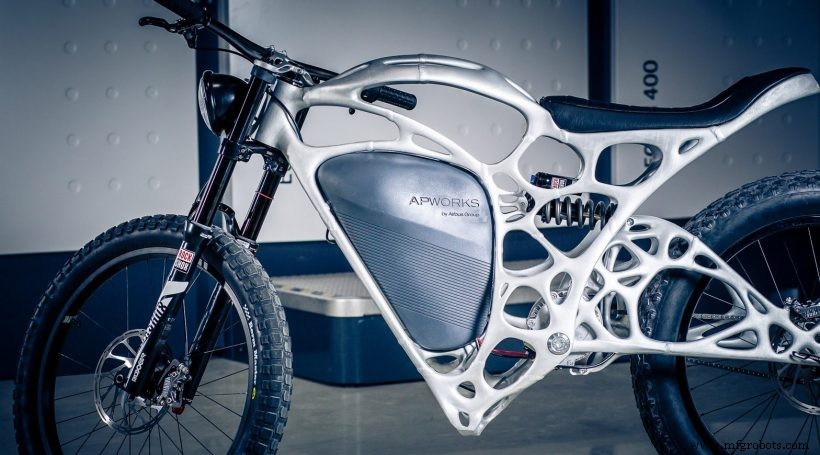
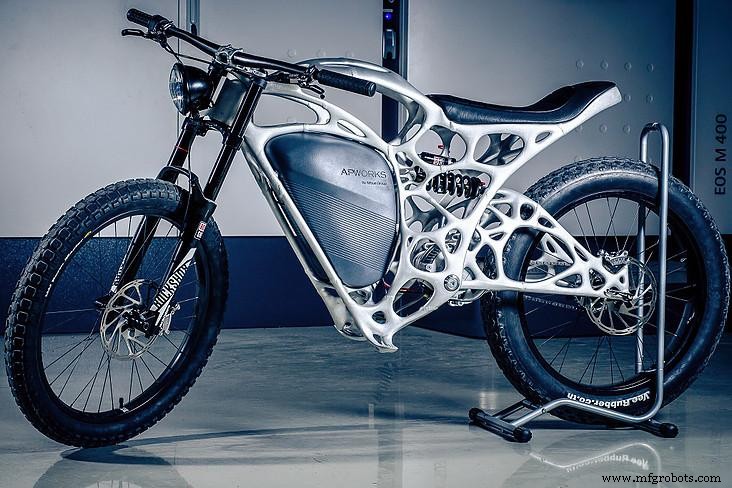
APWORKS has pioneered metal additive manufacturing since 2013, most famously with the Light Rider – the world’s first 3‑D‑printed motorcycle. The electric bike showcases the lightweight design, superior performance, and complex geometries possible with AM.
Founded as an Airbus spin‑off, APWORKS now delivers end‑to‑end metal AM solutions, from part optimisation to fully qualified serial production. The company’s proprietary high‑strength aluminium alloy, Scalmalloy®, was integral to the Light Rider project. APWORKS recently became part of Premium AEROTEC, a tier‑one aerospace supplier and Airbus subsidiary, broadening its reach across aerospace, automotive, and robotics.
In this interview, CEO Joachim Zettler explains why a solid business case is essential for AM adoption, how automotive firms can reap the benefits, and what the future holds for the industry.
What is APWORKS’ mission?
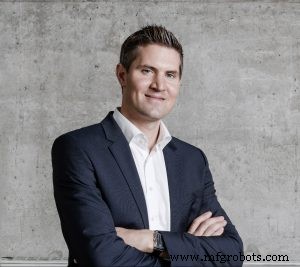
APWORKS began in 2013 under Airbus and was recently acquired by Premium AEROTEC, an established aerospace manufacturer. While the corporate structure has evolved, our core mission remains unchanged: to be a one‑stop provider of additively manufactured industrial components for a wide range of customers, including the automotive sector.
We see ourselves as educators, guiding clients who are new to AM through the design, optimisation, and production process. For seasoned users, we help refine applications to unlock performance gains and cost savings. Projects vary from small batches to high‑volume production, such as the 20,000 units per year in the optics industry.
How can the automotive industry benefit from additive manufacturing?
High‑performance automotive brands, from Formula One teams to luxury manufacturers like Bugatti and Ferrari, value rapid lead times and cost efficiencies. AM enables part consolidation—replacing assemblies of up to ten components with a single printed part—reducing inspection, assembly, and material waste. Optimised designs often yield stronger, lighter components, creating a compelling business case.
In motorsport, the primary driver is still speed of delivery, but performance optimisation is increasingly important. Surprisingly, weight reduction is rarely the sole focus; instead, functional performance and manufacturing efficiency drive AM adoption.
What level of AM knowledge do your clients typically have?
When APWORKS launched in 2013, most clients were unfamiliar with AM. Today, around 60% are well‑versed, while 40% still need foundational education. We partner with clients throughout their journey—providing training, knowledge transfer, and strategic guidance to build a robust business case.
How do companies identify the right AM applications?
We adopt a green‑field approach: starting from scratch, we gather boundary conditions and develop a multiphysics‑optimised design that only AM can deliver. By focusing on lead‑time reduction and material savings, we evaluate each part’s potential business value and select the most promising candidates.
What is APWORKS’ strategy for designing for additive manufacturing?
Our team blends design expertise with production knowledge. Engineers are cross‑trained in both disciplines, ensuring that every part we design can be manufactured on‑site. We also transfer this knowledge to clients, enabling them to accelerate their own AM initiatives.
What are the benefits of Scalmalloy® and your material development approach?
Scalmalloy® uniquely combines high strength with excellent ductility—a rare combination in aluminium alloys. Rather than inventing new materials, we optimise existing alloys (e.g., Ti‑6Al‑4V, AlSi10Mg, 316L) by fine‑tuning process parameters, achieving up to a 30% increase in ultimate tensile strength while preserving elongation.
What is AMXpert and why did you develop it?
AMXpert serves two purposes. First, it provides an instant quoting system: clients upload geometry, select material, and receive a price—or place an order—within minutes. Second, it functions as a portfolio screening tool. By loading thousands of parts into our internal knowledge database—containing data on failures, material–design combinations, minimum wall thickness, and more—clients can quickly identify which parts are AM‑ready.
Can you share any success stories?
While many projects remain confidential, APWORKS has delivered components for the fashion industry, Formula One teams, robotics, and automotive tooling. Our most publicised project is the Light Rider motorcycle, which is 30% lighter than conventional electric bikes thanks to Scalmalloy® and AM.
How do you address certification and quality challenges?
AM must meet stringent quality criteria, especially in aerospace. Traditional qualification pathways—derived from forging, casting, or machining—often overlook the unique nature of additive processes. We mitigate this by applying rigorous material testing, establishing traceability, and developing internal standards for powder characterization, post‑processing, and operator training. Industry standards are evolving, and we remain proactive in shaping them.
How should new users choose the right metal 3D printing technology?
Start by validating a business case before investing in hardware. Small or medium‑sized companies should consult experienced partners, learn from proven successes, and avoid premature equipment purchases that may go underutilised. This strategic approach saves time, money, and ensures long‑term profitability.
What does the future of the AM industry look like?
AM is transitioning from R&D to mass production. As machines become more efficient and cost‑effective, serial manufacturing will dominate. While AM will remain niche for highly specialised parts, it will become a standard production method alongside machining and casting. Continued education from universities and industry leaders like APWORKS will accelerate this evolution.
What’s next for APWORKS?
We continue to educate clients and support them in designing and producing optimised parts. Simultaneously, we are product‑driven, developing our first proprietary AM‑based product (details remain confidential). We also plan to expand our footprint in the United States to provide on‑site support.
Learn more about APWORKS: https://apworks.de/
Expert Interviews
AMFG’s Expert Interviews series highlights companies and individuals shaping the future of additive manufacturing. For participation inquiries, contact marketing@amfg.ai.
3D printing
- Scalmalloy: A High‑Strength Aluminium‑Magnesium‑Scandium Alloy for Aerospace‑Grade Metal 3D Printing
- Digital Alloys CEO Duncan McCallum Discusses Joule Printing and the Future of Metal 3D Manufacturing
- Nanoe CEO Guillaume de Calan Discusses the Future of Ceramic 3D Printing
- Expert Interview: Simon Fried, Co‑Founder of Nano Dimension, on 3D Printing’s Future in Electronics
- How PostProcess Technologies CEO Jeff Mize is Removing the Post‑Processing Bottleneck in Additive Manufacturing
- MELD Manufacturing CEO Nanci Hardwick on Revolutionizing Metal 3D Printing
- Interview with VELO3D’s VP of Technology Partnerships: Advancing Metal 3D Printing Capabilities
- Inkbit CEO Davide Marini Discusses the Future of Multi‑Material Inkjet 3D Printing
- Why Post‑Processing Is the Key to Scalable 3D Printing – Insights from AMT CEO Joseph Crabtree
- Why Composite 3D Printing Is a Game Changer – Insights from Anisoprint CEO Fedor Antonov