



Stereolithography & Digital Light Processing: Current Landscape & Future Outlook
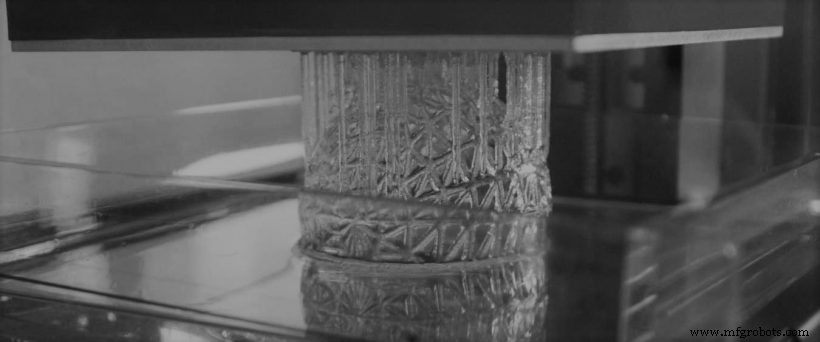
Stereolithography (SLA) and Digital Light Processing (DLP) are now the leading vat‑polymerisation 3D printing technologies. Their rapid evolution over the past decade has propelled them from rapid‑prototyping tools to production‑grade systems capable of delivering flawless parts for dentistry, jewelry, consumer goods, and more.
In this article we trace the history of SLA and DLP, examine today’s applications, and explore the materials and automation that are shaping the next wave of mass‑manufacturing.
SLA, DLP, and Vat Polymerisation: Key Concepts
Both SLA and DLP use liquid photopolymer resin and a light source to solidify material layer by layer. The primary distinction lies in the light delivery method: SLA employs a UV laser beam, while DLP projects an image of the entire layer via a digital light projector.
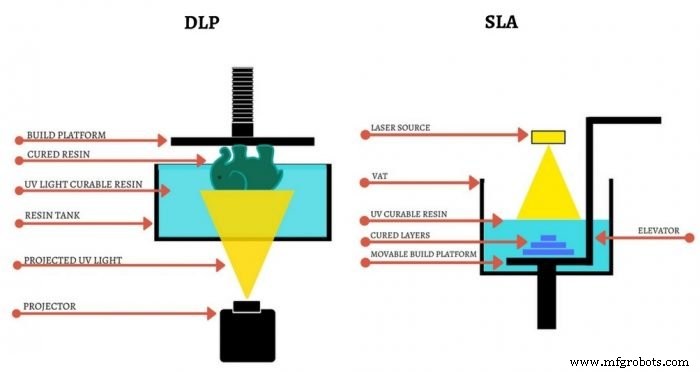
The SLA process begins with a build platform submerged in a resin tank. A laser traces each layer’s outline, then the platform lowers to accommodate the next one. DLP follows the same logic but flashes a full‑layer image, enabling faster build times. The trade‑off is that DLP resolution is limited by the projector’s pixel size, which can leave a slight pixelated finish.
Other proprietary resin‑based systems exist. Carbon’s Digital Light Synthesis™ (DLS) uses an oxygen‑permeable membrane to expose resin to light, followed by a thermal post‑curing step to lock in mechanical properties. DLS delivers parts at speeds and quality comparable to injection moulding.
Charting the Evolution of SLA and DLP
The story begins with Chuck Hull, who patented the first practical stereolithography system in 1984 and founded 3D Systems in 1986. The first commercial SLA machine, the SLA‑1, launched in 1987. Meanwhile, EnvisionTEC’s CEO Al Siblani and partner Alexandr Shkolnik introduced the first functional DLP printer in 2000, with the Perfactory 3D printer hitting the market in 2002.
- 1981: Dr. Hideo Kodama files a patent for a laser‑cured resin printer.
- 1984: Chuck Hull patents stereolithography and establishes the technology’s foundation.
- 1986: 3D Systems founded; the company spearheads industrial SLA adoption.
- 1987: 3D Systems releases the SLA‑1, the first commercial SLA machine.
- 2000: EnvisionTEC’s Al Siblani and Alexandr Shkolnik prototype the first DLP printer.
- 2002: EnvisionTEC commercialises the Perfactory DLP printer.
- 2010s: Key patents expire, opening the market to new SLA players.
- 2011: Formlabs launches the low‑cost Form 1 desktop SLA printer.
- 2013: Photocentric introduces Daylight Polymer Printing using LCD screens.
- 2014: Carbon unveils DLS technology for high‑speed, high‑quality printing.
- 2016: 3D Systems debuts the modular Figure 4, robotic‑assisted SLA printer.
- 2018: Adidas uses Carbon’s DLS to mass‑produce Futurecraft 4D sneaker midsoles.
The 2010s: A New Era for SLA
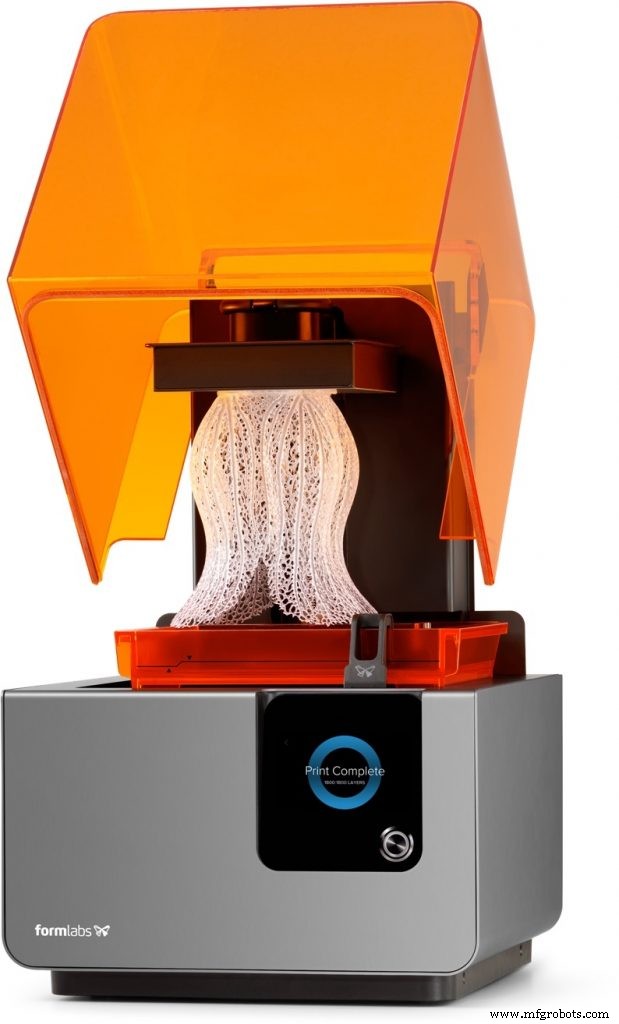
The decade brought significant breakthroughs. Formlabs democratized desktop SLA printing, making it accessible to small businesses and research labs. The company now claims to be the world’s largest SLA printer seller, with over 40,000 units shipped.
Advances in DLP Technology
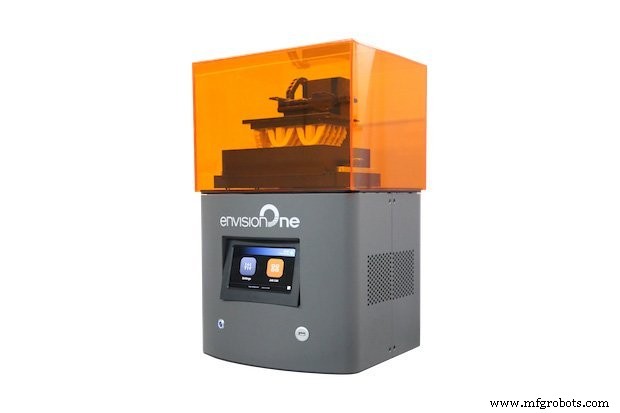
EnvisionTEC’s Continuous Digital Light Manufacturing (cDLM) revolutionized DLP by moving the build plate continuously along the Z‑axis. This innovation delivers speeds of 20‑50 mm/h and supports larger parts. The 2018 Envision One cDLM line offers dedicated dental and mechanical models.
Daylight Polymer Printing (DPP)
Photocentric’s DPP harnesses daylight instead of UV, using inexpensive LCD panels to cure resin. This yields a low‑heat process that reduces resin adhesion and expands the build volume. The LC Maximus 3D printer, launched in 2023, offers a 700 × 893 × 510 mm build chamber for under $15,000.
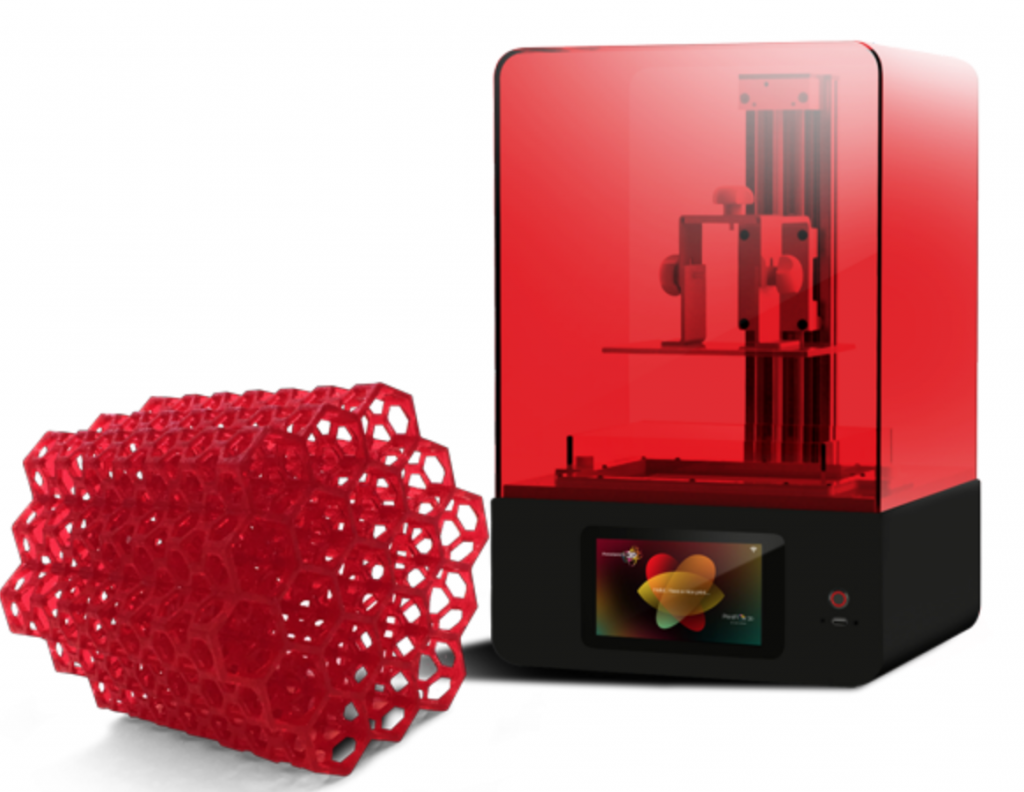
Materials Market: From Proprietary to Open
Resin dominates the additive manufacturing market, with over 25 proprietary chemistries from major players like 3D Systems and EnvisionTEC. However, proprietary licensing and pricing limit material diversity and slow innovation.
Open Materials Ecosystem
Collaborative approaches are emerging to expand material options. Origin’s programmable photopolymerisation (P3) platform, in partnership with BASF and Henkel, promises new thermoset chemistries. Fortify’s Fluxprint technology, supported by DSM and other resin suppliers, delivers carbon‑fiber and fiberglass‑reinforced resins that are currently the strongest on the market.
Production‑Scale Success Stories
3D printing is already replacing conventional manufacturing in several sectors. Sonova, a leading hearing‑aid maker, has 3D‑printed custom ear shells for over 100,000 customers annually since 2001, leveraging DLP for precision fit. Adidas’s Futurecraft 4D sneakers, produced by Carbon’s DLS, showcase how complex lattice structures can enhance performance and comfort.
Looking Ahead: SLA, DLP, and Mass Manufacturing
The trajectory is clear: faster, more accurate printers; broader resin selections; and cost‑effective desktop systems are pushing vat‑polymerisation into full‑scale production. As automation and open‑materials initiatives mature, these technologies will unlock new manufacturing paradigms across industries.
3D printing
- Stereolithography (SLA) 3D Printing: UV‑Cured Resin Builds Fast, Strong Prototypes
- Stereolithography (SLA): The Foundational 3D Printing Technology
- Standards for 3D Printing (2020 Update): Current Landscape and Road Ahead
- Metal 3D Printing Today: From Prototype to Production
- FDM 3D Printing Today: Current State, Milestones, and Future Outlook
- 2021 State of 3D Printing in Healthcare – Market Growth & Emerging Applications
- 3D Printing and Mass Customisation: Current Landscape and Future Opportunities
- Industrial vs. Desktop SLA/DLP 3D Printing: Which Is Right for You
- Industrial Digital Transformation: Current Status and Future Outlook
- SLA 3D Printing Design Guidelines: Tips for High-Quality Builds