



FDM 3D Printing Today: Current State, Milestones, and Future Outlook
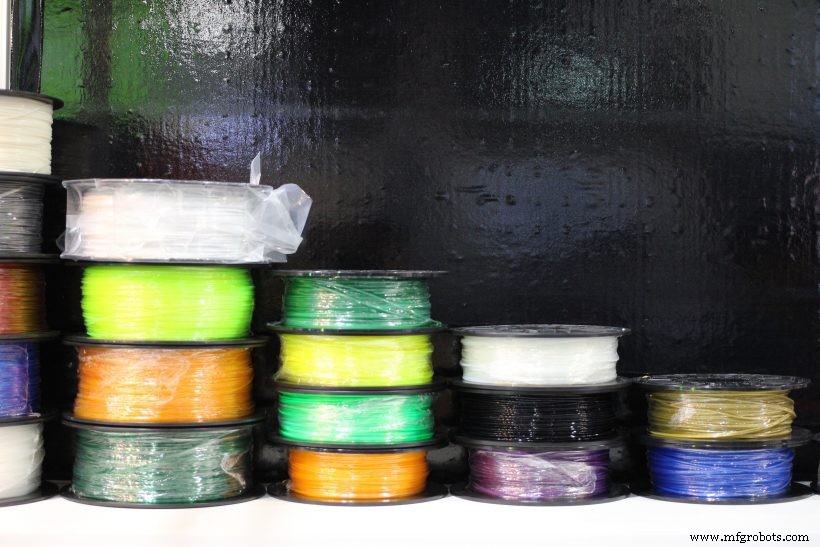
Advancements in extrusion‑based 3D printing are reshaping the trajectory of Fused Filament Fabrication (FFF), also known as FDM.
FFF is the most widely adopted additive manufacturing technology, driving significant revenue and an expansive installed base (SmarTech, 2017). As adoption spreads across industrial sectors, understanding its evolution is essential for both engineers and business leaders.
What has propelled FDM’s growth, and what does the future hold for extrusion‑based polymer printing? This article reviews key milestones, emerging technologies, and the next wave of production‑grade applications.
Key milestones in the development of FDM
- 1989 – Scott and Lisa Crump file the first FDM patent, founding Stratasys.
- 1991 – Stratasys commercializes the first FDM printer.
- 2005 – The RepRap project launches, dramatically reducing FDM cost.
- 2008 – Stratasys introduces high‑performance ULTEM 9085 for its FDM 900mc and 400mc machines.
- 2009 – Expiration of core FDM patents unlocks DIY printer development; MakerBot and Lulzbot emerge.
- 2011 – Ultimaker, a leading desktop FDM manufacturer, is founded.
- 2013 – Stratasys acquires MakerBot; Markforged, a composite‑FDM pioneer, is founded.
- 2014 – BigRep, the largest extrusion‑based printer manufacturer, is founded.
- 2015 – Voodoo Manufacturing starts its 3D printing business, scaling to 200+ FDM units by 2019.
- 2017 – Stratasys launches its Continuous 3D Build Demonstrator, a modular high‑throughput system.
- 2018 – Essentium commercializes FlashFuse, an electrically heated high‑speed extrusion platform.
The origins of FDM
The late 1980s marked the birth of extrusion‑based 3D printing. Engineer Scott Crump patented Fused Deposition Modeling in 1989, and two years later Stratasys released the 3D Modeler. Since then, FDM has bridged the gap between high‑cost prototyping and affordable, rapid iteration.
Today, Stratasys remains a dominant hardware player, offering nine FDM models alongside its Polyjet line. While the core process—melting and extruding thermoplastic layer by layer—remains unchanged, incremental innovations have steadily advanced performance, reliability, and material range.
The rise of the RepRap project and low‑cost FDM
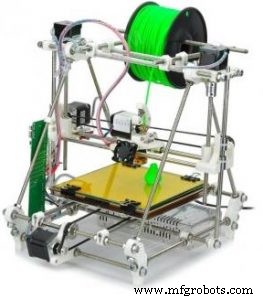
The RepRap initiative championed open‑source, self‑replicating printers, inspiring a wave of low‑cost desktop units once key FDM patents expired. This democratization allowed hobbyists and SMEs to experiment with additive manufacturing without prohibitive investment.
The 2010s: A new generation of FDM
The decade saw a surge of companies pushing the boundaries of FDM, from continuous fibre printing to large‑format solutions.
Pioneering continuous carbon fibre 3D printing
In 2014, Markforged introduced Continuous Filament Fabrication (CFF), the first commercial continuous‑fiber technology. By pairing nylon filaments with strands of carbon, Kevlar, or fiberglass, CFF produces parts that are up to 40% lighter and stronger than 6061 aluminum.
The X7, priced at $70,000, offers a 330 × 270 × 200 mm build envelope and 50 µm layer height—an impressive specification for a desktop system. In 2018, Markforged shipped over 2,500 industrial printers, positioning it among the largest additive‑manufacturing firms.
The new benchmark for large‑format FDM printing?
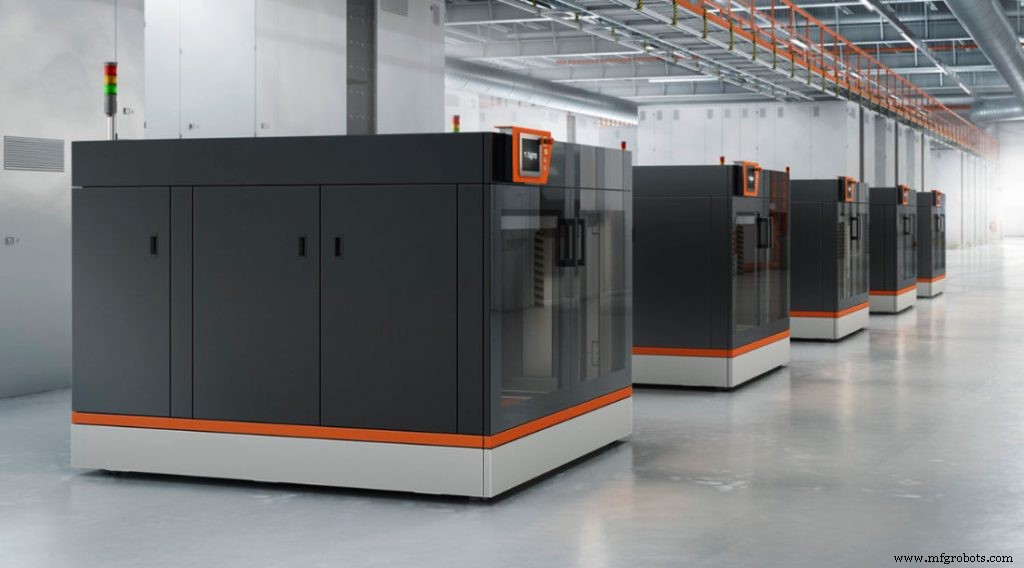
Large‑format FDM addresses the need for rapid, cost‑effective tooling and component production. BigRep, founded in 2014, leads the market with extruders capable of volumes exceeding 1 m³.
Speed remains a challenge; printing large parts can take days. BigRep tackles this with larger nozzles, high‑weight spools, and a “high‑speed” filament that cuts build time by up to 50%. Its Metering Extrusion Technology (MXT), unveiled at formnext 2018, uses a reservoir‑based system to deliver precise material flow, achieving up to fivefold speed gains.
Infused with isotropic strength
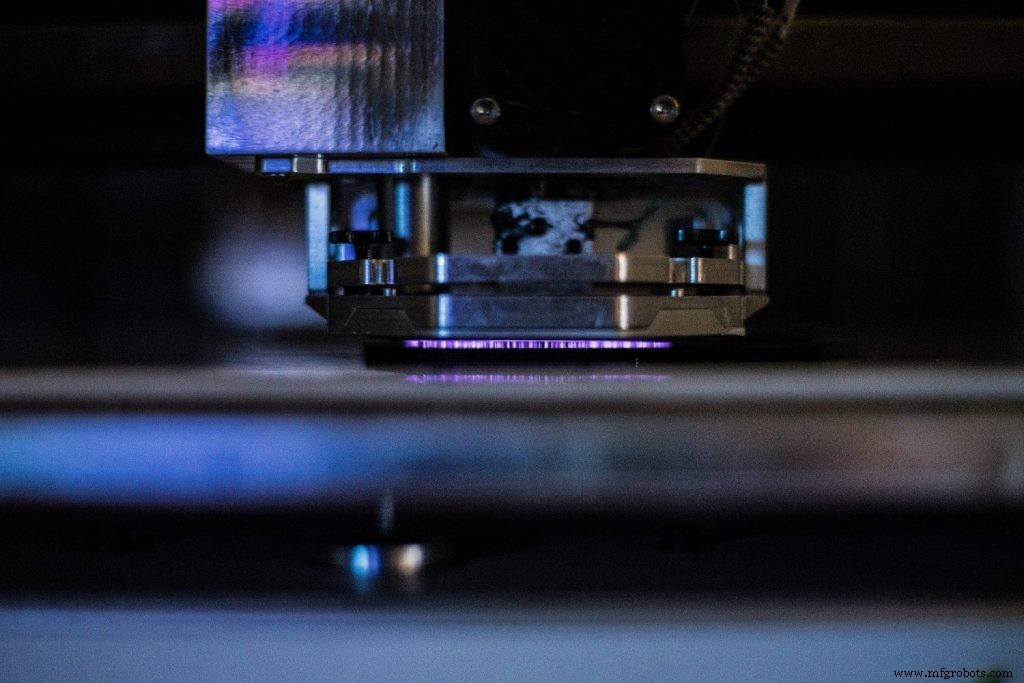
Layer‑by‑layer deposition often results in anisotropic parts, with weaker Z‑axis bonds. Essentium’s FlashFuse technology mitigates this by electrically heating the print, promoting uniform bonding and eliminating warpage. The High Speed Extrusion (HSE) 180‑S, priced at $75,000, demonstrates strength comparable to injection‑molded components.
Essentium secured $22 million in Series A funding led by BASF Venture Capital, fueling further development of production‑grade FDM.
Industrial‑grade FDM materials
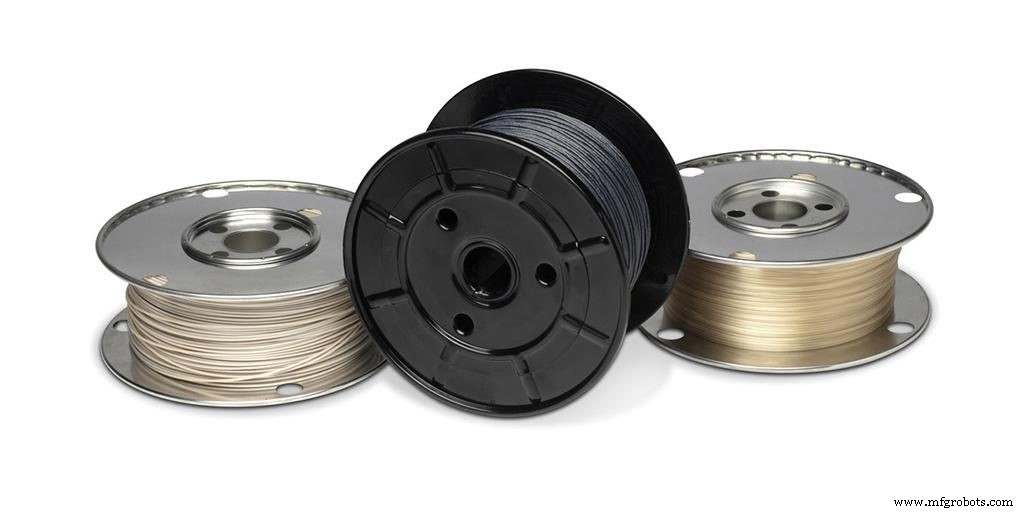
The material landscape has expanded far beyond PLA and ABS. Today’s printers can process composites, nylon, flexible polymers, biocompatibles, and high‑performance thermoplastics such as ULTEM and PEEK.
High‑temperature extruders now enable printing of ULTEM and PEEK, making FDM one of the few additive routes capable of handling these demanding materials. Chemical giants—including BASF, SABIC, Mitsubishi Chemical’s Verbatim, Evonik, and Solvay—are actively supplying these grades. Solvay’s recent PEEK and PPSU filaments offer exceptional strength‑to‑weight ratios and chemical resistance, opening aerospace, automotive, oil‑&gas, and medical applications.
While the catalog of high‑performance FDM filaments is still growing, increasing demand will accelerate material innovation.
3D printing farms: the future of FDM?
Challenges such as part strength and print speed have historically limited FDM’s production use. Recent advances in materials and process control are eroding these barriers, but scalability remains critical.
FDM farms—networks of dozens of printers operating around the clock—offer a viable pathway to high‑volume manufacturing. Voodoo Manufacturing, with 200+ FDM units, automates job distribution via advanced software, achieving injection‑mold‑level pricing.
Stratasys showcased a Continuous Build 3D Demonstrator in 2017, a modular system of FDM cells coordinated by cloud‑based control. Although not yet commercial, the concept demonstrates the potential for large‑scale, continuous production.
As FDM matures with stronger, larger parts and faster, more scalable workflows, it is poised to unlock new manufacturing markets and establish itself as a significant production technology.
3D printing
- Standards for 3D Printing (2020 Update): Current Landscape and Road Ahead
- Metal 3D Printing Today: From Prototype to Production
- Stereolithography & Digital Light Processing: Current Landscape & Future Outlook
- 2021 State of 3D Printing in Healthcare – Market Growth & Emerging Applications
- 3D Printing and Mass Customisation: Current Landscape and Future Opportunities
- Understanding FDM 3D Printing: A Complete Guide
- Are 3D Printer Fumes Dangerous? Health & Safety Insights
- FDM 3D Printing: Choosing Between Desktop and Industrial Solutions
- Understanding the Key Differences Between FDM and SLA 3D Printing Technologies
- A Retrospective on FDM 3D Printing: Key Milestones and Components