



Nanoe CEO Guillaume de Calan Discusses the Future of Ceramic 3D Printing
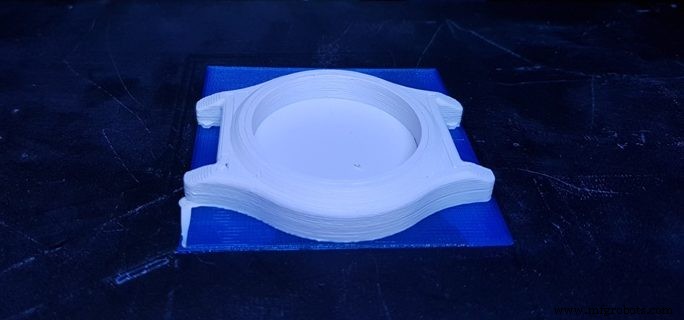
 Ceramic 3D printing is still an emerging field, yet its versatility makes it ideal for a broad range of industrial applications—from bearings and semiconductors to aerospace and jewellery. As the market matures, companies are actively working to make ceramic additive manufacturing fully viable.
Nanoe, a French‑based provider of industrial‑grade technical ceramics, pioneered the first commercial technical ceramic filaments (Zetamix). In this interview, CEO Guillaume de Calan explains Nanoe’s strategy, the path toward desktop ceramic 3D printing, and the substantial market potential for this technology.

Can you tell us about Nanoe?
We are a raw‑material supplier that produces powders and feedstock for the ceramics industry. Founded ten years ago, we serve diverse sectors—including medical and aerospace—providing the high‑strength, high‑temperature, and corrosion‑resistant materials these industries need to manufacture advanced parts.
What are some of the applications for your materials?
One example is the jewellery and watchmaking sector, where companies use ceramic rings, watches, and other pieces. They are turning to ceramic 3D printing for rapid prototyping, small‑batch production, and on‑demand manufacturing. Another key area is aerospace, where technical ceramics are essential for observation mirrors, structural components, and telecommunications equipment. Ceramic 3D printing offers significant weight savings—critical when every kilogram sent to orbit costs millions—by enabling topology optimisation and other design efficiencies.
Why did you found Nanoe?
Nanoe began as a spin‑off from a French laboratory that specialized in nano‑materials for industrial use. We quickly identified technical ceramics as our niche. Initially, we supplied raw materials for traditional shaping processes such as pressing, injection moulding, and casting. This year, we shifted focus to 3D printing, recognizing our customers’ growing interest in integrating additive manufacturing into their production streams.
What challenges does 3D printing ceramic materials present?
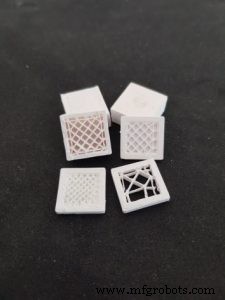 Ceramics are high‑temperature, non‑melting materials, so conventional metal and plastic printing methods cannot be applied directly. Instead, we use an indirect approach: ceramic powders are mixed with a binder—often a thermoplastic or resin—to create a printable feedstock. The printed part must then undergo binder removal and high‑temperature sintering, requiring precise control of homogeneity, binder content, and burn‑off to achieve dense, functional ceramics.
What post‑processing steps are involved?
Our powders are formulated for FDM, enabling the production of ceramic filaments with a plastic binder that can be printed on any FDM machine. Post‑processing involves two key stages: chemical debinding—dipping the part in a solvent to remove the binder—and sintering at temperatures exceeding 1500 °C to consolidate the ceramic into a high‑density component.
Why focus on FDM, and do you plan to expand to other technologies?
As a raw‑material supplier, reaching the widest customer base is essential. FDM is the most prevalent 3D printing technology, making it the logical starting point. Desktop ceramic 3D printing is largely unexplored; industrial systems exist but require high capital investment and are tailored for mass production rather than rapid prototyping. By adapting our powders for FDM, we bring ceramic additive manufacturing to the desktop, while we also plan to explore additional technologies in the future.
How do you see the ceramic 3D printing market evolving?
The market remains nascent. Currently, fewer than ten companies worldwide offer commercial ceramic 3D printing systems, largely because of the technical challenges involved. However, the demand from aerospace, luxury goods, and other high‑tech sectors signals rapid growth. While ceramic 3D printing is roughly a decade behind its metal counterpart, we anticipate significant advances in the next ten years that will bring production‑ready solutions to market.
Where does Nanoe fit within this landscape?
Our technology is distinct from the prevailing stereolithography‑based approaches that rely on photosensitive resins. Nanoe’s ceramic feedstocks enable faster production, larger build volumes, and superior geometry capabilities. As a raw‑material provider rather than a machine manufacturer, we focus on integrating our materials with existing 3D printers, broadening access for users familiar with metal and plastic printing.
What does the next five years look like for additive manufacturing?
The trend is shifting from prototyping to the manufacturing of final, ready‑to‑use parts—especially for high‑reliability applications such as aircraft and satellite components. We expect 3D printing to move from a testing tool to a core production process.
Anything else you’d like to add?
Despite its promise, the high upfront cost of ceramic and metal 3D printing systems—often exceeding €100,000—creates a barrier for SMEs. Nanoe’s goal is to democratize ceramic 3D printing by offering a desktop solution with an investment of under €10,000. We believe this will revolutionize how small businesses approach additive manufacturing. Our next milestone is to launch a comparable desktop solution for metal printing at Formnext next month.
For more information about Nanoe, visit: https://www.nanoe.com.
3D printing
- Digital Alloys CEO Duncan McCallum Discusses Joule Printing and the Future of Metal 3D Manufacturing
- John Kawola on Ultimaker’s Transition to Enterprise 3D Printing
- Jabil’s Rush LaSelle Explains How Additive Manufacturing is Revolutionizing Global Production
- Interview with APWORKS CEO Joachim Zettler: Unlocking Business Value in Metal 3D Printing
- Inkbit CEO Davide Marini Discusses the Future of Multi‑Material Inkjet 3D Printing
- Lithoz CEO Dr. Johannes Homa Explains the Future of Ceramic 3D Printing
- Why Composite 3D Printing Is a Game Changer – Insights from Anisoprint CEO Fedor Antonov
- How 3D Printing Will Transform Manufacturing in the Next Decade
- How 3D Printing is Revolutionizing Modern Manufacturing
- 4D Printing: Revolutionizing Additive Manufacturing for Adaptive Solutions