



The Three Pillars of 3D Printing Success: Hardware, Materials, and Software
What are the secrets to a successful additive manufacturing operation?
Additive manufacturing is steadily moving from prototyping into full‑scale production. While the technology has advanced dramatically over the past decade, several core challenges remain that must be addressed to deliver reliable, cost‑competitive parts.
The Three Pillars of 3D Printing Success
The foundation of a robust AM program rests on three interdependent elements:
1. Hardware
2. Materials
3. Software
These pillars—hardware, materials, and software—form the bedrock of industrial 3D printing. Progress in each area is essential for the technology’s continued transition into end‑part production.
Pillar #1: Hardware
Modern industrial 3D printers are far more advanced than the early 1980s systems. They run faster, deliver higher reliability, and are increasingly engineered for production workloads.
Accuracy and repeatability
For AM to replace conventional manufacturing, printers must consistently produce parts that meet the same dimensional and mechanical specifications. Three critical factors influence repeatability:
- Orientation
- Position
- Part placement relative to other pieces on the build plate
Speed and scalability
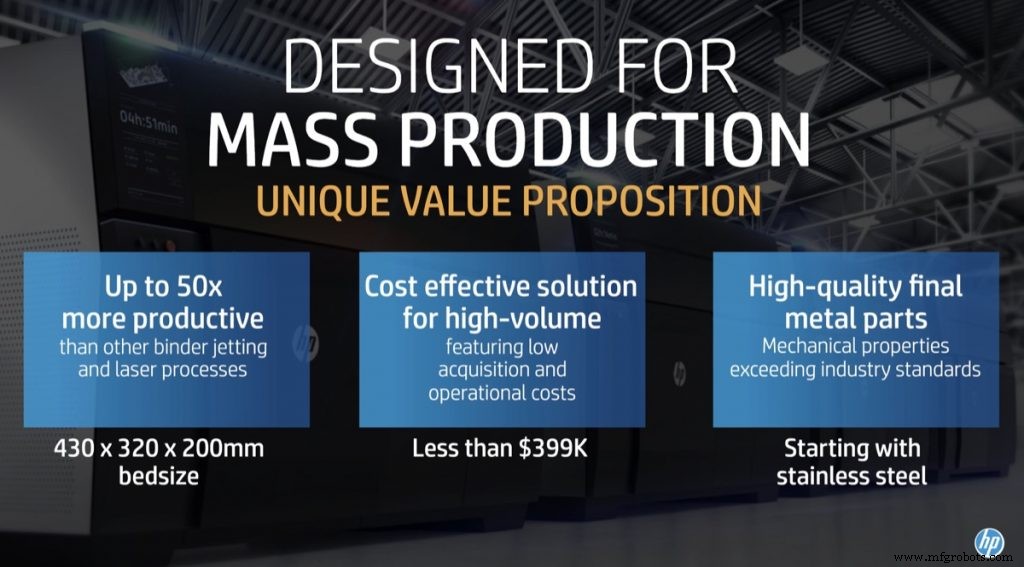
Print speed remains a limiting factor for mass production. Manufacturers like HP are addressing this with their Multi‑Jet Fusion (MJF) platform, which has already produced roughly 3.5 million parts, half of them for end‑use. HP’s upcoming Metal Jet system claims up to 50× the throughput of comparable binder‑jetting and SLM machines and is designed to meet ASTM International stainless‑steel standards.
Pillar #2: Materials
Materials are the second cornerstone of industrial AM. The spectrum now includes metals, polymers, and ceramics, yet cost and standardisation still pose hurdles.
High costs
Additive manufacturing must stay cost‑competitive with traditional methods. Filament for FDM printers can cost around $50 per pound, versus $3 per pound for injection moulding—a gap that industry collaboration seeks to close. Ultimaker’s partnerships with global material suppliers aim to broaden choice and drive prices down.
Standardisation
The lack of uniform standards hampers adoption, particularly for metals and ceramics. Organizations like ASTM International are partnering with key industry players to create a Center of Excellence for additive manufacturing, focusing on standards for metal powders and beyond. New material entrants are also expanding the portfolio of high‑performance thermoplastics and lightweight metals.
Pillar #3: Software
Software is the glue that links hardware and materials into a coherent production chain. Without robust digital workflows, companies struggle to manage processes, maintain visibility, and achieve efficiency.
Managing workflows
Traditional PLM or ERP systems cannot handle the unique CAD, analysis, and build‑prep steps required by AM. Many firms still rely on disparate tools that do not communicate, reducing productivity. Advanced workflow platforms—such as AMFG’s solution—automate tasks from request intake to build scheduling, and deliver real‑time metrics and insights.
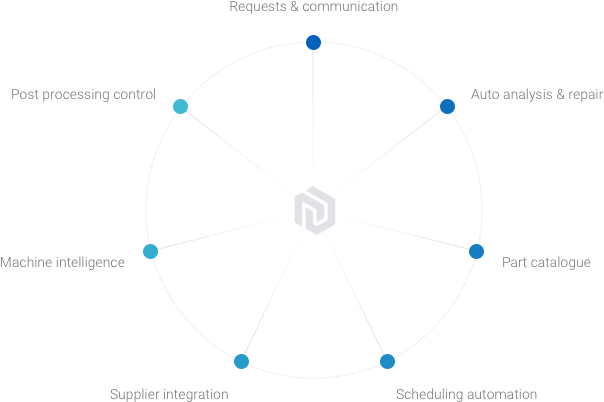
Simulation tools further reduce risk by predicting print outcomes and optimizing parameters before the first build.
Machine control
Direct, real‑time communication between production software and AM hardware is essential for remote operation, capacity assessment, and process optimisation. To realise this, hardware manufacturers must collaborate with software developers to expose machine APIs and support open‑standard interfaces.
Overcoming Challenges in 3D Printing
Over the past decade, additive manufacturing has achieved significant milestones across hardware, materials, and software. Yet the path to mainstream adoption hinges on success in all three domains.
Hardware and material advances—such as HP’s MJF and Metal Jet systems and Velo3D’s closed‑loop printers—demonstrate the industry’s capacity for production‑grade solutions. On the software front, platforms like AMFG are automating project and production management to meet the demands of end‑part production.
Continued collaboration across the ecosystem is vital. By jointly addressing reliability, cost, standardisation, and digital integration, the industry can maintain its growth trajectory and unlock the full potential of 3D printing for mainstream manufacturing.
3D printing
- How to Weld and Glue 3D‑Printed Plastic Parts for Strong, Precise Assemblies
- 3D Printing Software Market to Reach $4.5 B by 2021 – Key Implications for Your Business
- The Three Pillars of 3D Printing Success: Hardware, Materials, and Software
- 2019 3D Printing Materials Market: Trends, Growth, and Emerging Opportunities
- In‑House Production: The Fuse 1 Builds Its Own Parts
- Open‑Source 3D Printing: Empowering Innovation Through Shared Designs
- How 3D Printing Is Revolutionizing Aerospace and Defense
- Harnessing Composites: The Key to Efficient Lightweight CNC Machined Parts
- Top Flexible Materials for 3D Printing: Performance & Applications
- Open vs. Closed 3D Printing Systems: Choosing the Right Solution