



2019 3D Printing Materials Market: Trends, Growth, and Emerging Opportunities

3D printing materials are rapidly expanding. In 2019 the additive manufacturing (AM) materials market reached a value of $1.5 billion and is projected to climb to a striking $4.5 billion within the next five years. Chemical giants and metal producers are not only supplying new materials but are also driving the industrialisation of AM.
In this article we examine the 2019 evolution of the 3D printing materials landscape, spotlight key players, and identify the trends that will shape the market’s future.
Explore related series articles:- How the 3D Printing Hardware Market is Evolving in 2019
- 3D Printing Software: Achieving True Digital Production
- Post‑Processing for Industrial 3D Printing: Key Trends You Should Know
Polymers Remain the Dominant Material Class
Polymers continue to lead the market, capturing 80.6% of global 3D printing material revenue in 2018 – a figure that reached $3.4 billion. A Jabil survey of 308 AM users found that 74% employed polymer materials in 2018, reflecting their ease of adoption and lower cost.
Shift Toward High‑Performance Thermoplastics
While standard plastics such as PLA and ABS dominate the polymer segment, demand for robust, high‑temperature materials is accelerating. Manufacturers are developing carbon‑reinforced composites, ULTEM, PEEK, and PEKK to enable functional prototypes and end‑use parts for aerospace, medical, and industrial applications.
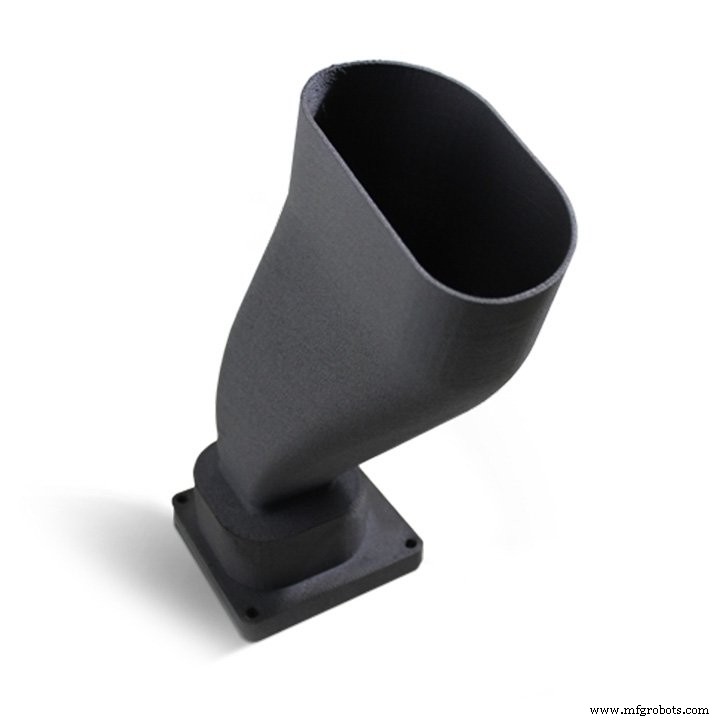
Key collaborations include Roboze and SABIC’s joint development of EXTEM AMHH811F, an amorphous thermoplastic polyimide filament with a heat deflection limit of 230 °C, a glass transition temperature of 247 °C, and excellent flame‑retardant properties. This material exemplifies the industry’s push to transition AM from prototyping to critical, high‑performance use cases.
In the medical sector, PEEK printing is now used to fabricate patient‑specific implants. Evonik’s recent investment in Meditool – a Chinese start‑up specialising in PEEK‑printed neurological and spinal implants – underscores the growth potential in this niche.
Composite Materials Accelerate Adoption
Composite printing – combining a thermoplastic matrix with reinforcing fibers such as carbon, glass, or Kevlar – is a high‑growth area. Current offerings often feature chopped fibers, but continuous‑fiber printing is gaining traction. Desktop Metal’s new Fiber 3D printer, for instance, can reinforce nylon, PEEK, and PEKK with continuous carbon fibers.
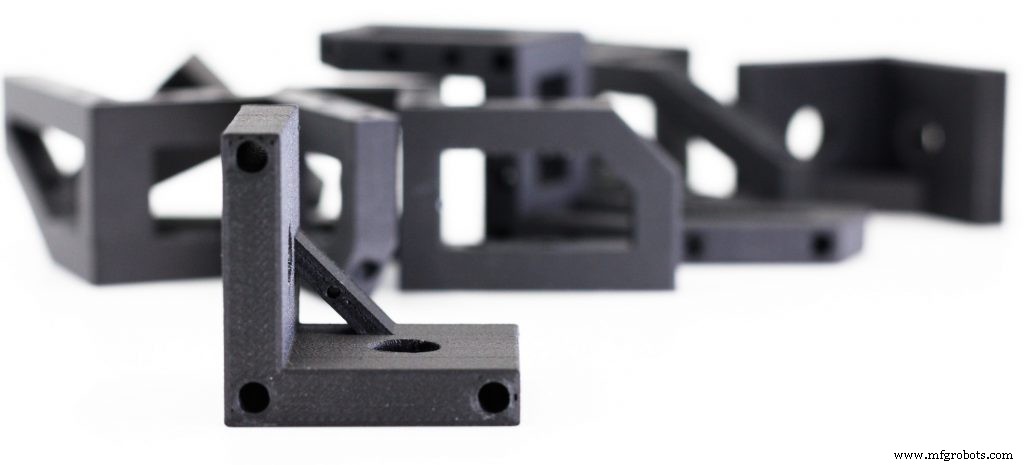
A SmarTech Analysis report projects the global composite 3D printing market to grow at a CAGR of 22.3% over the next five years, opening opportunities beyond aerospace and medical into automotive, energy, and transportation sectors. Recent breakthroughs include a composite 3D‑printed bicycle frame and continuous‑fiber 3D printing (CF3D) technology combined with Arkema’s photocurable resins.
Graphene‑Enhanced Printing
Graphene’s exceptional electrical and thermal conductivity attracts interest across battery, aerospace, and electronics markets. Terrafilum and XG Sciences are developing graphene‑enhanced extrusion filaments, while Virginia Tech and Lawrence Livermore National Laboratory pioneered a stereolithography process capable of producing graphene structures down to 10 µm.
AECOM’s partnership with UK’s Scaled and material partner Versarien produced a 4.5 m high graphene‑reinforced polymer arch for rail signalling, demonstrating real‑world applicability. Despite the promise, graphene remains costly and difficult to print, positioning it as an emerging technology rather than a mainstream solution.
Growth of Elastomeric Materials
Soft, flexible materials such as TPU and silicone are gaining traction in consumer, medical, and industrial markets where toughness and elasticity are required. Huntsman’s IROPRINT AM line offers resin, powder, and filament options for footwear, hoses, gaskets, and robotic grippers.
Covestro introduced TPU‑based orthopaedic insoles that allow variable hardness through design, enabling fully customised footwear. Dow’s SILASTIC 3D 3335 LSR, combined with Nexus Elastomer Systems’ dosing technology and German RepRap’s LAM printer, enables colour‑printed silicone parts without compromising mechanical performance. EOS added the TPU 1301 powder, noted for high resilience and shock absorption, suitable for automotive and footwear applications.
Flame‑Retardant Polymers for Safety‑Critical Sectors
Industries with stringent fire‑safety requirements, such as transportation and electronics, are increasingly adopting flame‑retardant 3D printing materials. DSM’s Novamid AM1030 FR, certified V0 and V2, targets automotive and electronics markets. Markforged, Cubicure, and CRP Technology also offer flame‑retardant composites, expanding options for critical industrial uses. Future growth is expected in polymers with enhanced UV resistance to support automotive applications.
Ceramic Materials: A Growing Niche
The 3D printing ceramic market is projected to rise from a $20 million revenue base in 2020 to over $450 million by 2029, according to SmarTech Analysis. Technical ceramics, prized for high strength, temperature, and chemical resistance, are already in use across aerospace and electronics. XJet Ltd. recently added alumina to its portfolio of technical ceramics, offering higher hardness than zirconia but lower wear resistance for easier post‑processing.
Metal Materials: A High‑Growth Segment
Metal AM generated €390 million in revenue in 2018 and grew 41.9% that year, maintaining a 40%+ growth trajectory over five years (Wohlers Report 2018). Metal powder production is scaling, with Höganäs AB building a new atomising plant in Germany to supply high‑purity powders under the Amperprint® brand. Liberty House Group and Sandvik are also expanding their powder‑metal capabilities, the latter investing SEK 200 million to produce titanium powders via atomisation.
Strategic Expansion Across the AM Value Chain
Companies are broadening their footprint from powders to finished parts. GKN Additive merged with GKN Hoeganaes, creating a full powder‑to‑part solution, and acquired Forecast 3D to enter polymer AM. Sandvik’s 30% stake in Beam IT aligns with its strategy to deepen manufacturing industry presence.
Innovations in Metal Powders
New metal powders are enabling AM in extreme environments. H.C. Starck’s AMtrinsic Ta/Nb powders offer high melting points and corrosion resistance, suitable for chemical processing and energy sectors. OxMet Technologies introduced high‑strength nickel alloys capable of withstanding 900 °C, surpassing current limits. Aeromet’s enhanced A20X aluminium powder exceeds 500 MPa UTS, positioning it among the strongest commercially available aluminium AM powders.
6K’s UniMelt technology converts recycled metal feedstock into premium AM powders, supporting a circular economy by turning failed builds and support structures into new material.
Materials: The Keystone of Additive Manufacturing
A recent Jabil survey indicates that 41% of AM users believe that superior materials will most significantly drive mass adoption. While advanced polymers and specialised metals are rapidly evolving, high material costs remain a key bottleneck. However, increasing demand and expanded supply chains suggest that prices may decline in the coming years.
With both large corporations and niche start‑ups investing heavily in material development, the 3D printing materials sector is poised for sustained growth, shaping the future of additive manufacturing across industries.
3D printing
- Rapid Prototyping: The Evolution of 3D Printing and Its Impact on Product Development
- How 3D Printing Drives Innovation in Formula One – 5 Key Trends
- The Three Pillars of 3D Printing Success: Hardware, Materials, and Software
- 5 Key 3D Printing Trends Shaping 2019
- 5 Key Trends Driving the 3D Printing Materials Market in 2019
- Selective Laser Sintering (SLS): Cutting‑Edge Technologies, Advanced Materials, and Expanding Applications
- 3D Printing Trends 2019: Metal Innovation, Binder Jetting Breakthroughs, and Advanced Plastics
- How 3D Printing Revolutionized Manufacturing: A Journey Through Its Evolution
- How 3D Printing Is Revolutionizing Aerospace and Defense
- Global Crane Market Outlook: Key Growth Drivers, Emerging Trends & 2025 Forecast