



3D Printing Software Market to Reach $4.5 B by 2021 – Key Implications for Your Business

The 3D printing software sector has surged in recent years, with BIS Research forecasting a global market value of $4.52 billion by 2021—a CAGR of 25.2%. This growth is driven by expanding demand across medical, automotive, aerospace, and defense industries, all of which rely increasingly on sophisticated software to unlock the full potential of additive manufacturing.
For companies, the right software is no longer a luxury—it’s a competitive necessity. Choosing the proper tools can streamline design, reduce rework, and accelerate time‑to‑market, while an ill‑suited solution can cripple workflows and inflate costs. That’s why a clear understanding of your operational needs is essential before committing to any platform.
The Key Software Applications
The BIS report, Global 3D Printing Software & Services Market, Analysis and Forecast (2017‑2021), identifies four core application categories that are reshaping how engineers and designers bring objects to life: design/modeling, data preparation, simulation, and machine control.
3D Design/Modelling Software
Design and modeling tools dominate the additive manufacturing landscape, accounting for 61% of the global software and services market last year. From industrial to consumer applications, 3D CAD software has become a foundational element of digital production. Selecting the right platform hinges on your printing workflow, material requirements, and integration capabilities. Leading options include Blender, Rhino3D, SolidWorks, and AutoCAD.
3D Printing Simulation

Predicting how a part will behave during printing remains a challenge, especially for metals where thermal gradients can cause unexpected distortions. Simulation software bridges this gap by modeling the manufacturing process and forecasting stresses, warping, and potential failures. 3DSIM’s exaSIM platform exemplifies this capability, offering insights that eliminate costly trial runs. The recent acquisition of 3DSIM by ANSYS—a leader in computer‑aided engineering—promises to accelerate innovation in simulation tools.
Data Preparation Software
Preparing CAD files for printing is often labor‑intensive. Common issues—noise shells, overlapping surfaces, and mesh holes—must be corrected before a model can be sliced. Robust data‑preparation tools automate error detection and correction, saving time and ensuring printability. Investing in reliable software for this step is a strategic advantage.
Machine Control Software
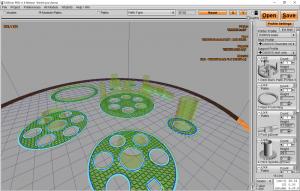
Slicing software—often referred to as machine control—translates 3D models into machine‑readable instructions. It slices the object into layers, generates G‑code, and sets parameters such as print speed and layer height. Popular slicers include Cura and KISSlicer, which cater to both beginners and professionals, as well as Slic3r, tailored for advanced users. Choosing the right slicer aligns with your printer hardware, material, and production goals.
3D Printing Software – A Market in Flux
As new applications for additive manufacturing emerge, the software ecosystem will evolve rapidly. A persistent barrier, however, is the shortage of technical expertise. Companies that invest in training and development will reap the full benefits of advanced tools. Ultimately, the 3D printing software market is still in its infancy—there remains vast, untapped potential for innovation and efficiency.
3D printing
- Desktop Metal’s BMD and Microwave Sintering: A New Era for Metal Additive Manufacturing
- The Three Pillars of 3D Printing Success: Hardware, Materials, and Software
- How 3D Printing and Software Drive Digital Transformation in Manufacturing
- Industrial Robotics Market: Growth Forecast & Impact on Manufacturers
- Navigating Supply Chain Challenges During Chinese New Year
- CNC Machining vs. 3D Printing: Choosing the Right Manufacturing Method for Your Project
- Advanced Manufacturing Explained: Key Benefits for Your Business
- Choosing the Right 3D Printing Software: A Comprehensive Guide
- Explore the Versatile Applications of 3D Printing in Industry and Healthcare
- Mastering 3D Printer Flow: Definition, Significance, and Calibration Tips