



How 3D Printing is Revolutionizing Modern Manufacturing
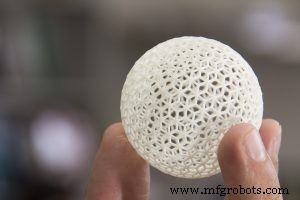 The idea of “printing” a fully functional guitar may have once been disregarded as nothing more than science fiction, but the times have changed, and now it can be done with very minimal effort. Thanks to recent technological advancements, 3D printing has transitioned from a novel concept into a functional, practical application for creating a wide range of products and items. This has prompted some market analysts to say that 3D printing is the future of manufacturing.
How 3D Printing Works
3D printing is actually known more commonly as “additive manufacturing” by professionals, which sums up the process pretty nicely. While the exact processes varies depending on the type of 3D printer, it typically involves the formation of multiple layers of material via a computer control system. 3D printers consist of a computer or similar human machine interface (HMI), output mechanism, and the material. The operator inputs commands into the computer, which subsequently tells the output mechanism how to create the object using the given material. It’s a somewhat technical process that’s been streamlined for greater efficiency and practicality in recent years.
So, is 3D printing the future of manufacturing? There’s really no way to accurately answer this question, as 3D printing technology is still in it infancy. Granted, huge strides have been made to turn this technology into a working practice, but it’s still used sparingly among manufacturing companies.
Benefits of 3D Printing in Manufacturing
Here’s a short list of some of the many benefits offered by 3D printing in the manufacturing industry:
- Reduced overhead.
- Ability to manufacture products and items onsite; thus, reducing shipping and logistics cost.
- Stay on-top of cutting-edge trends that could reshape the future of manufacturing.
- Reduced labor.
- Reduces risk of worker injury.
As you can see, there are numerous benefits associated with the use of 3D printing technology in the manufacturing industry. From reduced overhead and labor to promoting a safer workplace, 3D printing is paving the way for a brighter manufacturing industry. The only question now is whether or not manufacturers will actually use the technology in practical applications.
Learn more about Monroe’s Additive Printing Service or get your parts printed now!
3D printing
- Hybrid Manufacturing: Merging Additive and Subtractive Technologies for the Future of Production
- 10 Expert Predictions Shaping the Future of 3D Printing
- Digital Twin Technology: Shaping the Future of Manufacturing
- How 3D Printing Is Transforming Manufacturing, Healthcare, Aerospace, and Education
- Powering the Future: Innovative Energy Management for Manufacturers
- How 3D Printing is Transforming Modern Manufacturing
- Unlocking Innovation: The Key Advantages of 3D Printing in Modern Manufacturing
- How Selective Laser Sintering (SLS) Converts 3D CAD Designs into Solid Parts
- How 3D Printing Will Transform Manufacturing in the Next Decade
- 4D Printing: Revolutionizing Additive Manufacturing for Adaptive Solutions