



10 Expert Predictions Shaping the Future of 3D Printing
2019 marked a pivotal year for 3D printing, as the technology rapidly transitioned from prototyping to industrial production and became a core element of modern manufacturing ecosystems.
Keeping pace with this fast‑moving industry is challenging, so we sifted through more than 30 expert interviews from the past year to distill the most critical trends that will define the next decade of additive manufacturing.
1. 3D Printing Is Set to Become Mainstream Serial Production
“Additive manufacturing is headed for very exciting times because it’s gradually becoming mainstream.”
Andy Kalambi, CEO of Rize
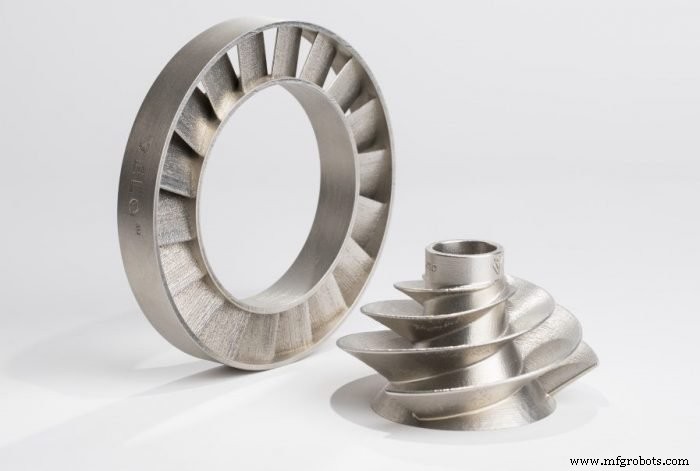
3D printing has moved beyond prototyping. Today, companies across automotive, consumer goods, and tooling sectors are integrating the technology into their production lines, with 51% of surveyed firms already using 3D printing for serial parts (Sculpteo 2019 State of 3D Printing report).
Automakers such as Ford, Volkswagen, and BMW are already deploying 3D‑printed components, and BMW recently celebrated its one‑millionth 3D‑printed part for the i8 Roadster. While current volumes are modest, the range and frequency of printed parts are poised to expand dramatically.
“We’re reaching an inflection point and the number of parts that are actually going into production is increasing. Five years from now, you’ll see a lot of contract manufacturers that have scaled up considerably and have hundreds of these systems on their floor, producing parts with long‑term contracts for production.”
Zachary Murphree, VP of Technology Partnerships at VELO3D
Key to scaling is the arrival of next‑generation metal binder jetting, offered by companies such as Desktop Metal, 3DEO, ExOne, HP, and GE. These systems combine lower hardware and material costs with higher throughput, positioning metal binder jetting as a cost‑competitive alternative to traditional manufacturing methods. While 3D printing will not replace machining or injection moulding, it is evolving into a viable production method that can run alongside conventional processes.
2. Design Software Will Seamlessly Integrate With Additive Manufacturing
“One important trend is the development of design software tools for AM. The next step is for them to become fully and seamlessly integrated into popular CAD software products.”
Terry Wohlers, Founder and President of Wohlers Associates
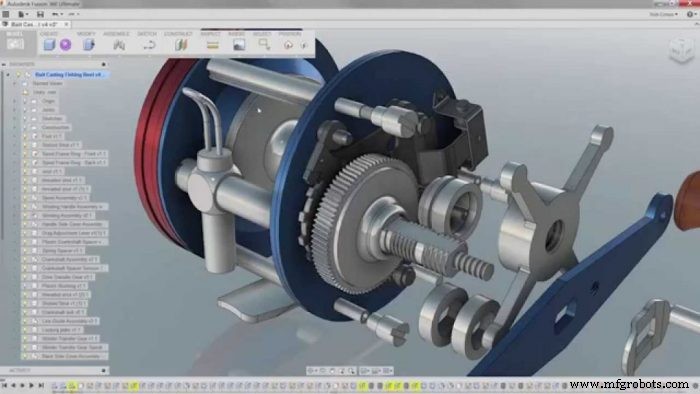
Designing for additive manufacturing remains challenging for engineers accustomed to traditional methods. Many CAD tools are not yet optimized for graded materials, lattice structures, or porosity modeling. Integrated solutions—such as Autodesk Netfabb, which repairs STL files, generates supports, lattices, and simulates metal parts—are bridging this gap. PTC’s Creo 6.0, enriched by its recent acquisition of generative‑design firm Frustum, also offers end‑to‑end design and build preparation. These advances will accelerate adoption by reducing iteration cycles and making additive‑friendly design the default workflow.
“We’ll see more software tools that help engineers design parts better for a given process… These developments will help to reduce the number of iterations needed, especially if the goal is printing for production.”
Greg Paulsen, Director of Application Engineering at Xometry
3. Education Is the Key to Wider Adoption

“In terms of skills, in my opinion, innovation is all about people and technologies. There’s no point in pushing for advanced technologies without the people to adopt them.”
Revannth Murugesan, Managing Director at Carbon Performance
The State of the Industry Survey identified lack of education as the biggest barrier for service bureaus. Prototyping is straightforward, but moving to production demands hardware investment and deep technical knowledge. Without this expertise, companies struggle to build business cases and realize the technology’s full potential.
“That workforce element is really critical right now. There are not enough engineers, managers, executives who truly understand the technology well enough to work and develop a strategy to get what they need to get out of it.”
John Barnes, Founder of The Barnes Group Advisors
“The industry is recognising what additive manufacturing can’t do as well as the fact that it can do a lot more than most are using it for today.”
Harold Sears, Technical Leader of Additive Manufacturing Technologies at Ford
Education initiatives—online courses, workshops, and tradeshows—are expanding. For example, the Barnes Group launched an online course in partnership with Purdue University to provide engineers with AM fundamentals. Companies that learn the capabilities and limits of 3D printing, like Boyce Technologies, can pivot from prototyping to high‑volume production, with 90% of their output now produced by 3D printing.
4. Dentistry Will Embrace 3D Printing as a Dominant Production Method
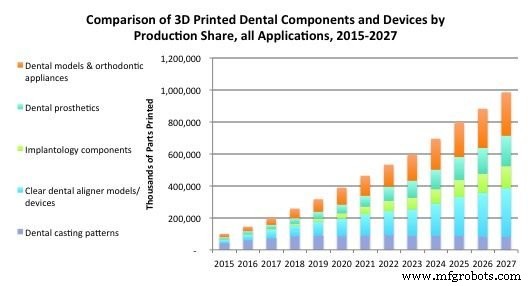
“In dentistry, you could, in theory, have a great case for converting 80% plus of the means of production to an additive technology.”
Scott Dunham, Vice President of Research at SmarTech Analysis
Resin‑based technologies (SLA, DLP, material jetting) are already producing crowns, guides, and aligners. A SmarTech report projects 3D printer sales in dentistry to surpass machining hardware by 2025, with 3D printing becoming the leading production method for dental restorations by 2027. Resin printers average $5,000 and are compatible with certified dental resins—Formlabs and EnvisionTEC now offer 5–13 dental‑specific materials, respectively.
“We’re seeing that 3D printing is becoming one of the key tools in areas like dental care and dental restoration. The digital thread there has been largely developed all the way from intraoral scanning to the workflows and the planning—not just in the lab, but also in the dental clinic.”
Avi Reichental, Founder of XponentialWorks
5. Additive Manufacturing Will Become Smarter
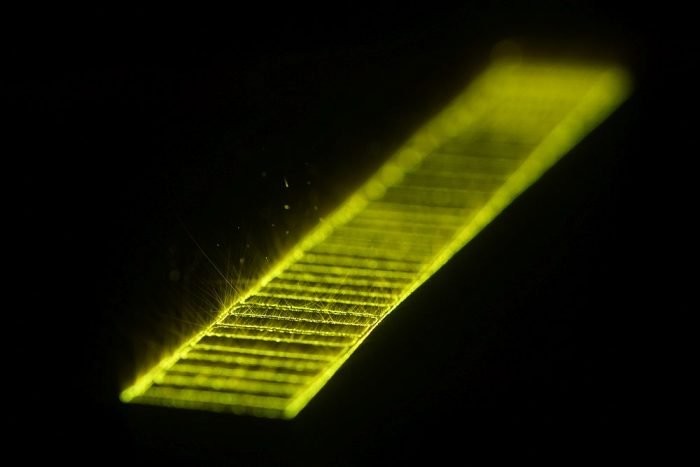
“Part of the machine learning process is to introduce a high level of repeatability and enable the user to more easily predict how performance is going to function.”
Joshua Martin, CEO of Fortify
Smart printers equipped with sensors and machine‑learning algorithms are emerging. Real‑time monitoring—capturing melt‑pool temperature, build dimensions, and surface finish—allows predictive analytics to flag defects before they occur. Companies like VELO3D, EOS, and MIT startup Inkbit are pioneers, integrating camera‑based inspection and automated correction into their machines. Widespread adoption of these technologies will improve repeatability, reduce build failures, and streamline quality assurance.
“I think that’s the Holy Grail for AM because with in‑process control you’re able to almost immediately react on deficiencies within your process.”
Yves Hagedorn, Managing Director at Aconity3D
6. The Service Bureau Market Will Continue to Expand
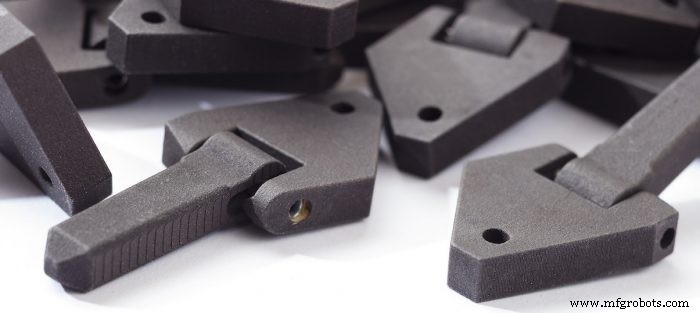
Service bureaus are pivotal for advancing AM. The trend is driven by specialization—metal AM, medical, and other niche verticals—and by the need for integrated post‑processing and design services.
“The specialists who can cultivate unmatched expertise in a specific area of AM should see a return on that investment in expertise.”
Scott Dunham, Vice President of Research at SmarTech Analysis
“There will be a lot of mergers and acquisitions over the next few years… larger manufacturers of 3D printing materials may acquire service bureaus to promote their particular materials.”
Jonathan Warbrick, Business Development Manager at Graphite Additive Manufacturing
Recent acquisitions—Sandvik’s stake in Beam‑IT and the rapid growth of MaaS platforms like 3D Hubs and Xometry—illustrate the sector’s momentum. These platforms provide end‑to‑end manufacturing services, reducing marketing overhead for shops and offering customers a one‑stop shop for diverse production needs.
“[MaaS is] a win‑win because the shops are getting work without having any need to do marketing for it… the customer has a one‑stop location to get their parts ordered over many manufacturing technologies.”
Greg Paulsen, Director of Application Engineering at Xometry
7. Metal 3D Printing Will Continue to Mature
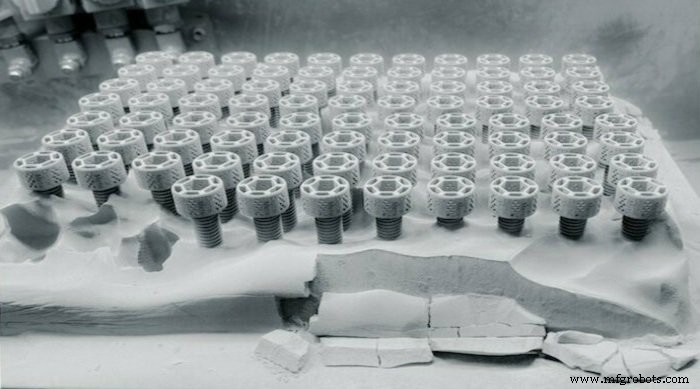
“When it comes to metal 3D printing, we’ve just scratched the surface.”
Scott Dunham, Vice President of Research at SmarTech Analysis
Metal AM remains a high‑growth area, yet its full potential is untapped. The focus will shift toward advanced materials, higher utilization rates, and rigorous quality control. EOS’s 2019 launch of four new metal alloys—stainless steel CX, aluminum AlF357, and two titanium grades—demonstrates this trajectory. Reliable testing and certification processes will be critical for broader industrial adoption, especially in automotive, aerospace, and energy sectors.
“Quality control, i.e. understanding the quality requirements and being able to validate your part, is really going to make a difference going forward.”
Doug Hedges, President of Sintavia
As production volumes rise, collaboration on standards and best practices will become essential to ensure consistent part quality across the industry.
8. Composite 3D Printing Presents a Massive Market Opportunity
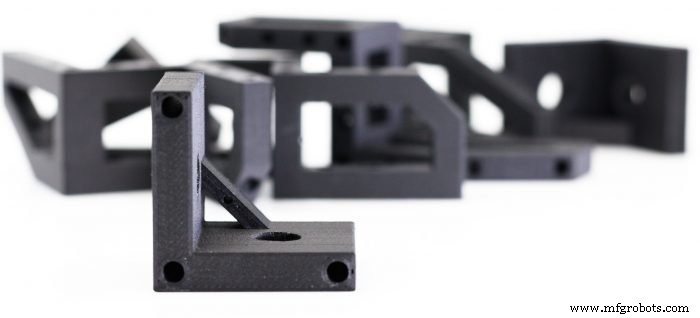
“The composite space is perhaps the newest segment in 3D printing. There are challenges that come with this, but there are also a lot of opportunities.”
Joshua Martin, CEO of Fortify
The composite sector is projected to reach nearly $10 billion in the next decade, driven by the ability to produce lightweight, high‑strength parts for aerospace, automotive, oil & gas, and industrial goods. Current manufacturing of composites is labor‑intensive and slow; additive manufacturing can dramatically reduce costs and lead times.
“Composite manufacturing is currently very labour, resource and capital intensive, which means that it doesn’t really scale to large volumes.”
Wiener Mondesir, Co‑Founder and CTO of Arevo
Companies like Markforged, Arevo, Fortify, Impossible Objects, and Thermwood are accelerating the transition to composite AM. Fortify’s recent $10 million Series A funding and Arevo’s bike‑frame production showcase the sector’s rapid growth.
9. Automation Will Become Central to Additive Manufacturing
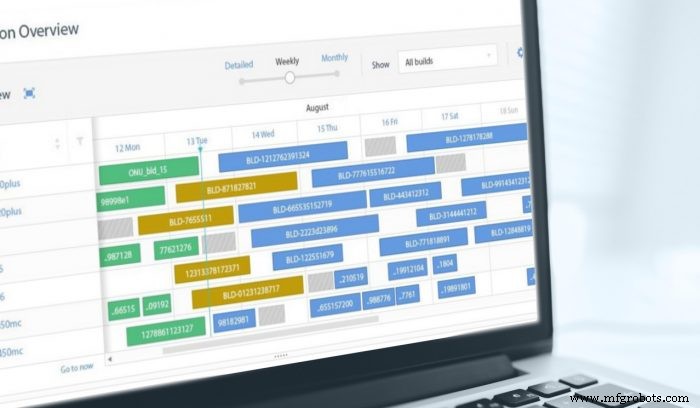
Automation—hardware, robotics, sensors, and software—is the next frontier. Integrated production units that combine robotics for build handling and computer‑vision inspection are already on the market. Digital Metal’s robotic build‑boxing solution and Jabil’s automated post‑processing workflows illustrate this trend.
“Post‑processing automation will become one of the major things to watch out for. This is because the real step change will be in the ability to automate post‑production.”
Neil van Es, Founder of Parts on Demand
Automated post‑processing, coupled with digital workflow management, will enable continuous, volume‑ready production—essential for full‑scale manufacturing.
10. The Additive Manufacturing Landscape Will Become More Competitive
“In the next couple of years we will see a lot more competitive chaos resulting from a fairly crowded field.”
Scott Dunham, Vice President of Research at SmarTech Analysis
The AM market now includes over 80 printer manufacturers, most of whom emerged in the last decade. New entrants can leapfrog legacy incumbents, focusing on innovation without legacy constraints. This has spurred rebranding efforts—Ultimaker and 3D Hubs, for example—to clarify their B2B focus.
“We live in a period in which you either innovate or evaporate. In other words, you either disrupt or you will be disrupted.”
Avi Reichental, Founder of XponentialWorks
Competitive pressure will drive companies to differentiate through unique expertise and clear value propositions, fostering continued growth and innovation across the sector.
Trends Signal a Bright Future for AM
“I think the additive manufacturing industry will deliver on its promise.”
Simon Fried, Co‑Founder of Nano Dimension
The convergence of advanced hardware, intelligent software, new materials, and expanding applications indicates that 3D printing will become another mainstream manufacturing technology. Dental, in particular, is on the cusp of an almost complete shift to additive manufacturing, while other sectors will follow as awareness and capabilities grow.
“I really do think you will see the impact of digital manufacturing as a solution for full‑scale manufacturing.”
Philip DeSimone, Co‑Founder and VP of Business Development at Carbon
To thrive, firms must capitalize on these trends—delivering specialized services, investing in smart tech, and pursuing continuous innovation. The future of additive manufacturing is digital, smart, and full‑scale.
More Expert Roundups:
- 10 of the Biggest Challenges in Scaling Additive Manufacturing for Production [Expert Roundup]
- Expert Roundup: 20 Experts Share Their 3D Printing Predictions for 2020
3D printing
- How Digitisation Powers the Future of Medical 3D Printing
- Industry 4.0: Materialise’s Blueprint for the Networked Factory
- Collaboration: The Path to the Factory of the Future
- What 3D Printing Needs to Evolve: Top 3 Industry Demands Revealed at AMUG
- How 3D Printing Is Transforming Manufacturing, Healthcare, Aerospace, and Education
- The ABCs of 3D Printing: How Additive Manufacturing is Shaping Modern Industry
- 8 IoT Trends Forecasted for 2017: Expert Insights
- How 3D Printing Will Transform Manufacturing in the Next Decade
- How 3D Printing is Revolutionizing Modern Manufacturing
- 4D Printing: Revolutionizing Additive Manufacturing for Adaptive Solutions