



John Barnes, Founder of The Barnes Group Advisors, Discusses Additive Manufacturing’s Future and Workforce Development

The need for specialised skills and expertise in additive manufacturing is crucial for the technology’s adoption. Mastering additive principles is challenging due to a steep learning curve and significant time investment. The Barnes Group Advisors (TBGA), a US-based consultancy, tackles this issue.
Founded in 2017 in Pittsburgh, TBGA helps companies strategise and solve industrialisation challenges of additive manufacturing. It offers advisory services and a bespoke training programme.
In this interview, we sit down with founder and Managing Director John Barnes to discuss why workforce development fuels industry growth and what it takes to maximise additive manufacturing’s potential.
Could you tell me a bit about The Barnes Group Advisors and the services you provide?

We launched TBGA two years ago in response to the rapid industrialisation of additive manufacturing. With engineering backgrounds, our team has led qualification and certification efforts across industries. For example, at Arconic we qualified the first titanium series production parts for the Airbus A350.
Today, we’re a 13‑member team, many of whom have held executive roles, including myself—former Vice President at Arconic. Laura Ely, former Head of Technology at GKN Aerospace, leads our ADDvisor® Services.
Our expertise bridges the gap between technical requirements and strategic objectives, translating engineering needs into business‑relevant solutions. We assess each client’s supply‑chain position and advise on how to engage with or adopt additive manufacturing.
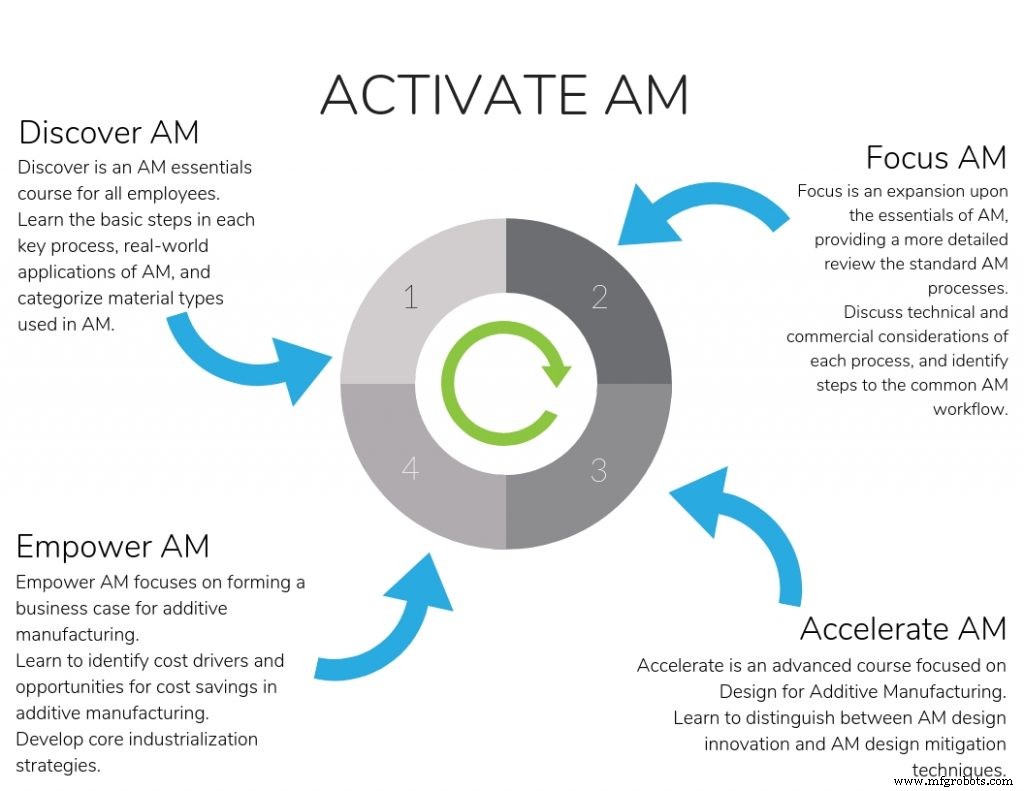
We also developed a training programme in response to client demand. One client launched a large AM business and needed engineers who could design for the process. Without that knowledge, financial goals were unattainable, so we crafted a requirements‑based curriculum.
Often our clients have mature products with original designers no longer available. Our role is not to sell additive manufacturing but to help them create better, more affordable parts. A requirements‑first approach simplifies the transition.

How did you become involved in additive manufacturing?
I began my career at what is now Honeywell Aircraft Engines, participating in a project with Sandia National Laboratories and nine other companies. The project spun out into Optomec, a pioneer in directed‑energy deposition using powder feedstock.
Later, I moved to Lockheed Martin’s Skunk Works, leading Manufacturing Exploration & Development. We explored polymer, sheet lamination, directed‑energy, and powder‑bed systems, diving deep into metal powders.
At CSIRO, Australia’s national science agency, I directed the high‑performance metals programme. There, we established Lab 22, an innovation facility that gave SMEs access to a range of additive technologies, addressing the capital barrier for small‑to‑medium enterprises.
Returning to the US in 2015, I joined RTI International Metals—later acquired by Alcoa and rebranded as Arconic. With titanium production plateauing, the CEO invested in downstream capabilities, including an AM facility in Texas. I led R&D for advanced manufacturing and ultimately secured the Airbus A350 titanium qualification project.
“It’s a hard business making airplane parts. Transitioning from prototyping to manufacturing demands extensive paperwork and qualification for special processes.”
What’s the current state of additive manufacturing in aerospace and defence, and what are the key challenges?
Additive manufacturing is a disruptive technology that requires commitment to reap its benefits. Workforce development is critical—designers must learn additive‑centric thinking, moving away from subtractive mindsets. This shift is essential for cost‑performance and rapid innovation.
Although aerospace, defence, and medical sectors are traditionally risk‑averse, they are leading adopters. The pace of progress is encouraging, yet the talent gap remains the biggest barrier. Companies need engineers, managers, and executives who truly understand additive technology to craft a viable strategy.
“Workforce development is the linchpin of industry growth.”
Why is designing for additive manufacturing so crucial?
Without additive‑centric design, the cost‑performance advantage evaporates. Engineers adopt new technologies only when they deliver clear cost savings. In additive manufacturing, weight drives cost: heavier parts mean longer build times and higher material consumption. Therefore, design decisions directly influence production cost and feasibility.
“You can’t control machine or material prices, but you can control design. Your design determines build time, post‑processing, and ultimately cost.”
Our training emphasises cost drivers in additive manufacturing, helping engineers avoid hidden expenses and achieve financial targets.
How is the skills gap in additive manufacturing being addressed?
Resources are expanding annually, including online courses. For example, TBGA partners with Purdue University to offer an online certificate with engineer, manager, and executive tracks—no engineering degree required. MIT also offers an online course, broadening accessibility.
High‑quality, remote‑accessible education enables professionals worldwide to move from no background to an intermediate level. This democratisation attracts young talent to manufacturing—making additive manufacturing an exciting career path.
The industry is shifting toward end‑part manufacturing. What does this mean, and what’s needed to get there?
We’re witnessing a transition from novelty headlines to mainstream production stories. This shift requires rigorous specifications, supply‑chain alignment, and industry collaboration.
Tier 1 and Tier 2 suppliers, along with small machining houses, are now asking: “When is the right time to adopt AM?”
Our “Four Lenses” framework—machines, materials, digital space, and people—coupled with the TBGA AM maturity model, guides organisations through a five‑level path from prototyping to full production.
Levels 0 and 1 focus on prototyping and tooling, demanding minimal skill sets. As companies move to levels 2 and 3, part replacement and consolidation require advanced design, risk management, and supply‑chain integration. Progressing to level 4—exclusive additive parts—demands robust training and process control.
Most firms are proficient at levels 0 and 1 but face challenges when attempting substitution. Achieving the business case for additive parts often requires a culture shift and risk tolerance.
What developments in additive manufacturing excite you?
Scientific progress is accelerating—process understanding improves, and machines become faster and more reliable. Material innovation, especially in polymers and metals, expands design freedom.
“As a materials engineer, I see vast potential in both polymers and metals. Designers and materials scientists have the chance to truly excel.”
Post‑processing is evolving, with modifications to existing equipment tailored for AM. Software is also advancing: new design tools, MES, and workflow systems streamline production and quality assurance.
The second generation of photopolymerisation technologies offers fresh opportunities, driven by startups and inventive approaches.
How do MES and workflow software contribute to industrialising AM?
MES and workflow tools manage risk, optimise inventory, and protect intellectual property. In highly regulated sectors like aerospace and medical, such systems are essential to maintain quality and safety standards.
They enable precise tracking of 3D‑printing files, ensuring the correct design is used and facilitating quality assurance. They also create monetisation pathways for unique AM processes.
To learn more about The Barnes Group Advisors, visit: https://www.thebarnes.group/
3D printing
- Additive Manufacturing Technologies Revolutionizes Post‑Processing with the First‑Ever Automated Machine
- Hybrid Manufacturing: Merging Additive and Subtractive Technologies for the Future of Production
- John Kawola on Ultimaker’s Transition to Enterprise 3D Printing
- How PostProcess Technologies CEO Jeff Mize is Removing the Post‑Processing Bottleneck in Additive Manufacturing
- Jabil’s Rush LaSelle Explains How Additive Manufacturing is Revolutionizing Global Production
- MELD Manufacturing CEO Nanci Hardwick on Revolutionizing Metal 3D Printing
- Avi Reichental Interview: From 3D Systems CEO to XponentialWorks Founder
- 5 Key Additive Manufacturing Trends Driving 2021 Innovation
- Additive Manufacturing Explained: From Design to Finished Part
- How 3D Printing Will Transform Manufacturing in the Next Decade