



5 Key Additive Manufacturing Trends Driving 2021 Innovation
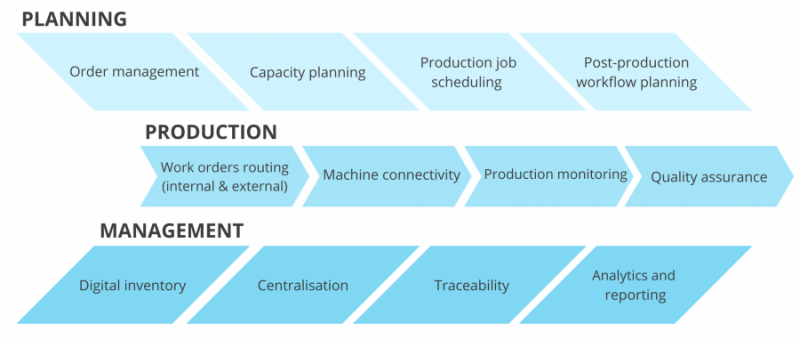
In 2020 the additive manufacturing (AM) sector faced setbacks while simultaneously gaining renewed production focus. As the technology matured, the industry turned to 2021 to answer a crucial question: what will shape AM’s future? Below are five trends that will define the next wave of AM innovation. Software has long been the bottleneck in 3D printing, lagging behind rapid hardware advances. It is the glue that connects every stage of the AM workflow—from ordering and design to build preparation, production planning, monitoring, and delivery. Until recently, many solutions were not tailored to AM’s unique demands, leading to manual, inefficient processes. In 2021, both large and niche vendors are closing this gap with tools specifically engineered for additive workflows, setting the stage for industrial‑scale adoption. Closed, proprietary AM systems once dominated the market, limiting integration with third‑party software and factory equipment. Today, connectivity is essential for scaling AM operations. Major players are pivoting to open‑system architectures. For instance, HP has partnered with a leading MES provider to integrate its AM lines into additive manufacturing execution software, while Stratasys announced expanded connectivity that allows its historically closed machines to interface seamlessly with external applications. These developments signal a broader industry shift toward interoperable solutions. Artificial intelligence (AI) and machine learning (ML) are becoming integral across the AM value chain. In hardware, AI-driven vision systems can monitor each print layer in real time and predict material behavior, enhancing process control. Generative design, already a cornerstone of AM, will benefit from AI‑powered optimization that adapts structures to specific material and process constraints. Software vendors are embedding AI into MES platforms to automate data collection, uncover bottlenecks, and recommend production improvements. As these capabilities mature, AM will move closer to fully autonomous, data‑driven manufacturing. Organizations are rethinking supply chains to increase flexibility and resilience. Additive manufacturing—by reducing tooling steps, shortening lead times, and enabling digital inventory—fits naturally into distributed, localized production models. A recent HP survey found that 59% of companies are evaluating hybrid manufacturing models, and 52% are exploring localized digital factories. 2021 is poised to see the first substantive deployments of distributed AM strategies. Digital manufacturing success hinges on robust software foundations. Manufacturing Execution Systems (MES) for AM streamline order management, scheduling, and monitoring, turning complex workflows into repeatable processes. Over the past few years, additive‑MES solutions have evolved to meet AM’s distinct requirements. Today’s systems are already integrating machine learning, offering advanced connectivity, and improving interoperability—all of which will fuel the next wave of growth in 2021 and beyond. Are you prepared to ride the wave of AM trends?
1. Software Innovation Accelerates Additive Manufacturing
2. Enhanced Machine Connectivity Drives Integration

3. AI and Machine Learning Fuel the Next Generation of AM
4. Distributed Manufacturing Powered by Additive Processes
5. The Rising Momentum of Additive MES Solutions

3D printing
- Additive Manufacturing Technologies Revolutionizes Post‑Processing with the First‑Ever Automated Machine
- Hybrid Manufacturing: Merging Additive and Subtractive Technologies for the Future of Production
- Seven Key Trends That Shaped 3D Printing in 2018
- Additive Manufacturing Explained: From Design to Finished Part
- 7 Emerging Trends Shaping the Future of Manufacturing
- How Technology is Transforming Tomorrow's Manufacturing
- Four Key Trends Shaping the Semiconductor Industry's Future
- How 3D Printing Will Transform Manufacturing in the Next Decade
- How 3D Printing is Revolutionizing Modern Manufacturing
- 12 Key Industry Trends Shaping Contract Manufacturing: The Rise of Additive Machining