



Solvay’s Brian Alexander on Building High‑Performance Polymers for Additive Manufacturing
 With the demand for high‑performance polymers in additive manufacturing accelerating, major material players are expanding their portfolios. As the industry shifts from prototyping to serial production, the need for engineering‑grade materials that satisfy stringent performance criteria across automotive, medical, aerospace, and other sectors has never been greater. Solvay, BASF, SABIC, and others are now actively developing AM‑specific polymers.
Solvay is a €10 billion company boasting more than 150 years of materials expertise. Featured in the Additive Manufacturing Landscape, the Belgian firm supplies specialty materials to diverse sectors, from automotive to aerospace.
This week we sit down with Brian Alexander, founder of Solvay Speciality Polymers’ Business Incubation Platform for Additive Manufacturing, to discuss the company’s expansion into AM, the strategic opportunities the technology offers, and why high‑performance materials are essential for advanced manufacturing.
Spotting the opportunity of additive manufacturing

By early 2016, additive manufacturing had become impossible to ignore. Internal deliberations led Solvay to establish a dedicated business unit within its Speciality Polymers division focused solely on AM.
“Additive manufacturing aligns perfectly with Solvay’s core markets,” Alexander explains. “We serve high‑value sectors where small series and mass customisation are the norm—think aerospace and healthcare—rather than mass production of millions of parts.”
“We recognized AM’s transformative potential: it could be a threat or an opportunity. We chose the latter.”
With key AM technologies such as SLS and FFF moving into the public domain by 2016, Solvay saw a widening market and the entrance of new competitors. Alexander notes that the hype accompanying AM required a pragmatic approach.
“In our first year we surveyed top customers to gauge their AM adoption. In 2016, most were skeptical—‘interesting, but not for mass production.’ That view has since evolved.”
AM requires a shift in mindset
Solvay Speciality Polymers, one of the group’s business units, employs approximately 3,500 staff. “We offer one of the most comprehensive portfolios of high‑performance polymers, with around 35 distinct formulations,” Alexander says.
These premium materials are sold in smaller volumes, which aligns well with AM’s demand for specialised, high‑value parts that benefit from the technology’s complexity and economies of scale.
“AM demands a fundamentally different mindset compared to conventional manufacturing. You must redesign the entire value chain—from materials to design, equipment, and process optimisation.”
“Attempting to market legacy resins in the AM space would have failed,” Alexander admits. “Our goal is to become the leading supplier of custom‑tailored, AM‑ready high‑performance solutions.”
What does that entail in practice?
“You must understand precisely what goes into the machine,” Alexander states. “Any uncontrolled variability in the supply chain compromises process control, which is critical for qualifying materials in niche markets like medical or aerospace.”
The road to developing high‑performance polymers for additive
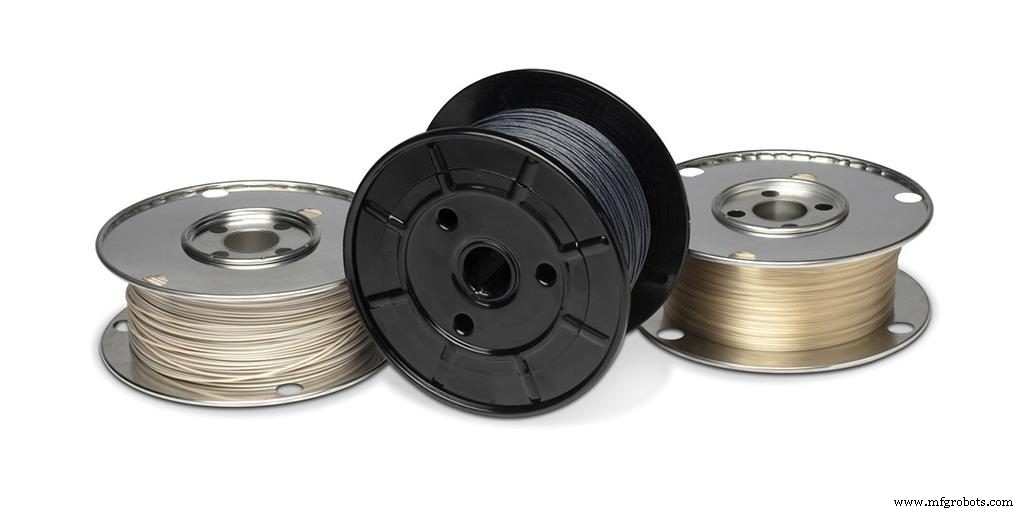
“Additive manufacturing began with low‑performance materials such as PLA and ABS, suitable for toys and prototypes,” Alexander notes. “To unlock the full potential of AM, industrial‑grade polymers—like PEEK—are required.”
The growing demand for industrial‑grade materials reflects the industry’s transition from prototype‑only to serial production.
“Focusing solely on prototyping misses AM’s benefits because those parts aren’t designed for additive processes,” Alexander explains. “Serial production demands a broad range of thermal, mechanical, and qualification data to achieve the desired design.”
Developing AM‑specific high‑performance polymers is challenging, given the variety of AM technologies and Solvay’s extensive materials portfolio.
In the end, the company selected Fused Filament Fabrication (FFF) as the starting point— the most accessible AM technology.
Solvay targeted two key markets for initial testing: healthcare, with its mass customisation needs, and aerospace, which relies on small series production.
“Our questions were: how are these markets currently using our materials, and how can we enable them for 3D printing?” Alexander says. “This approach expands our customers’ capabilities beyond traditional manufacturing.”
PEEK and PPSU were chosen as the inaugural polymers.
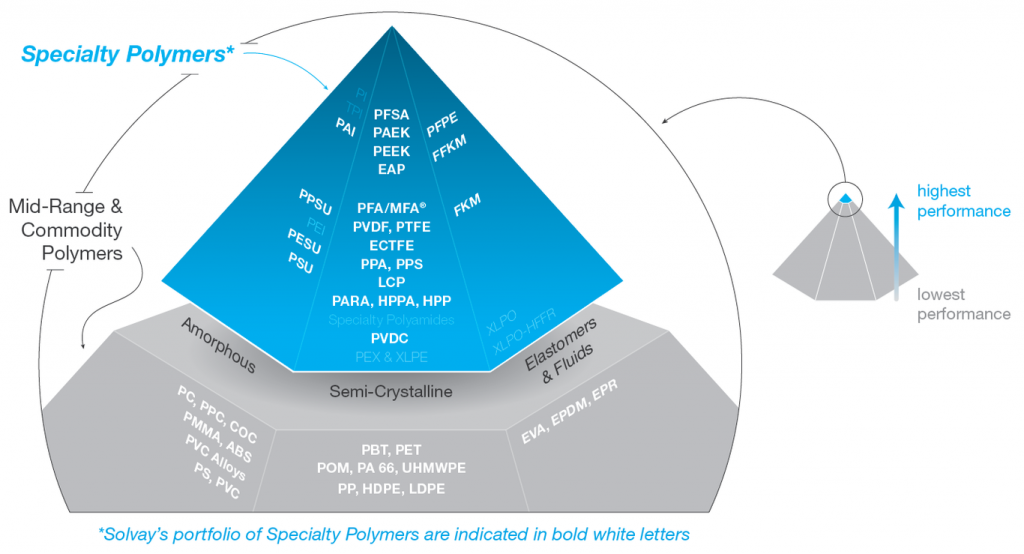
PEEK is renowned for its exceptional stability, chemical and temperature resistance, and superior strength‑to‑weight ratio, making it ideal for aircraft components, automotive bearings, oil & gas, and electronic applications.
PPSU offers high heat resistance, outstanding chemical and impact resistance, and excellent elongation at break, suitable for medical devices, plumbing, and food‑service components.
“In AM, understanding material behaviour—shrinkage, warpage, cohesion—is essential,” Alexander emphasizes. “These properties can be predicted if the material is well understood.”
Solvay launched its Additive Manufacturing Cup in October 2017, inviting university students worldwide to showcase their AM skills using PEEK filament. Alexander reports the results were “phenomenal.”
“Students quickly innovated, demonstrating that with the right support, the technology’s full potential can be realized,” he says, fueling confidence to pursue new avenues.
A new business model emerges
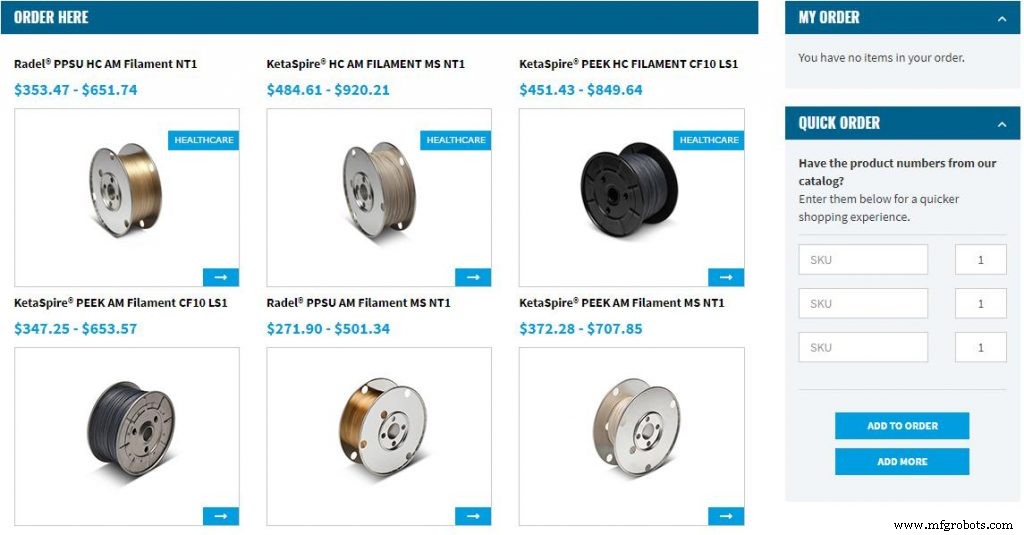
The success of the Additive Manufacturing Cup led Solvay to reimagine customer engagement through a new e‑commerce platform.
“We abandoned the closed‑model approach and opened our materials to anyone with a credit card,” Alexander explains. “Fast, transparent, and fair pricing is unprecedented for a major chemical company. Our ultimate goal is to inspire the next generation to use our materials.”
Data transparency is pivotal when serving industrial clients. “Other chemical companies provide generic data sheets based on injection moulded parts,” Alexander notes. “We publish comprehensive data on additively manufactured parts to give our clients confidence.”
Why process control is important
Alexander underscores the criticality of process control. “Without a robust process or suitable equipment, the part quality suffers.”
To that end, Solvay collaborates with 3D printer manufacturers to align print profiles with polymer specifications.
“Most industrial users seek plug‑and‑play solutions—a material that can be inserted and produce consistent parts,” he says. “That’s the direction we’re moving toward.”
Between 2017 and 2018, Solvay learned that print parameters significantly affect porosity and voids, which in turn impact strength and strain at break. “Consistent, homogeneous parts require a deep understanding of material processing.”
“To harness AM’s full potential—lattices, lightweighting, part consolidation—you must understand how your material behaves in complex geometries and optimise the design for AM.”
The role of materials simulation
Solvay continues to expand its AM materials capabilities.
Last year, the company partnered with e‑Xstream Engineering, integrating Solvay’s high‑performance polymers into the Digimat‑AM simulation platform.
3D printing simulation is increasingly critical for predicting part behaviour before printing.
Through Digimat‑AM, users can now simulate the thermomechanical performance of Solvay polymers during design, eliminating much of the trial‑and‑error traditionally associated with AM.
Alexander explains the partnership’s objective: “Providing a digital twin of our material allows designers to test concepts without the 24‑hour print cycle. Predictive simulation adds significant value and accelerates time to market.”

The future of AM polymers
Alexander offers a philosophical perspective on AM’s future.
“I’m excited by AM’s promise. Larger companies are moving from an application‑centric to a process‑qualification mindset,” he says. “If a process isn’t reliable, the part fails. It’s simple.”
He notes that AM will complement, rather than replace, traditional manufacturing, opening new opportunities.
Regarding material costs, Alexander remains optimistic. “Economies of scale are a current challenge, and prices are high today. As volumes grow and applications diversify, prices will decline.”
2019 will be pivotal as Solvay works to qualify its additive processes. “We aim to partner with 10–15 commercial printers to ensure consistent printing of our polymers,” he says.
Solvay is also pursuing further collaborations, especially in advanced materials and other AM technologies such as SLS and Multi‑Jet Fusion, and with key OEMs ready to invest in disruptive solutions.
To learn more about Solvay, visit Solvay.
— — —
Expert Interviews
AMFG’s Expert Interviews series showcases innovative companies and individuals shaping the future of additive manufacturing. For more information about participating, contact marketing@amfg.ai.
3D printing
- How PostProcess Technologies CEO Jeff Mize is Removing the Post‑Processing Bottleneck in Additive Manufacturing
- Interview with Sintavia President Doug Hedges: Scaling Serial Production of Metal Parts via 3D Printing
- Jabil’s Rush LaSelle Explains How Additive Manufacturing is Revolutionizing Global Production
- How Graphite AM’s Jonathan Warbrick Drives Success in Industrial 3D Printing
- Interview with Eckhart Additive Manufacturing Engineer Robert Heath: 3D Printing, Automation & Industry 4.0
- Why Post‑Processing Is the Key to Scalable 3D Printing – Insights from AMT CEO Joseph Crabtree
- Scott DeFelice on the Evolution of High‑Performance Polymers for 3D Printing
- Top Metal 3D Printing Materials: Unlocking Additive Manufacturing’s Potential
- Design for Additive Manufacturing (DfAM): 3D Printing Strategies That Cut Costs and Boost Efficiency
- Why 3D Printing Is Revolutionizing Modern Manufacturing