



Interview with Sintavia President Doug Hedges: Scaling Serial Production of Metal Parts via 3D Printing
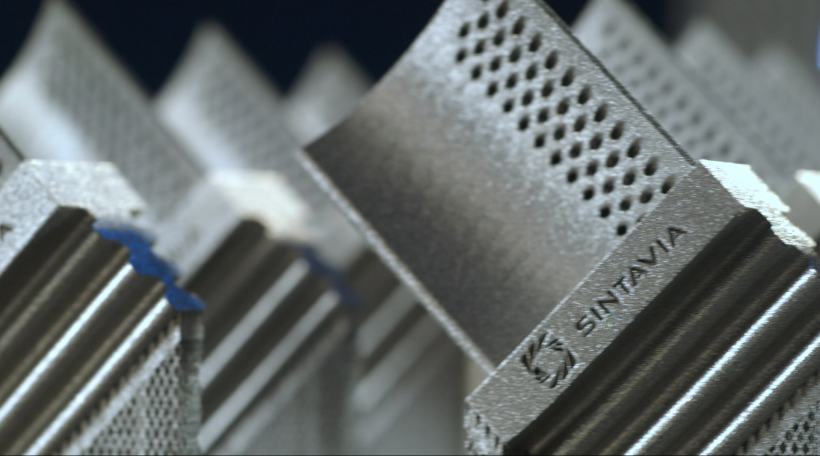
 Sintavia is an independent manufacturer that delivers metal additive manufacturing services to critical sectors such as aerospace, defence, and oil & gas.
Focused on serial production, Sintavia offers a fully integrated service—from design and build to post‑processing, testing, metallurgy, and powder characterisation—all within its in‑house laboratory.
Recently, Sintavia announced the expansion into a new 55,000‑square‑foot facility that prioritises high‑volume production.
This week we spoke with President Doug Hedges about how the company consistently produces certified metal parts, why additive manufacturing (AM) is transformative for aerospace, and what steps the industry must take to accelerate broader adoption.
Could you tell us a bit about Sintavia?
Sintavia was founded in 2012 by CEO and Chairman Brian Neff, originally as an in‑house AM unit for CTS Engines, a Fort Lauderdale‑based jet‑engine MRO. The company spun out as an independent entity in 2015 and moved to its current Davie, Florida, headquarters.
With deep roots in aviation maintenance, repair, and overhaul (MRO), Sintavia leveraged that expertise to build a vertically integrated manufacturing model. This approach means that metrology, machining, heat treatment, testing, and AM all occur under one roof, ensuring tighter quality control and faster turnaround.
Today, Sintavia serves aerospace and defence, as well as the oil & gas sector, with a portfolio that spans complex components to full assemblies.
Aerospace is a central focus for Sintavia. What are the key benefits of additive manufacturing for this industry?
AM originated as a rapid prototyping tool for OEMs in aerospace and defence, but it has since matured into a production‑grade technology that can replace traditional weldments and castings. The core advantages include:
- Consolidation of multiple parts into a single component, reducing assembly time and cost.
- Complex geometries such as lattice‑reinforced heat exchangers and lightweight valve bodies that were previously impossible to machine.
- Tool‑less design that shortens development cycles and lowers tooling expenses.
- Improved performance through weight reduction and enhanced material properties.
How does Powder Bed Fusion (PBF) fit into your production strategy?
At Sintavia, PBF—using both laser and electron‑beam systems—is the workhorse for high‑pressure ducts, valve bodies, and heat exchangers. The technology allows us to:
- Replace multiple weldments with a single, solid component, cutting down on potential failure points.
- Fabricate ultra‑thin walls (≤200 µm) and intricate internal channels that enhance heat transfer.
- Design parts specifically for AM, unlocking performance gains that conventional methods cannot achieve.
Beyond these, we apply PBF to turbomachinery components—from small compressor impellers to large rocket‑engine pieces—demonstrating versatility across the aerospace spectrum.
What design challenges arise when producing these parts?
AM is a highly dynamic process that can introduce significant distortion due to rapid heating and cooling cycles. Predicting and mitigating this distortion is critical for producing high‑precision parts. At Sintavia, we use Finite Element Analysis (FEA) early in the design cycle to determine optimal build orientation, support strategies, and part geometry. This predictive modelling allows us to add necessary tolerances and post‑process stock, ensuring the final component meets exact specifications.
We also coordinate AM with subtractive processes—such as machining and wire‑EDM—to achieve the required surface finish and dimensional accuracy.
What are the biggest hurdles in post‑processing metal AM parts?
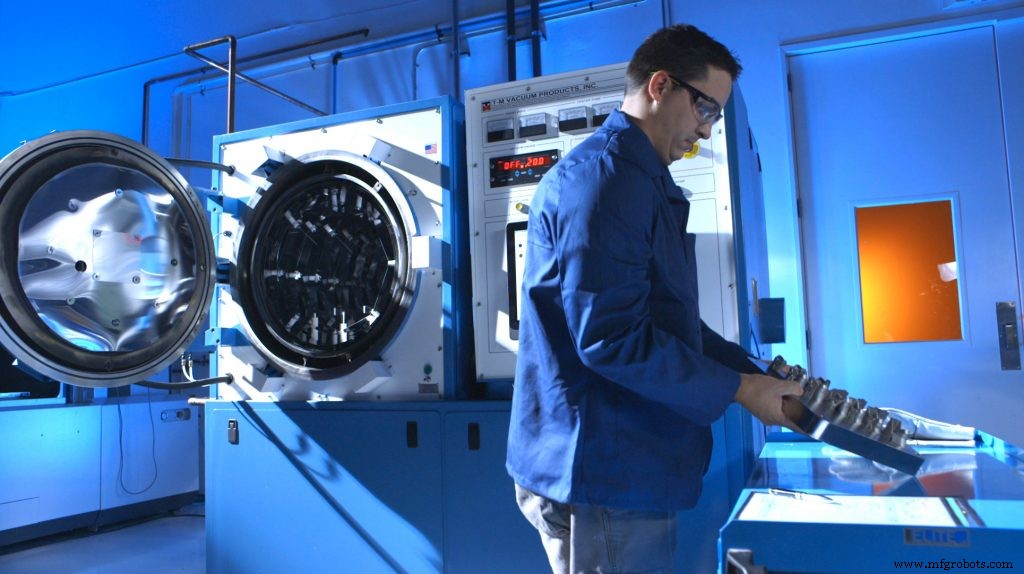
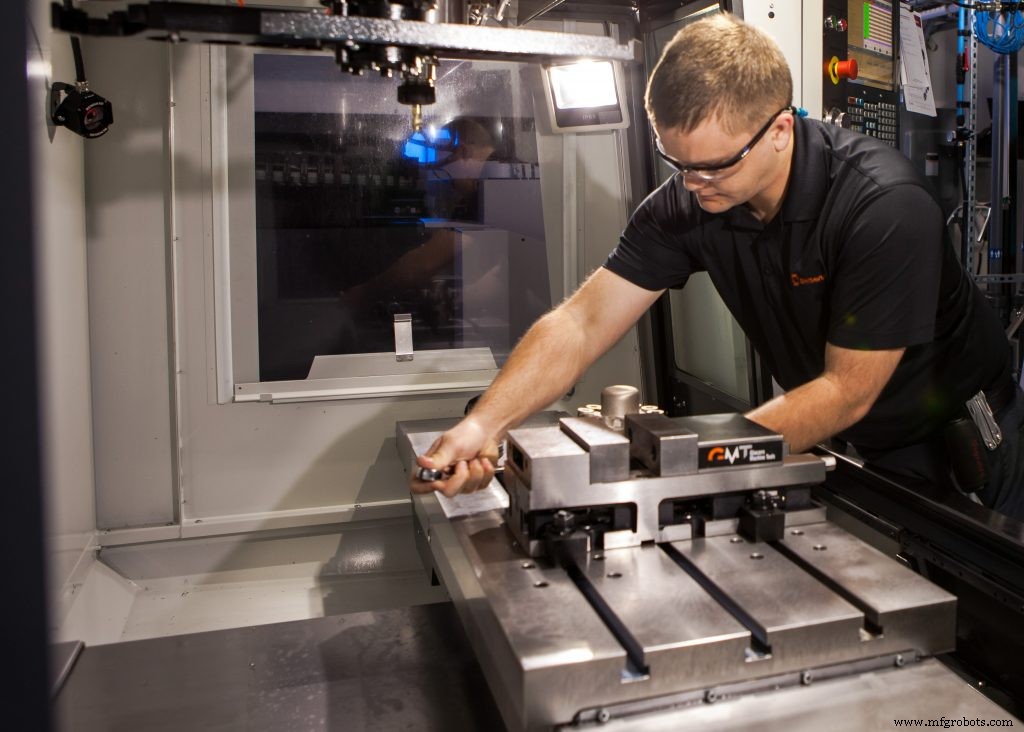
Post‑processing is a tightly coupled sequence that begins with powder removal. For complex geometries, we employ custom ultrasonic or vibration‑based systems to extract residual powder efficiently. Next, we perform in‑house stress relief—either in a vacuum furnace or a box furnace—to eliminate residual stresses introduced during build.
The part is then removed from the build plate via wire‑EDM or a bandsaw, followed by support removal. Depending on the material and complexity, this may require five‑axis machining or a dedicated support‑removal system. Finally, we offer Hot Isostatic Pressing (HIP) or precision machining to meet final dimensional and surface finish requirements.
Each step is controlled and documented to ensure traceability and repeatability.
How does Sintavia handle metal powder development and characterization?
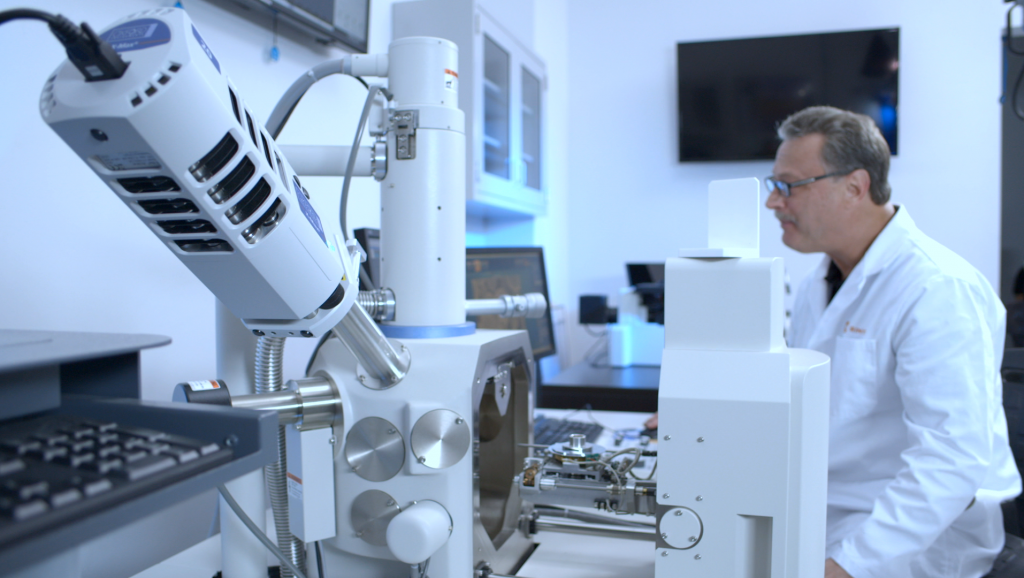
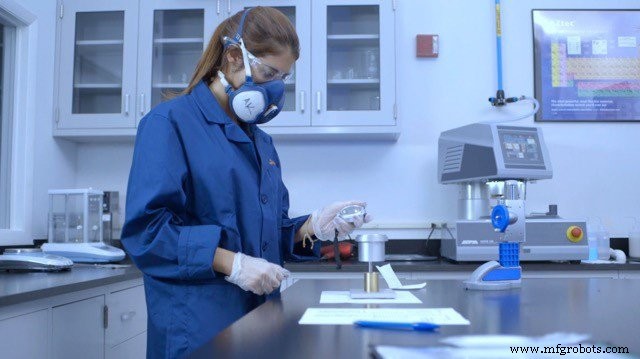
While we do not develop new powders, we partner with alloy manufacturers to validate specialty steels and stainless alloys for flight use. Our in‑house lab conducts a suite of eight to nine critical tests—flow testing, morphology, particle‑size distribution, gas analysis, ICP chemistry, and more—to ensure powders meet stringent aerospace standards before build.
Throughout the build, we sample and archive powder to monitor any changes, enabling us to maintain consistent material performance and compliance.
What’s the vision behind the new facility?
The upcoming 55,000‑sq‑ft facility will be the flagship production hub, featuring over $30 million in new AM equipment, advanced powder handling systems, backup generators, and a dedicated power supply for inert gas. We anticipate creating 135+ new jobs in South Florida.
By scaling from 12 machines in our current plant to potentially 65 in the new space, we can offer end‑to‑end production—from build to heat treatment, post‑processing, and finishing—within a single, controlled environment. This aligns with our mission to deliver certified, repeatable parts for OEM customers.
Will Sintavia expand into automotive or medical markets?
Absolutely. The same high‑quality, traceable processes that serve aerospace also meet the rigorous standards of automotive and medical sectors. Our ISO 17025‑accredited lab and AS 9100 certification provide a solid foundation for transitioning to ISO 13485 for biomedical applications. In addition, we are already supplying parts for industrial gas turbines, illustrating the breadth of our capabilities.
What’s needed to accelerate the adoption of metal 3D printing?
Speed, cost, and proven quality are the pillars of broader adoption. Advances in laser technology, part‑design guidelines, and streamlined post‑processing workflows have already reduced cycle times and costs. Continued investment in these areas, combined with industry‑wide standardization, will move metal AM from prototyping into mainstream serial production.
How do you see the next five years shaping metal additive manufacturing, and where does Sintavia fit?
We anticipate a shift toward full‑production manufacturing, where AM parts compete directly with cast and forged alternatives in terms of strength, durability, and cost. Sintavia’s integrated platform—combining design, build, and post‑processing—positions us to lead this transition, ensuring that OEMs receive parts that meet or exceed traditional manufacturing standards.
What’s next for Sintavia?
Our focus is on lean, large‑scale production that delivers flight‑ready components for leading aerospace OEMs, including Honeywell, for whom we are the first AM supplier to produce certified parts. By 2025, we aim to double our production capacity and deepen our partnerships with major airframers and engine manufacturers, establishing Sintavia as the go‑to advanced manufacturing partner worldwide.
Final thoughts
Quality remains our top priority. For risk‑averse industries like aerospace, certification and conformance to engineering specifications are non‑negotiable. While we often discuss AM, we prefer to frame ourselves as an advanced manufacturer of precision aerospace parts, delivering solutions that enable our customers to outperform their existing designs.
To learn more about Sintavia, visit: https://sintavia.com/
About Doug Hedges
Doug Hedges brings over 20 years of aerospace experience, from experimental component design to FAA‑approved repairs and alterations. Prior to Sintavia, he held senior engineering roles at CTS Engines, HEICO Aerospace, Kapco Global, and Rolls‑Royce, and earned a BSME in Mechanical Engineering from the University of Minnesota.
Expert Interviews
AMFG’s Expert Interviews series showcases innovative companies and individuals shaping the future of additive manufacturing. For more information, contact marketing@amfg.ai.
3D printing
- Dr. Alvaro Goyanes of FabRx on 3D‑Printed Medicines: From Innovation to Personalised Care
- Solvay’s Brian Alexander on Building High‑Performance Polymers for Additive Manufacturing
- Interview with ANSYS Chief Technologist on Driving Metal 3D Printing Success Through Simulation
- Inside 3DEO: President Matt Sand Explains How Intelligent Layering Drives High‑Volume Metal 3D Printing
- MELD Manufacturing CEO Nanci Hardwick on Revolutionizing Metal 3D Printing
- Interview with FIT AG CEO Carl Fruth: Driving Radical Innovation through Additive Manufacturing
- Avi Reichental Interview: From 3D Systems CEO to XponentialWorks Founder
- How Graphite AM’s Jonathan Warbrick Drives Success in Industrial 3D Printing
- Metal 3D Printing: Revolutionizing Production with Speed, Cost Savings, and Design Freedom
- Additive Manufacturing 101: A Beginner’s Guide to 3D Printing