



How PostProcess Technologies CEO Jeff Mize is Removing the Post‑Processing Bottleneck in Additive Manufacturing
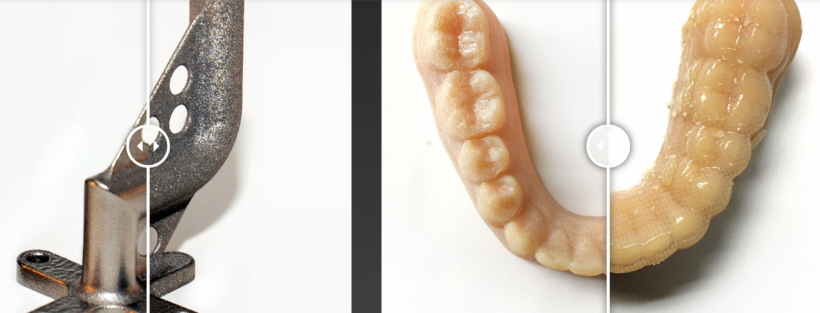
Before and after: 3D‑printed parts following post‑processing using PostProcess Technologies’ automation solutions. Image credit: PostProcess Technologies

Post‑processing remains the most labor‑intensive step in additive manufacturing, consuming 30‑60% of the total production time. The core of this bottleneck is that it is still largely a manual process.
PostProcess Technologies, headquartered in Buffalo, New York, is pioneering automation for support removal and surface finishing. In this week’s Expert Interview, AMFG speaks with CEO Jeff Mize to explore how the company is shaping the future of automated post‑processing and why it is essential for scaling additive manufacturing.
Could you tell me a bit about PostProcess Technologies and the problems you’re trying to solve?
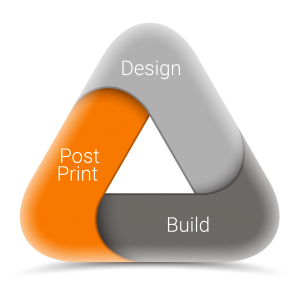
We tackle two primary challenges. First, we automate support removal. Because parts are built layer‑by‑layer along the Z‑axis, gravity necessitates supports, making manual removal the major labor cost. Second, we deliver superior surface finishing. Over the past five years, the industry has shifted from prototype fit to functional form, driving a demand for production‑grade finishes. Our integrated software, hardware, and chemistry solutions provide “customer‑ready” parts for internal or downstream customers.
All investment, expertise, and innovation focus on the industrial segment of the AM market. Our proprietary software orchestrates energy‑efficient processes that enable automated support removal and high‑quality surface finishes.
What benefits do your solutions offer?
Our customers gain three key advantages:
- Consistency – Machines run continuously, delivering repeatable results that manual methods cannot match.
- Throughput – Automation removes the post‑printing bottleneck, enabling higher volumes as AM operations scale.
- Return on Investment – Technician time is reduced by at least 90%, yielding a fast ROI of 10–30 weeks.
Prototyping volumes are exploding: firms that once produced a thousand prototypes annually now produce 10,000–30,000. Consistent parts are critical for these volumes, and manual methods simply cannot keep pace.
Could you explain a little bit more about how you integrate software, hardware and chemistry?
We blend software, hardware, and chemistry to create a unique value proposition. Our chemists, coders, and development engineers collaborate in real time to optimize processes for high‑volume technologies—including PolyJet, FDM, SLA, DMLS, HP’s MJF, and Carbon’s CLIP. With over 500,000 benchmarks, we continually refine the chemistry to meet diverse material needs.
This multidisciplinary approach gives us a leadership position in the automated post‑printing market. The software is the brain: it drives our Agitation Algorithm for support removal and controls the frequency and amplitude of surface‑finishing vibrations.
Are there specific verticals you’re targeting?
We serve all verticals but expect the majority of revenue to come from aerospace, medical, dental, and automotive sectors. Our customer base already spans every industry.
What do you see as the main challenges still facing additive manufacturing?
Speed and cost remain critical challenges. Companies like HP and Stratasys invest heavily in faster printing, while we anticipate a continued decline in material and equipment costs across both polymer and metal domains.
PostProcess Technologies addresses the bottleneck of post‑printing by delivering consistent throughput and output quality, thereby reducing overall cycle time.
How do you see additive manufacturing evolving over the next five years?
We project the AM market to reach 3–4% of traditional manufacturing—roughly a 300–400 billion‑dollar industry. Medical will become the second largest market after aerospace, with mass customization driving demand. Aerospace and automotive will also accelerate, with average growth rates exceeding 40% in key verticals. Companies such as cosmetic manufacturers and automotive OEMs plan to produce millions of parts annually, necessitating scalable post‑processing solutions.
PostProcess has recently announced its expansion into Europe. Why did you make that decision—and do you have further plans for the expansion in the future?
The global demand for additive manufacturing—over 2,000 inquiries worldwide—drives our expansion. Europe represents a market equal in size to North America, particularly strong in metal technologies with leaders like EOS, SLM, and Renishaw. We now operate a European headquarters in Sophia‑Antipolis, just outside Nice, France, and partner with Rösler Mass Finishing to distribute across Germany, France, Spain, the UK, Poland, and Italy. Plans for an Asian launch are anticipated for late 2019/2020.
Could you share what’s on the horizon for PostProcess Technologies?

We continue to refine our solutions for higher throughput and new materials, guided by customer feedback. The chemistry team relentlessly innovates to keep pace with material science advancements. Upcoming enhancements will target both support removal and surface finishing. In addition, we are developing two new products—one for 2019 and another for 2020—to provide an end‑to‑end post‑finishing suite that addresses the majority of customer needs.
Find out more about PostProcess Technologies here.
3D printing
- Optimizing Software Integration for Additive Manufacturing Success
- Inside F1 Innovation: Renault’s Additive Manufacturing Lead Pat Warner Shares 19 Years of Evolution
- Felix Ewald, CEO of DyeMansion, Discusses Innovations in Powder-Based 3D Printing Post-Processing
- Additive Manufacturing Technologies Revolutionizes Post‑Processing with the First‑Ever Automated Machine
- The Internet of Things in Additive Manufacturing: What It Means for Customers, Data, and Operations
- Solvay’s Brian Alexander on Building High‑Performance Polymers for Additive Manufacturing
- Jabil’s Rush LaSelle Explains How Additive Manufacturing is Revolutionizing Global Production
- MELD Manufacturing CEO Nanci Hardwick on Revolutionizing Metal 3D Printing
- John Barnes, Founder of The Barnes Group Advisors, Discusses Additive Manufacturing’s Future and Workforce Development
- Why Post‑Processing Is the Key to Scalable 3D Printing – Insights from AMT CEO Joseph Crabtree