



Interview with Xometry’s Greg Paulsen: How Manufacturing‑as‑a‑Service Is Revolutionizing Production
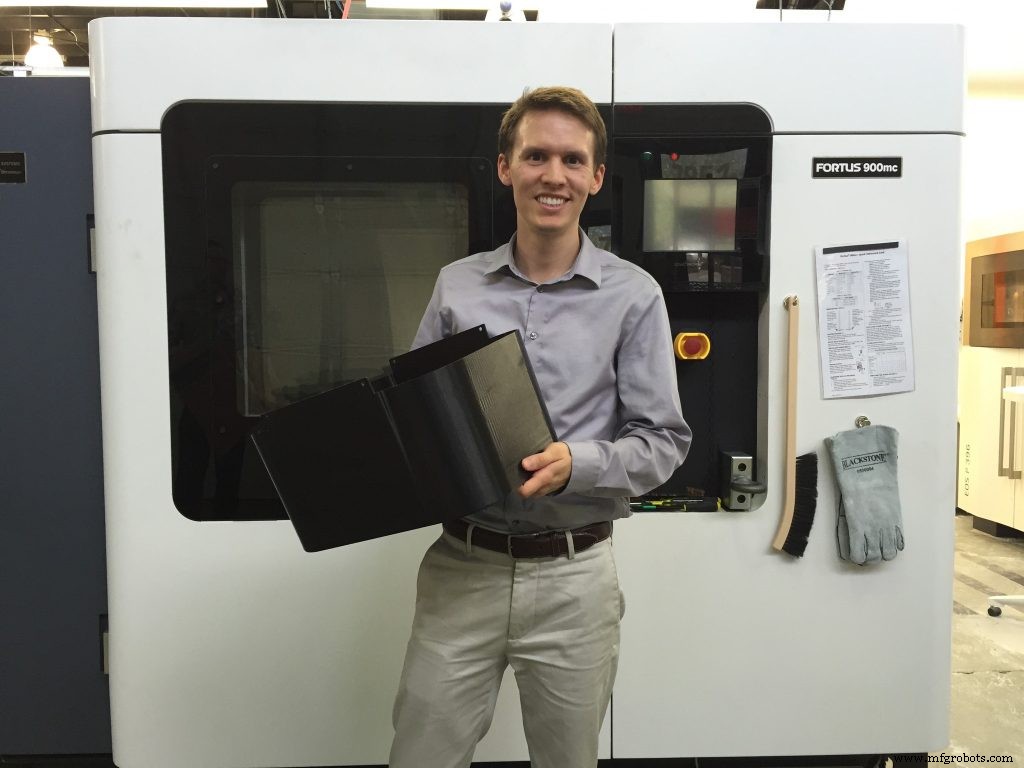
Manufacturing‑as‑a‑Service (MaaS) is a transformative business model poised to reshape the global manufacturing sector. Simply put, MaaS platforms connect customers with a vetted network of manufacturers to deliver production services on demand. The advantages are clear: agile, decentralized manufacturing; maximized capacity utilization for providers; and a wide array of suppliers available to clients at competitive rates. One of the pioneers of this model is the U.S.‑based Xometry. Founded in 2014, Xometry’s marketplace brings together machine shops and additive‑manufacturing bureaus, enabling customers to source high‑quality parts instantly. We sat down with Greg Paulsen, Director of Application Engineering at Xometry, to explore the forces driving MaaS, its future trajectory, and how businesses can leverage additive manufacturing. Xometry functions as a single‑stop MaaS portal, bridging buyers and suppliers. Our mission was to demystify custom‑parts procurement. Previously, rapid‑prototype requests required bundling files into a ZIP and sending spreadsheets to suppliers—a process that could take days, if not longer, for a clear quote. Today, Xometry employs AI and machine learning to instantly interpret 3D files, providing on‑site pricing across multiple technologies—including six 3D‑printing modalities and nearly 60 materials—along with manufacturability feedback. Think of Xometry as the Amazon of parts: you browse, quote, and order. However, the manufacturing challenge remains—identifying which shop can fulfill each order without over‑loading any single partner. Our solution mirrors the Uber model: we present a shop with a job—“$1,960 for 17 parts in seven business days”—and they decide whether to accept based on current capacity. This dynamic capacity management keeps the network efficient. We view our partners as collaborators, not competitors. Each service bureau—large or small—gets exposure to a wide pool of opportunities, creating a win‑win: shops receive work without marketing overhead, while customers enjoy a unified ordering experience. MaaS unlocks the full potential of additive manufacturing by connecting the right expertise to the right task. Similar to how the Internet of Things meshes small devices, MaaS meshes diverse manufacturing services. Complex jobs can be segmented so that each component is produced by the most qualified provider, enhancing quality and driving competitive pricing. For example, a part requiring CNC or DMLS might be best handled by a shop with specialized equipment, while other segments could be outsourced elsewhere. This optimization elevates overall output quality and cost efficiency. Additive manufacturing dominates the volume side. High‑throughput processes such as laser powder bed fusion (SLS or HP’s Multi‑Jet Fusion) generate a significant share of parts—often sets or single units. We estimate that 15‑20% of these parts are end‑use, low‑volume production components. While the number of additive parts is higher, revenue from traditional methods—CNC, injection moulding, sheet metal—remains larger due to higher unit values. Our goal is to consolidate all methods on one platform, giving customers a comprehensive toolkit. The industry is still evolving, but rapid growth is evident. Engineers and designers accustomed to traditional manufacturing often overlook the distinct strengths of additive processes. Understanding design‑for‑manufacturability (DfM) across each technology is a barrier. We address this by providing detailed guides and consulting on the most suitable process for each part. Many customers arrive with a concept for a particular process (e.g., CNC) but discover, after evaluation, that 3D printing offers a more cost‑effective solution—especially for early‑stage prototypes or low‑volume runs. Additive manufacturing is increasingly accepted for end‑use production, driven by zero‑tooling, mass‑customisation, and just‑in‑time inventory advantages. The sector’s diversity and the surge in custom manufacturing opportunities signal sustained momentum. It begins with the 3D CAD file—every printer needs it. We assess the part’s size, required tolerance, functional needs, and aesthetics to match the optimal technology. Size thresholds guide decisions: under 9 inches fits most processes; 9–14 inches leans toward SLS, FDM, or SLA; over 14 inches favors FDM for single‑piece builds, with SLA capable of up to 25 inches. For >25 inches, FDM remains the only viable option. Functional requirements—flexibility, repeated wear—may dictate powder‑bed processes like Multi‑Jet Fusion or laser sintering. Aesthetic demands often call for SLA, PolyJet, or Carbon’s DLS, which deliver superior surface finish. 1️⃣ Hybridisation will become mainstream, combining additive and subtractive processes for optimal results. 2️⃣ Software‑driven design will empower engineers with advanced tools that optimise parts for specific processes, including orientation and pre‑deformation. 3️⃣ The MaaS model will expand, moving manufacturing toward fully digital, traceable ecosystems that record every step of the build. Boost throughput by segmenting builds. For FDM, run multiple small machines rather than a few large ones; this maximises daily output and reduces bottlenecks. For medium‑size powder‑bed machines (SLS, MJF), fill trays as much as possible and maintain rapid exchange of build plates to keep the machine busy. Synchronise post‑processing and shipping timelines with build schedules to ensure a steady revenue stream. Unlike CNC, where a machinist can adjust tooling to meet tolerances, 3D printing’s outcome is largely dictated by the printer itself. High‑repeatability systems like SLS yield consistent results, though some shrinkage—particularly in internal cavities—may require CAD offset adjustments. We foresee advanced simulation tools that predict shrinkage, warping, and other deformations before printing, enabling virtual pre‑deformation and reducing the need for physical iterations, especially in metal AM. Xometry’s pricing engine is market‑driven, not arbitrarily set. Machine‑learning models analyze prevailing shop rates and customer expectations to offer competitive, fair prices. Our ecosystem empowers small machine shops—many with fewer than 20 employees—by providing on‑demand work, quality standards, and digital traceability tools such as inspection reports and progress tracking. By enhancing partner capabilities and ensuring consistent customer experience, we create a robust marketplace that benefits all stakeholders. After securing $50 million in funding from Highland Capital, GE Ventures, BMW Ventures, and Dell, Xometry is expanding its marketplace. We’re launching Xometry Supplies, offering over 50,000 tooling SKUs—end mills, cutters, raw materials—to support both external customers and our partner network. This initiative strengthens the entire supply chain, positioning Xometry as a comprehensive platform for manufacturing transactions. Explore Xometry’s 3D printing and CNC machining services today.What services does Xometry offer?
How is MaaS reshaping part manufacturing?
What proportion of orders on Xometry’s platform are additive versus traditional?
How would you describe the current state of the additive manufacturing industry?
How can companies identify the best use cases for additive manufacturing?
What are three predictions for the future of 3D printing?
Advice for additive‑manufacturing service providers
The importance of repeatability in 3D printing
What has driven Xometry’s success?
What lies ahead for Xometry?
3D printing
- Interview with James Hinebaugh, Co-Founder of Expanse Microtechnologies: Harnessing Microscale X‑ray CT for Additive Manufacturing Quality
- Expert Interview: Simon Fried, Co‑Founder of Nano Dimension, on 3D Printing’s Future in Electronics
- How PostProcess Technologies CEO Jeff Mize is Removing the Post‑Processing Bottleneck in Additive Manufacturing
- Jabil’s Rush LaSelle Explains How Additive Manufacturing is Revolutionizing Global Production
- MELD Manufacturing CEO Nanci Hardwick on Revolutionizing Metal 3D Printing
- Interview with APWORKS CEO Joachim Zettler: Unlocking Business Value in Metal 3D Printing
- John Barnes, Founder of The Barnes Group Advisors, Discusses Additive Manufacturing’s Future and Workforce Development
- 3D Hubs’ Agata Lovrecich on the Rise of MaaS: 3D Printing, CNC, and the Future of Digital Manufacturing
- How NMBU’s 3D Printing Lab Rapidly Produced Medical Supplies During COVID‑19: An Interview with Senior Engineer Kristian Omberg
- Elevate Your Manufacturing Operations with the Industrial IoT Maturity Model