



3D Hubs’ Agata Lovrecich on the Rise of MaaS: 3D Printing, CNC, and the Future of Digital Manufacturing
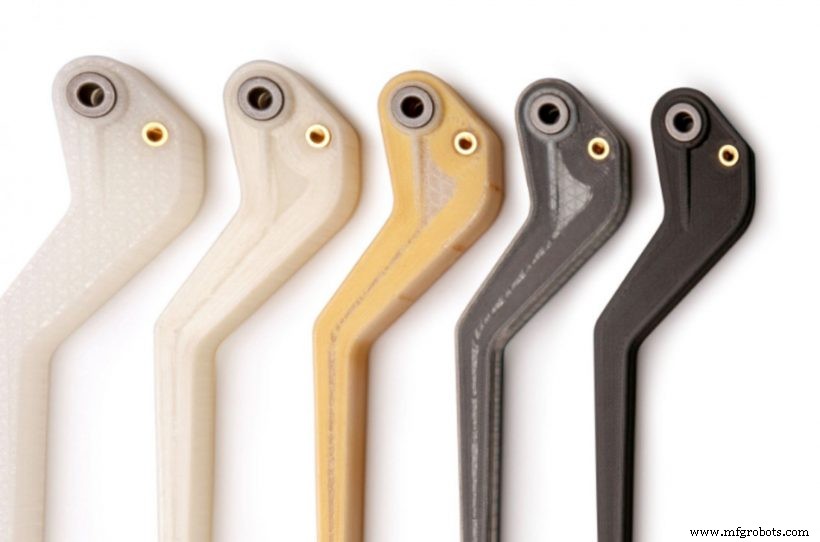
Digital manufacturing and cloud‑based software are redefining the manufacturing landscape through a new Manufacturing as a Service (MaaS) model. Companies offering MaaS deliver instant, algorithm‑driven quotes and rapid delivery, eliminating the weeks‑long wait for traditional suppliers.

Originally launched as a peer‑to‑peer marketplace for 3D printer owners, 3D Hubs has pivoted to serve the industrial sector, building a global network of vetted manufacturers. In this interview, Product Marketing Manager Agata Lovrecich explains how MaaS is democratizing access to advanced manufacturing and what sets 3D Hubs apart from competitors.
What is 3D Hubs?
3D Hubs is an online manufacturing platform designed to accelerate product development for engineers. The core idea is simple: engineers upload a CAD file, receive an instant, machine‑learning–generated price, and place an order that can be fulfilled in days. This automation frees SMEs from administrative overhead and lets them focus on design, testing, and iteration.
Why has MaaS become so valuable?
Traditionally, small companies struggled to access reliable manufacturing capacity, while large firms enjoyed dedicated suppliers and bulk pricing. MaaS lowers this entry barrier by aggregating global and local manufacturing resources, offering instant capacity matching and transparent pricing.
What drove 3D Hubs’ shift to B2B?
In 2013, 3D Hubs connected hobbyists with 3D printers. Early feedback revealed that engineers were using the platform for rapid prototyping and diverse materials. To meet this demand, 3D Hubs added CNC machining and injection moulding, transitioning from a pure marketplace to a professional, full‑service platform. Today, the company guarantees consistent quality across its partner network.
What fuels 3D Hubs’ success?
Our rapid growth stems from a dedicated team, a clear focus on the engineering community, and a first‑mover advantage in building the necessary online infrastructure. Recognizing the market gap and pivoting at the right moment were key to our expansion.
How does 3D Hubs differentiate itself?
We combine price competitiveness—thanks to a broad partner base covering CNC, 3D printing, injection moulding, and sheet‑metal fabrication—with instant capacity matching, advanced automation, and responsive customer support. These factors give us a clear edge over rivals.
What share of orders is for 3D‑printed parts versus CNC and injection moulding?
CNC machining remains the most requested service. 3D printing, while growing at a slightly slower pace, is steadily gaining traction as more customers gain in‑house printer capacity and rely on 3D Hubs for high‑volume or specialized builds.
Can you share real‑world 3D printing projects?
We focus on applications beyond prototypes, where 3D printing’s flexibility shines:
- Design flexibility: A VR headset company used 3D printing to iterate housing designs after the first production run, something infeasible with moulding.
- Complex assemblies: Optisys re‑engineered a tracking antenna from 100 parts into a single 3D‑printed component, cutting nine months of production time and 75% of startup costs.
- Speed: SureFire Electronics chose 3D printing over injection moulding, saving seven weeks while meeting material specifications.
High‑performance materials are now available, debunking the myth that 3D printing cannot match traditional manufacturing in strength or durability.
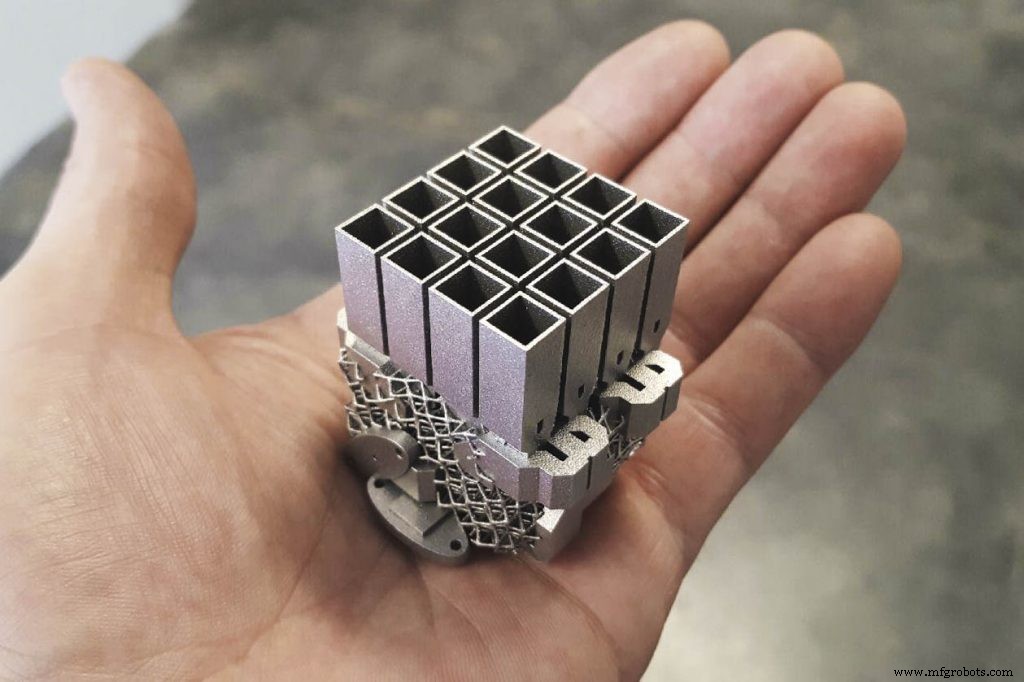
Common misconceptions about 3D printing
While 3D printing accuracy can be close to traditional methods with industrial printers, it generally lags behind CNC machining. Material libraries are rapidly expanding, offering properties that even surpass conventional options. Most importantly, 3D printing should be viewed as a complementary technology—not a wholesale replacement—for the right applications.
When to choose 3D printing over CNC or injection moulding?
Ask yourself:
- Do I need a part quickly?
- Am I constrained by my current production method?
- Will I need design changes after production?
Future of 3D printing
Quality improvements will bring 3D printing closer to the standards of traditional manufacturing. As the industry becomes better educated about the technology’s strengths, adoption will accelerate.
2020 outlook for 3D Hubs
We plan to further professionalise our 3D printing services, expand into industrial‑grade printers, and broaden our material catalogue to better serve engineering‑centric projects.
3D printing
- Interview with James Hinebaugh, Co-Founder of Expanse Microtechnologies: Harnessing Microscale X‑ray CT for Additive Manufacturing Quality
- How PostProcess Technologies CEO Jeff Mize is Removing the Post‑Processing Bottleneck in Additive Manufacturing
- Jabil’s Rush LaSelle Explains How Additive Manufacturing is Revolutionizing Global Production
- MELD Manufacturing CEO Nanci Hardwick on Revolutionizing Metal 3D Printing
- Interview with Xometry’s Greg Paulsen: How Manufacturing‑as‑a‑Service Is Revolutionizing Production
- John Barnes, Founder of The Barnes Group Advisors, Discusses Additive Manufacturing’s Future and Workforce Development
- Fortify CEO Josh Martin Discusses Revolutionary Fluxprint™ Digital Composite Manufacturing
- Interview with BCN3D CTO Eric Pallarés: Unlocking the Power of IDEX 3D Printing Technology
- How NMBU’s 3D Printing Lab Rapidly Produced Medical Supplies During COVID‑19: An Interview with Senior Engineer Kristian Omberg
- Blacksmith: The Adaptive Platform Driving Innovation in Additive Manufacturing