



Interview with James Hinebaugh, Co-Founder of Expanse Microtechnologies: Harnessing Microscale X‑ray CT for Additive Manufacturing Quality
In additive manufacturing, the integrity of a part can make or break a product—especially in aerospace, medical, and automotive applications where flawless performance is non‑negotiable. Traditional inspection methods often miss hidden flaws such as porosity, voids, and inclusions that can compromise a metal part’s reliability. Microscale X‑ray computed tomography (CT) offers a powerful solution, enabling deep, non‑destructive analysis that is otherwise unattainable.
Expanse Microtechnologies specialises in Microscale X‑ray CT, providing manufacturers with advanced inspection tools that bridge the gap between academic research and industrial needs. In this interview, James Hinebaugh, President and Co‑Founder, explains how the company’s proprietary technology is redefining quality control in additive manufacturing.
About Expanse Microtechnologies
Expanse Microtechnologies delivers fast, focused insights into materials and processes for additive manufacturing. By bringing the capabilities of university labs directly to industry, the company offers specialised Microscale X‑ray CT services that accelerate research, optimize manufacturing, and enhance part reliability.
Why Co‑Found Expanse?
Hinebaugh cites a clear market need: manufacturers lacked effective tools to answer critical questions about their processes. CT, with its unparalleled ability to reveal internal structures, became the solution. The goal was to apply CT expertise to AM and provide rapid, actionable data for manufacturers.
What Is Microscale X‑ray CT?
Microscale X‑ray CT provides high‑resolution, three‑dimensional imaging of both the interior and exterior of complex parts. It allows detailed characterisation of geometrical features, defect types, and manufacturing outcomes, turning massive image data sets into concise, actionable reports.
The company has developed advanced image‑processing algorithms that distil gigabyte‑sized datasets into clear visualisations and metrics, helping clients pinpoint defect origins and correlate them with process parameters.
Importance of X‑ray CT in Manufacturing
CT offers a unique, non‑destructive “virtual cross‑section” capability—effectively slicing a part into micrometre‑thick layers without physically damaging it. This comprehensive view reveals correlations between porosity, surface defects, and build parameters, enabling informed process adjustments.
Our Software Advantage
Unlike commercial suites that require extensive market validation before development, Expanse’s custom software is built to meet specific client needs. For example, a new surface‑roughness tool can be developed in 2–3 weeks, delivering tailored analysis that industry‑specific competitors cannot provide.

Client Portfolio
Expanse serves the entire AM supply chain: powder manufacturers, machine builders, service bureaus, and product developers. Their work ranges from analysing powder morphology to monitoring in‑process parameters, and from validating medical implants to supporting aerospace component production.
Key Challenges Addressed
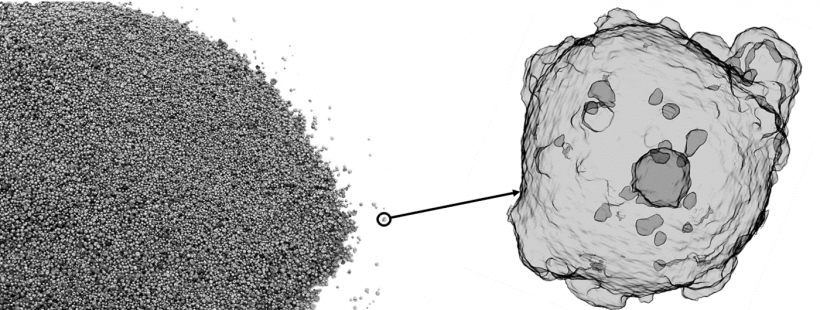
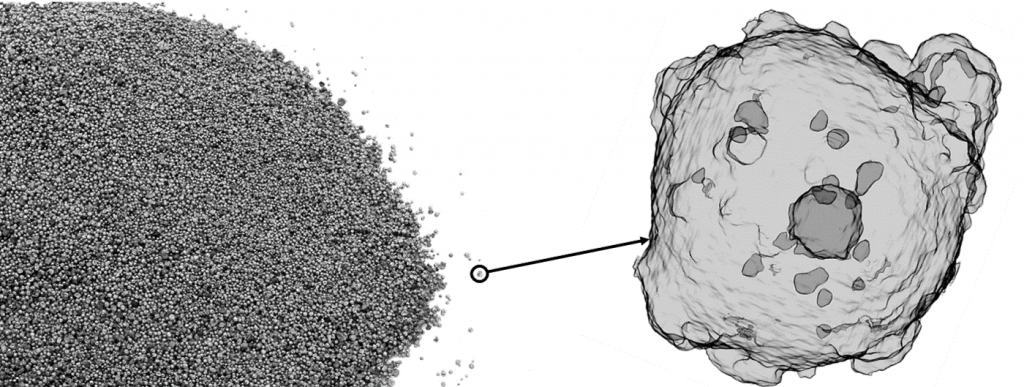
Powder quality remains a critical bottleneck. Uniformity in morphology and particle size is essential for consistent bed‑layer thickness and fusion. Expanse’s CT analysis identifies porosity, inclusions, and other defects that can be trapped during printing, allowing manufacturers to refine powder formulations and recoater design.
Additionally, the company is exploring how to integrate in‑process monitoring data with CT results, leveraging machine learning and computer vision to predict and mitigate defects in real time.
Customer Success Story
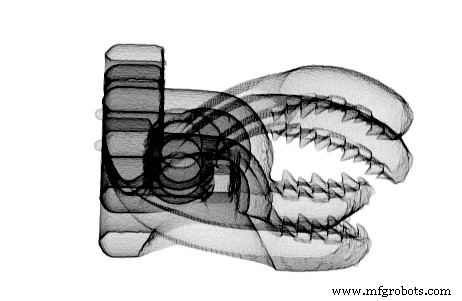
A titanium spine clamp manufacturer faced rigidity issues in early prototypes. Within two weeks of scanning, Expanse identified problematic material binding. Adjusting the build file and orientation resolved the issue, enabling the next print cycle without additional tooling development.
The Future of Additive Manufacturing
Hinebaugh envisions a future where AM adoption is streamlined through better process understanding and reduced qualification times. By standardising machine‑quality tracking and powder‑consistency metrics, Expanse aims to cut the re‑qualification burden for regulated industries, making AM a more fluid, scalable production method.
Strategic Partnerships
Collaborations with the University of Waterloo’s Multi‑Scale Additive Manufacturing lab and The Barnes Group Advisors drive the development of industry‑ready tools and quality frameworks, reinforcing Expanse’s commitment to research‑driven innovation.
To learn more about Expanse Microtechnologies, visit https://www.expansemicro.com
3D printing
- Inside F1 Innovation: Renault’s Additive Manufacturing Lead Pat Warner Shares 19 Years of Evolution
- Solvay’s Brian Alexander on Building High‑Performance Polymers for Additive Manufacturing
- Jabil’s Rush LaSelle Explains How Additive Manufacturing is Revolutionizing Global Production
- Interview with FIT AG CEO Carl Fruth: Driving Radical Innovation through Additive Manufacturing
- Autodesk’s Robert Yancey on Additive Manufacturing, Generative Design, and Industry 4.0
- Interview with Xometry’s Greg Paulsen: How Manufacturing‑as‑a‑Service Is Revolutionizing Production
- How Graphite AM’s Jonathan Warbrick Drives Success in Industrial 3D Printing
- John Barnes, Founder of The Barnes Group Advisors, Discusses Additive Manufacturing’s Future and Workforce Development
- Fortify CEO Josh Martin Discusses Revolutionary Fluxprint™ Digital Composite Manufacturing
- 3D Hubs’ Agata Lovrecich on the Rise of MaaS: 3D Printing, CNC, and the Future of Digital Manufacturing