



Additive Manufacturing Execution Systems (MES): A Comprehensive Guide for New Adopters
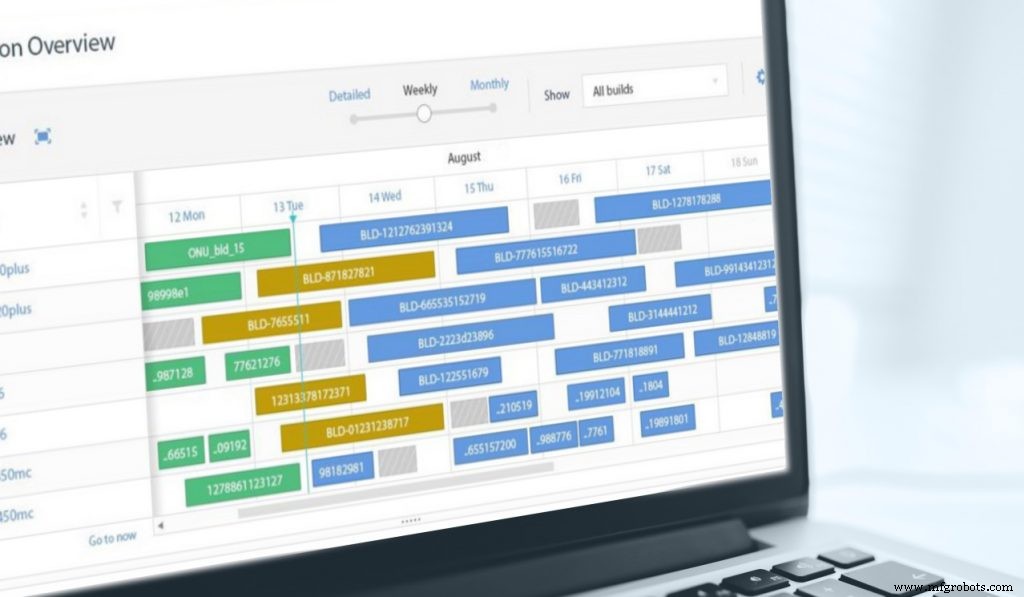
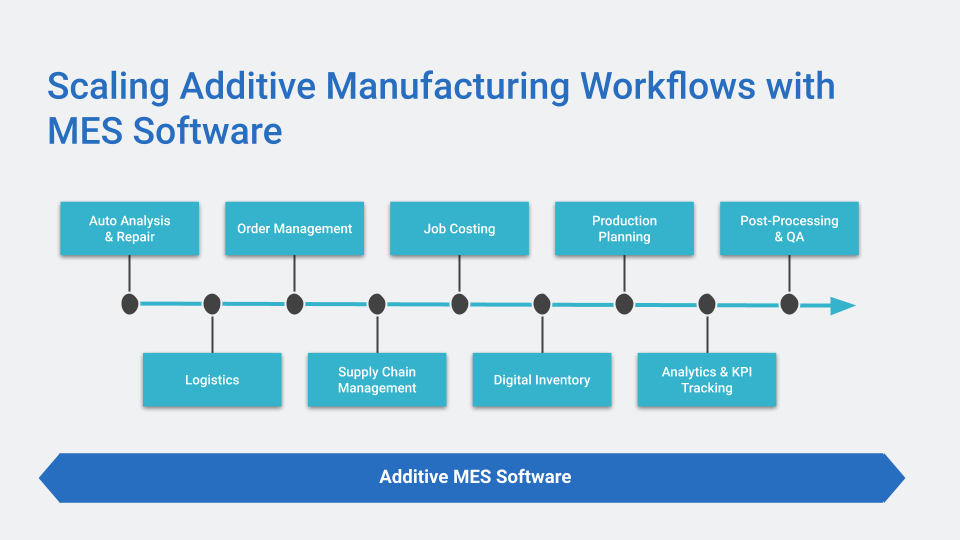
This article was updated on 21/07/2021 As additive manufacturing (AM) continues to industrialise, manufacturers need effective strategies to manage and scale their AM workflows. An Additive Manufacturing Execution System (MES) provides that capability. Additive MES is workflow software that gives manufacturers greater traceability, deeper data insights, and best‑practice processes across their entire AM operations. In this article we will cover: Discover our new whitepaper Additive Manufacturing MES Software: The Essential Guide to learn more about Additive MES software. In today’s competitive environment, manufacturers are under pressure to deliver products faster, more efficiently, and at lower cost. Lean processes and heightened efficiency are the path forward, and many are turning to additive manufacturing (AM) to meet those goals. AM is a digital manufacturing technology that enables complex designs and high‑customisation. A recent EY report shows that 46% of companies plan to adopt AM for end‑part production by 2022. As AM adoption accelerates, the need for a dedicated system to execute, coordinate, and manage AM operations becomes critical. In traditional manufacturing, Manufacturing Execution Systems (MES) perform that role by offering real‑time production visibility, proactive decision‑making, resource management, and optimised scheduling. However, conventional MES solutions are often too limited for the unique requirements of AM. AM demands a distinct approach to design, production, and post‑processing. For instance, post‑processing workflows, build preparation, and quality assurance can differ significantly from conventional manufacturing. Consequently, specialist MES software has emerged to meet the specific needs of additive manufacturing. Additive MES software supports the management, monitoring, and automation of all real‑time processes related to AM production, from request standardisation to printability analysis and production scheduling. It also allows companies to capture and document production data—costs, material usage, turnaround times—enabling tighter process control and maximised efficiency. Scaling AM operations across supply chains and production sites requires an integrated, end‑to‑end management process that only workflow software can deliver. Here are five core benefits: Additive MES replaces spreadsheets and manual processes with streamlined, digital workflows. Manual data collection and scheduling can create bottlenecks, reduce visibility, and increase the risk of human error. A centralised platform automates and links disparate tasks, reducing manual labour and boosting overall process efficiency. “Traceability is about tracking and documenting quality—from printing to post‑processing, data acquisition, and preparation.” —Timm Kragl, Senior Consultant at Phanos GmbH Additive MES provides comprehensive visibility across an organisation’s AM operations, replacing fragmented spreadsheets with a unified platform that connects executive strategy to shop‑floor execution. Real‑time dashboards let managers monitor KPIs, spot bottlenecks, and drill down into productivity drivers. As production volumes grow, workflow software must flexibly adapt. The right Additive MES scales effortlessly, accommodating new machines and increased job throughput without compromising performance. Workflow software establishes a logical sequence of AM steps, ensuring every requirement is correctly configured. It delivers active quality management, standard procedures, and continuous improvement. In high‑value sectors such as aerospace and medical, it provides the controls and documentation needed to meet stringent standards. Automation shortens workflows, lowering labour costs and allowing operators to focus on higher‑value tasks. Tracking material consumption with Additive MES also reduces waste, directly impacting the bottom line. Adopting AM for production often reveals gaps in connectivity and traceability, especially between strategy and production. Scaling AM—printing hundreds or thousands of parts per month—requires a software architecture that can manage expanding workflows. With Additive MES, production managers can schedule jobs more efficiently, identify potential bottlenecks before they become critical, and gain full real‑time visibility. The platform also centralises data throughout the workflow, giving stakeholders instant access to historical and live information, which accelerates responses to operational challenges. Successful AM adoption hinges on data, traceability, and automation. Workflow software should be a core component of your AM strategy, evaluated early to support rapid expansion. “Additive MES is essential when traceability and transparency become key priorities.” —Timm Kragl, Senior Consultant at Phanos GmbH When order volumes grow, maintaining visibility and accountability becomes challenging, especially across multiple production sites. MES provides a single system that integrates files, orders, statuses, and lead times, making the workflow transparent and adjustable. Long‑term AM strategy typically involves adding more machines and expanding capacity. A scalable MES architecture is required to handle increased order volume and maintain workflow efficiency. For organisations with distributed AM sites, a centralised MES delivers cross‑site visibility and collaboration. It standardises ordering interfaces, optimises post‑processing coordination, and integrates suppliers into a unified workflow. “Analyse your current gaps and determine how software can bridge them.” —Timm Kragl, Senior Consultant at Phanos GmbH While ERP systems manage strategic planning, HR, supply chain, and logistics, they often lack real‑time shop‑floor execution capabilities. Additive MES focuses on execution—request management, order pricing, and printer scheduling—connecting production operations to the wider enterprise. MES should integrate with ERP to ensure seamless data flow across the organisation. As AM operations grow, managing complexity becomes a challenge. Additive MES and workflow software are essential tools for scalability, compliance, cost reduction, and overall efficiency. For companies looking to maximise AM, adopting an MES platform is no longer optional—it’s the key to future‑proofing operations and achieving competitive advantage. Explore other articles in this series: How Can MES and Workflow Software Transform Production Planning for Additive Manufacturing? How Digitisation Can Help Transform AM Post‑Processing and QA Management 3 Ways Connectivity Will Enhance Your Additive Manufacturing Operations How Can You Leverage 3D Printer Monitoring To Scale Additive Manufacturing?
What is an Additive Manufacturing Execution System?
5 Key Benefits of Additive MES Software
1. Efficient, Automated Workflows
2. Real‑time Visibility and Traceability
3. Scalability
4. Standardised Processes
5. Reduced Operational Costs
Why Should My Organisation Consider Additive MES Software?
When Should My Organisation Consider Additive MES Software?
1. You Need More Traceability Across AM Operations
2. You Plan to Scale Your AM Operations
3. You Operate Multiple Production Sites
Why Do I Need Additive MES Software If I Already Use ERP?
Take Full Control of Your 3D Printing Workflows with Additive MES
3D printing
- Scaling Additive Manufacturing: How MES Software Drives Production Growth
- Hybrid Manufacturing: Merging Additive and Subtractive Technologies for the Future of Production
- Unlocking Scalability in Additive Manufacturing with MES & Workflow Software
- Additive Manufacturing in the U.S. Military: A Strategic Evolution
- Additive Manufacturing Explained: From Design to Finished Part
- Manufacturing Execution Systems: Unlocking Efficiency, Cost Savings, and Real‑Time Visibility
- Manufacturing Execution Systems (MES): The Critical Link for On-Time Deliveries
- Exploring the Core Additive Manufacturing Methods
- Metal Additive Manufacturing: Transforming Production for Aerospace and Beyond
- How Selective Laser Sintering (SLS) Converts 3D CAD Designs into Solid Parts