



Elevate Aerospace Additive Manufacturing with MES: Overcome Standards, Costs, and Supply Chain Challenges
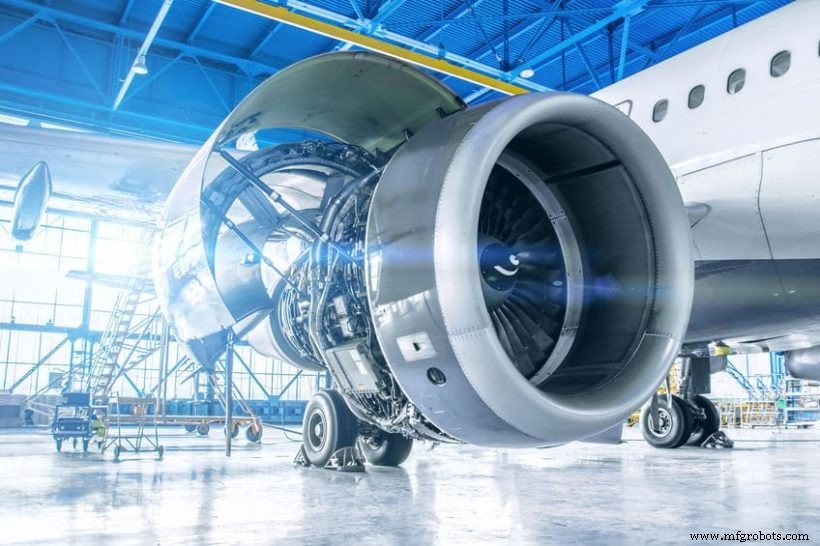
The aerospace and defence (A&D) sector has long championed 3D printing, using it for functional prototypes, tooling, and lightweighting critical components. Yet, scaling additive manufacturing (AM) beyond prototyping into repeatable, high‑volume production remains a formidable challenge for many OEMs and suppliers.
Additive Manufacturing in Aerospace and Defence
The Covid‑19 pandemic forced a dramatic pause in global passenger traffic in 2020, exposing weaknesses in traditional supply chains. To recover faster, manufacturers turned to digital solutions—AM among them—to reduce lead times, cut fuel burn, and enhance sustainability.
While AM has been part of aerospace for years, only recently has the technology matured enough for functional flight‑grade applications. Still, achieving consistent, repeatable builds requires robust standards, materials, and processes.
Explore 3D Printing Applications in A&D:
- 3D Printing for Aircraft Cabins
- 3D‑Printed Rockets and the Future of Spacecraft Manufacturing
Five Challenges to Scalable AM in Aerospace – and How Additive MES Helps
1. Meeting Industry Standards and Certifying AM Parts for Flight
A&D operations are governed by stringent regulations around information security, pricing, and product integrity. All aircraft components—whether machined or printed—must receive FAA (U.S.) and EASA (Europe) approvals. Standards for AM are evolving, making workflow design and audit control essential.
MES Enables Regulatory Compliance
Advanced AM‑MES systems capture, track, and control live data on parts and processes, supporting standards such as AS9100. Real‑time visibility empowers managers to enforce design control, standardise operations, and improve traceability—key to certification.
2. Reducing Lead Time for AM Parts and Shortening Supply Chains
Commercial OEMs maintain eight‑to‑ten‑year forward‑production plans. As orders grow, suppliers must deliver high‑quality parts quickly while keeping costs low. Many invest in AM to accelerate critical components—cabin parts, engine injectors, propellant valves, etc.
Achieving this pace demands an integrated supply‑chain network. Unfortunately, many firms lack awareness of solutions that link AM processes across the chain.
MES Facilitates Digital Supply Chains

By establishing a centralised digital platform, MES connects OEMs, suppliers, and subcontractors, enabling seamless job routing and real‑time tracking. Advanced solutions can auto‑route tasks based on lead time and cost parameters.
3. Cutting AM Costs and Minimising Material Waste
Flight‑grade materials—carbon‑reinforced composites, titanium alloys—are expensive. A failed build can cost thousands of dollars in material and machine time.
MES mitigates this risk by integrating real‑time machine monitoring. When a fault is detected, operators receive alerts and can halt the process before excessive material is consumed.
Read also: How Can You Leverage 3D Printer Monitoring To Scale Additive Manufacturing?
4. Protecting Intellectual Property in AM Data
Safeguarding design files and production parameters is critical. Additive MES solutions—whether on‑premise or cloud—adhere to aerospace security standards, offering secure data exchange, role‑based access, and Single Sign‑On (SSO) for robust identity protection.
5. Establishing Visibility and Traceability for AM Operations
Traditional paper logs and spreadsheets cannot match the granularity required for AM workflows. ERP systems, focused on transactional data, also fall short in capturing real‑time production nuances.
MES Enhances Production Visibility
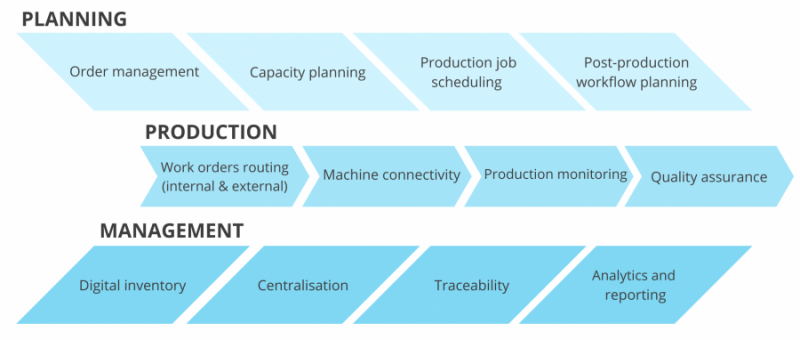
At the heart of AM, MES links shop‑floor personnel, AM machines, post‑processing stations, logistics, sales, and planning. It delivers dashboards that show machine utilisation, build status, and performance metrics in real time, enabling proactive decision‑making and continuous improvement.
Additive Manufacturing in Aerospace: Achieving Repeatability and Quality with MES
AM has become indispensable for aircraft manufacturers, but scaling it requires disciplined processes. Additive MES provides the digital backbone—ensuring compliance, standardisation, and data‑driven optimisation—so that aerospace companies can meet demand, maintain quality, and stay competitive in a digital‑manufacturing world.
Discover How AMFG Can Help
With system connectivity, built‑in security, and extensive software integrations, AMFG’s additive MES and workflow automation platform offers a complete solution for A&D firms seeking connected, scalable AM processes across their organisations and supply chains.
3D printing
- Scaling Serial Additive Manufacturing: How Additive MES Drives Efficiency and Growth
- Scaling Additive Manufacturing: How MES Software Drives Production Growth
- Unlocking Scalability in Additive Manufacturing with MES & Workflow Software
- Revolutionizing Additive Manufacturing: How MES & Workflow Software Optimize Production Planning
- Additive Manufacturing Execution Systems (MES): A Comprehensive Guide for New Adopters
- Master Precision Woodworking with a CNC Wood Router: Techniques, Materials, and Tools
- Unlocking Innovation: How Small Manufacturers Benefit from Additive Manufacturing
- Revolutionizing Aerospace: How Additive Manufacturing Enhances Performance and Efficiency
- Additive Manufacturing: Driving Innovation and Cost Efficiency in Aerospace
- Elevate Your Centerless Grinder Performance: Expert Tips & Best Practices