



2020 Additive Manufacturing Landscape: 240 Companies Shaping Digital Manufacturing
Update 16/06/2020: Following community feedback, the landscape now includes nine additional companies. Since AMFG released the inaugural Additive Manufacturing Landscape in 2019, the industry has accelerated rapidly. To capture this evolution, we present the second edition of our annual landscape. By the end of 2019, the global AM market was valued at over $10 billion. 3D‑printing hardware and materials are expanding into industrial sectors, and the COVID‑19 pandemic has accelerated digital transformation efforts. 3D printing offers the flexibility needed to navigate supply‑chain disruptions and shifting demand. Download the report and infographic here This year’s landscape features 240 companies and research institutions dedicated to industrialising 3D printing. The sector is segmented into: Only industrial‑focus solutions are included; consumer‑grade printers and service‑providers are excluded to keep the report focused. For service‑provider data, see our State of the Industry Survey. Hardware accounts for 56 % of the AM ecosystem, driven by a surge of new entrants. A new segment—composite 3D printers—has emerged, promising significant future growth. Metal machine manufacturers represent 40 % of hardware and 22.5 % of the overall landscape. Laser‑based systems remain dominant, but binder‑jetting and large‑part printers are gaining traction. Many landscape entries are start‑ups founded within the last five years, attracting considerable investor interest. In 2019, $1.1 billion flowed into 77 early‑stage AM companies, largely supporting hardware. The AM ecosystem remains fragmented, underscoring the need for integrated, connected solutions that enable digital‑manufacturing workflows. Hardware innovations continue to push performance, speed, and reliability for production use. Polymer 3D printers Polymer systems are still the most prevalent technology: 72 % of surveyed companies use polymers, compared with 49 % for metals. While prototyping remains dominant, polymer printers are increasingly applied to tooling, spare parts, and end‑use components, driven by high‑performance thermoplastics such as PEEK and ULTEM. Desktop 3D printers Desktop machines—especially Fused Filament Fabrication (FFF)—remain the largest sub‑category. Professional desktop FFF units now offer industrial features like dual extrusion and heated build chambers. Brands such as Ultimaker, MakerBot, BCN3D, and Roboze illustrate the segment’s growing diversity. Metal 3D printers Metal Powder Bed Fusion (PBF) remains the most widely adopted technology, though binder‑jetting systems are emerging as cost‑effective, faster alternatives. Companies like ExOne, Digital Metal, GE, Desktop Metal, and HP are expanding the metal portfolio. A new sub‑segment of compact metal printers, with a 43 % shipment increase in 2019, serves functional prototyping and small‑batch production; Desktop Metal and Markforged lead this space. Composite 3D printers Composite printing has entered the landscape with 10 key players—including Markforged, Fortify, and Anisoprint. Composite technology automates a labor‑intensive process, shortening design cycles and opening new markets. Recent investments exceed $150 million, underscoring industry confidence. Despite hardware advances, the COVID‑19 crisis may constrain capital expenditure. Research analyst Scott Dunham of SmarTech Analysis predicts modest hardware sales growth in 2020, but anticipates higher utilization of existing machines to drive material sales. “Hardware sales probably aren’t going to go anywhere as capital expenditures will no doubt be tight the rest of the year (at least). But we’re hopeful that utilization rates will rebound for the existing installed base of machines, driving material sales for new end‑use oriented materials.” In 2020, the Senvol database lists 2,245 AM materials, up from 1,700 in 2019. Polymers remain the most popular class, but metal demand is rising: 40 % of EY survey respondents seek standard alloys, 31 % high‑performance alloys. Material cost remains a barrier, with AM polymers and metals still several times pricier than conventional alternatives. The rise of AM as a digital‑manufacturing platform has spurred specialized software for design, simulation, build preparation, and workflow management. “3D printing is not new, with nearly 35 years of history, but most of the focus over the decades has been on platforms and materials. What is catching up is the software needed to better predict, correct, and manage printed parts.” Design and simulation Advanced simulation tools—topology optimisation, generative design—are increasingly applied to aerospace, automotive, and medical sectors, reducing trial‑and‑error cycles. Build preparation Fragmentation across slicers and post‑processing tools adds complexity. Software developers are now integrating these functions into single platforms that support printability checks, part orientation, lightweight optimisation, support generation, and simulation. Workflow and MES Manufacturing Execution Systems (MES) are emerging to manage AM operations, provide traceability, and scale production. Selecting an MES requires evaluating integration capability and scalability. IP and security As 3D printing becomes more widespread, protecting intellectual property is critical. Security software safeguards design data across hardware, departments, sites, and suppliers. Although currently niche, demand for dedicated security solutions is expected to grow. Scaling production necessitates automated post‑processing to overcome manual, time‑intensive steps that drive up cost per part. “Post‑processing has a huge impact on enabling manufacturers to hit their cost targets if pursuing scaled production.” “Focus should be on sustainable post‑processing technologies that fully automate the workflow, once the parts come out of the 3D printer, eliminating the prohibitive costs of a labor‑intensive manual workflow. Only when savings are met, scaled production is possible.” Joseph Crabtree, CEO of Additive Manufacturing Technologies Ltd. Companies such as Additive Manufacturing Technologies, DyeMansion, PostProcess Technologies, Rösler, and Quintus Technologies are pioneering automated solutions for cleaning, depowdering, surface finishing, and dyeing. From its first edition, AMFG’s Landscape has tracked a rapidly maturing industry. New entrants, evolving materials, and a heightened focus on automation and connectivity define the sector’s trajectory. Despite global uncertainty, the AM landscape offers abundant opportunity, with industry collaboration driving consolidation and resilience. Download the white paper and infographic here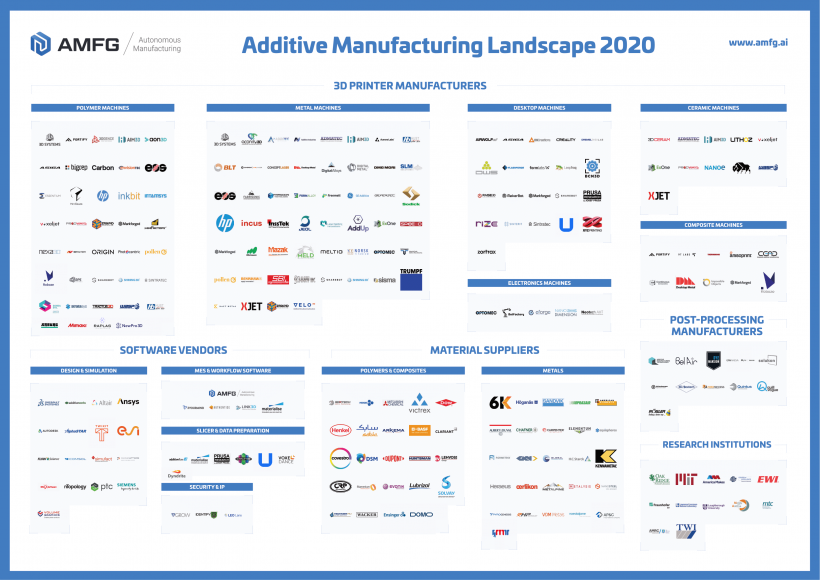
The Additive Manufacturing Landscape in 2020
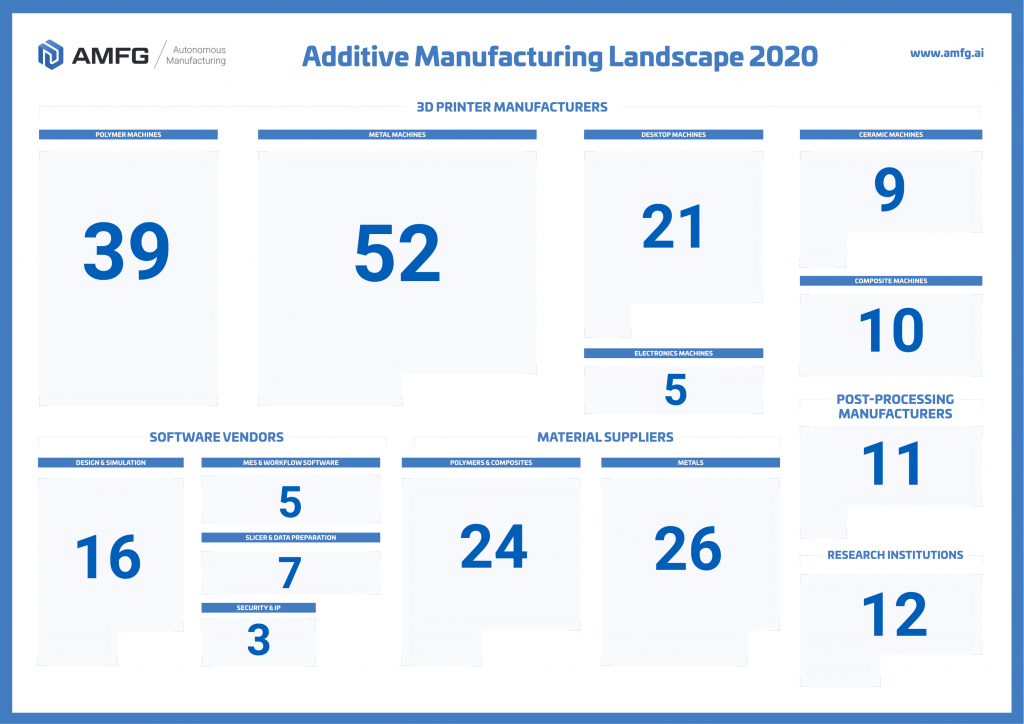
Key Takeaways
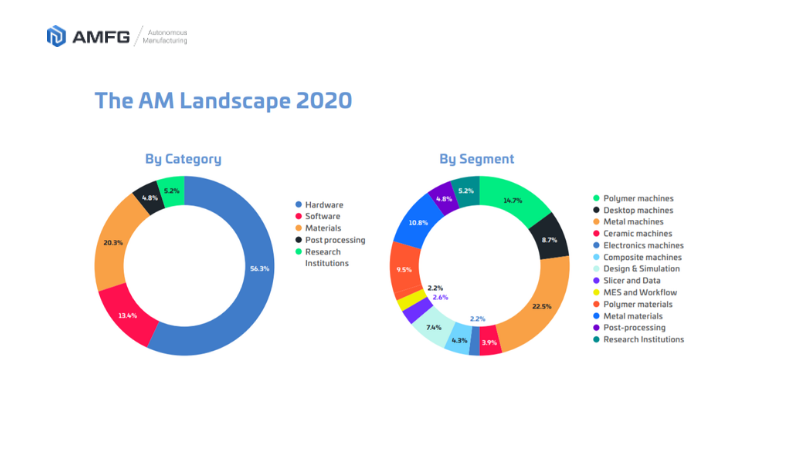
Hardware dominates the landscape
Metal 3D printers lead the hardware segment
Start‑ups accelerate innovation
Connectivity is a critical industry theme
Segment Deep Dive
Hardware
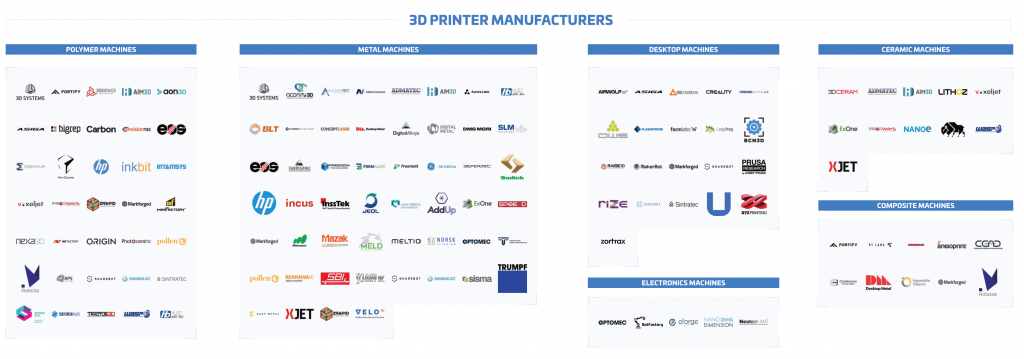
Hardware Challenges
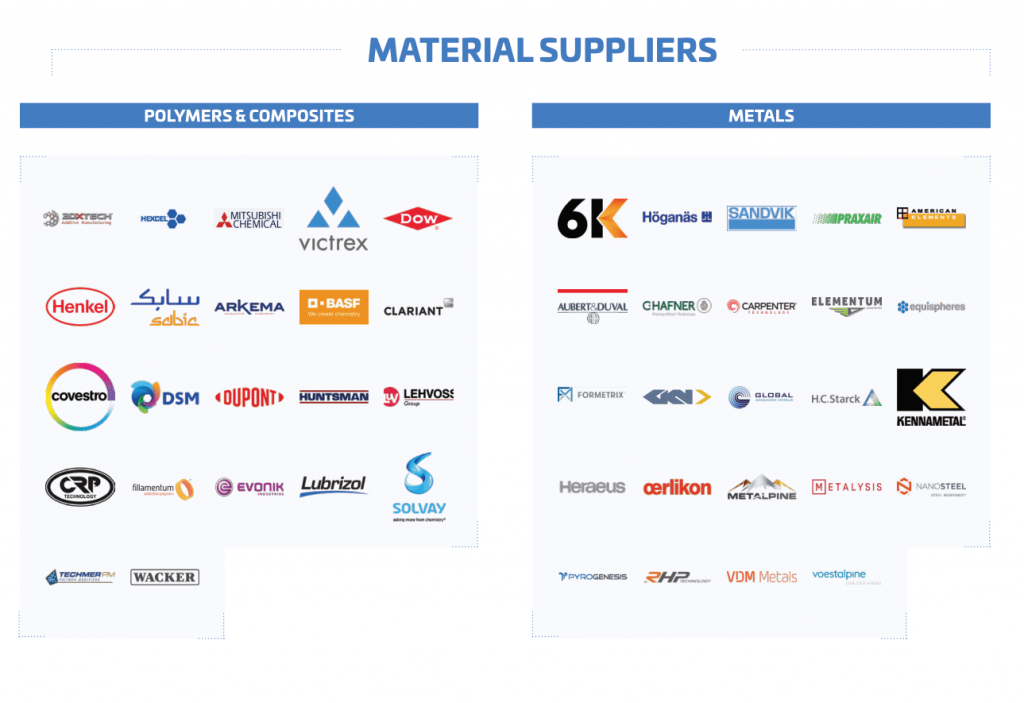
Materials
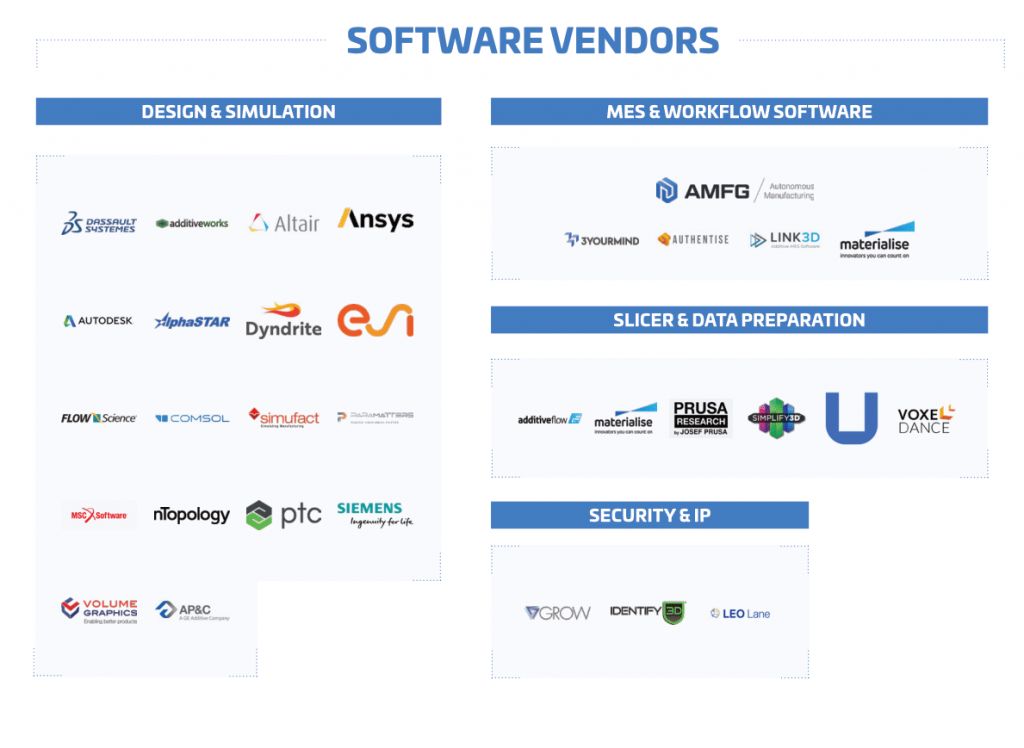
Software
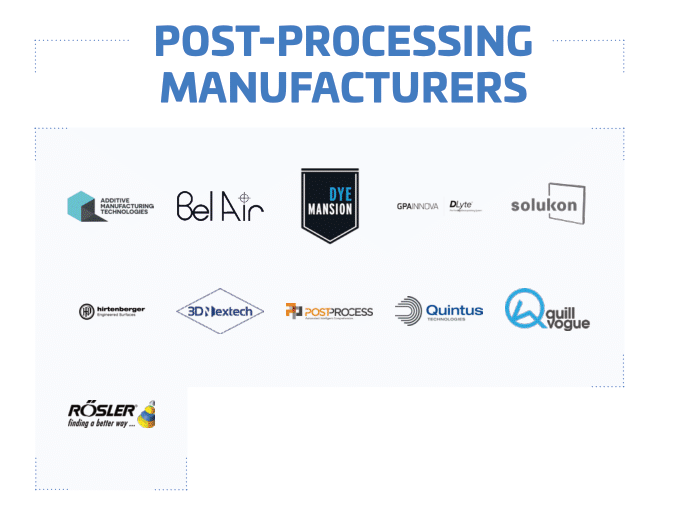
Post‑processing
Additive Manufacturing in 2020: Shaping the Future of Digital Manufacturing
3D printing
- How 3D Printing Drives Innovation, Efficiency, and Customization in the Automotive Industry
- Seven Key Trends That Shaped 3D Printing in 2018
- Additive Manufacturing Landscape 2019: 171 Companies Powering Industrial 3D Printing Growth (Updated)
- Additive Manufacturing Explained: From Design to Finished Part
- Revolutionizing Aerospace: How Additive Manufacturing Enhances Performance and Efficiency
- Digital Factories: Smart Manufacturing for Industry 4.0
- Censornet Secures the Future of UK Manufacturing
- Digital Manufacturing: Shaping Tomorrow's Industry
- Revolutionizing Auto Production: The Role of Additive Manufacturing
- Metal Additive Manufacturing: Transforming Production for Aerospace and Beyond