



Elevate Consumer Goods Production with Optimized Additive Manufacturing

Additive manufacturing (AM) has long supported product development, yet its full impact lies in transforming production lines into agile, cost‑effective, and sustainable operations.
To move from potential to measurable ROI, brands must build scalable AM workflows that deliver value to both customers and the bottom line. This article explores the key obstacles and presents proven solutions for setting up a high‑performance AM operation.
AM in the Consumer Goods Landscape
The consumer goods sector faces rapid digital shifts, direct‑to‑consumer models, and escalating sustainability expectations—all while needing faster lead times and tighter demand control. These pressures push companies toward near‑sourcing, instantaneous delivery, and automation.
AM emerges as a pivotal technology, offering accelerated design, rapid prototyping, mass customization, lean production with reduced waste, and complex geometries impossible with traditional methods.
Read also: 10 Exciting Ways 3D Printing is Being Used in the Consumer Goods Industry
Early adopters harness these advantages to unlock new business models and operational efficiencies, securing a competitive edge.
Four Core Challenges in AM Operations
1. Complex Internal Ordering
Consumer brands often generate hundreds of AM parts annually, creating a high volume of daily orders that overwhelm lab technicians and managers when handled manually.
At L’Oréal, engineers would email or hand USB drives to the 3D printing lab, after which staff manually calculated costs—an approach that scales poorly and adds little value.
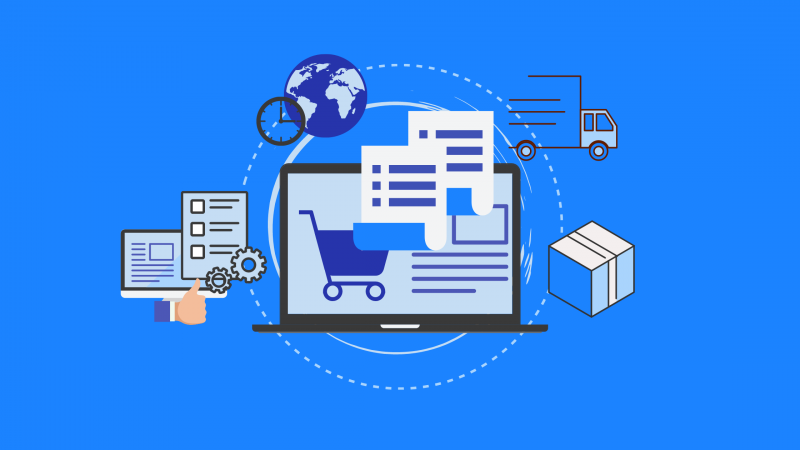
Automated workflow tools can resolve this. A web‑based request portal lets engineers select pre‑configured options, instantly revealing price and lead time. The portal feeds data directly into back‑end systems, enabling managers to track, prioritize, and schedule jobs efficiently.
2. Centralizing Siloed Data
AM workflows span multiple departments—production, finance, administration—yet each uses separate, often outdated spreadsheets. This fragmentation breeds duplicate, erroneous data and hampers real‑time decision‑making.
Implementing a connectivity‑driven central platform—such as an Additive MES—unifies data across ERP, PLM, and production sites. It eliminates manual data entry, ensures consistent information, and provides end‑to‑end visibility.
3. Transitioning to On‑Demand AM
Local, on‑demand manufacturing aligns with sustainability goals and consumer demand for customization. However, setting up such a model requires more than just new printers.
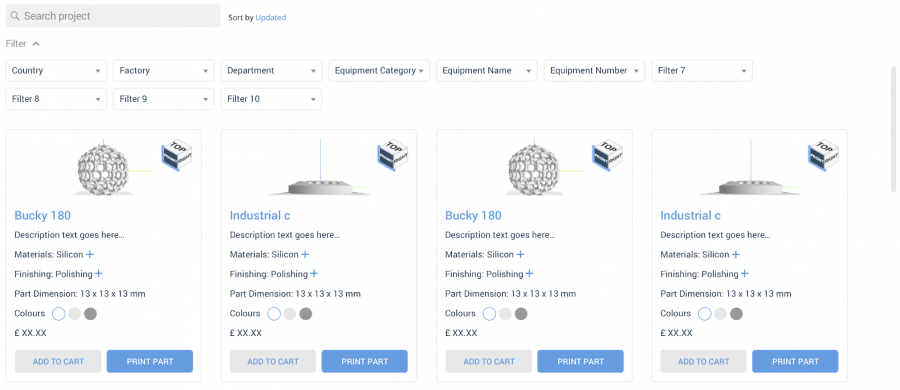
Digital inventories—software that stores CAD models, process specs, and material data—enable instant part retrieval. Linking the digital inventory with ERP and MES systems allows a single click to order production, drastically reducing lead time.
Read also: 4 Ways Digital Inventory Can Support Your Additive Manufacturing Operations
4. Enhancing Operational Efficiency
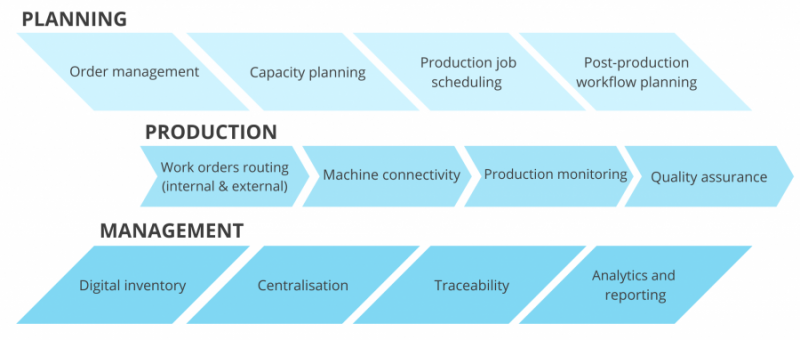
Static planning tools leave AM capacity invisible and quality inconsistent. An advanced Additive MES brings paperless workflows, automated process enforcement, and a secure audit trail—essential for ISO 9001 compliance.
By ingesting machine data—build status, material levels, uptime—MES systems provide real‑time insights. Managers can identify bottlenecks, optimize scheduling, and improve throughput and quality.
Streamlining AM for Competitive Advantage
Adopting AM in consumer goods demands robust workflow management. Additive MES software automates and coordinates processes, enabling faster, more reliable 3D printing while enhancing traceability and decision‑making.
With the right AM solution, companies unlock resources for innovation, accelerate time‑to‑market, and secure a leadership position in a rapidly evolving industry.
Discover how AMFG can help you
Our integrated MES and workflow platform offers system connectivity, automation, and extensive software integrations, delivering connected, scalable AM processes across your organization and supply chain.
3D printing
- How Automotive OEMs Overcome Additive Manufacturing Challenges with Digital Solutions
- Elevate Aerospace Additive Manufacturing with MES: Overcome Standards, Costs, and Supply Chain Challenges
- Accelerate Additive Manufacturing with Real‑Time 3D Printer Monitoring
- Scaling Serial Additive Manufacturing: How Additive MES Drives Efficiency and Growth
- Revolutionizing Additive Manufacturing: How MES & Workflow Software Optimize Production Planning
- How Digital Inventory Enhances Additive Manufacturing: 4 Key Advantages
- How On-Demand Additive Manufacturing Enhances Supply Chain Resilience
- Unlocking Innovation: How Small Manufacturers Benefit from Additive Manufacturing
- Revolutionizing Everyday Life: Additive Manufacturing in Consumer Applications
- How SDKs Accelerate Innovation in Additive Manufacturing