



Scaling Additive Manufacturing: How MES Software Drives Production Growth
79 % of manufacturers anticipate that their use of 3D printing for production parts will at least double within the next five years, according to a recent Jabil survey. Despite this rapid adoption, many firms still struggle to scale their additive manufacturing (AM) operations.
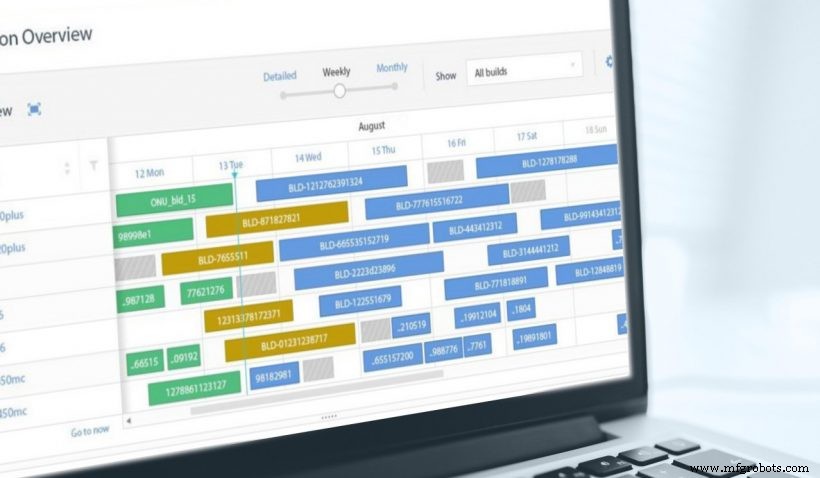
Scaling AM inevitably requires more machines and higher throughput. A robust software architecture can automate production and enable you to handle a larger volume of 3D‑printing orders. Below, we explain how MES software can help you achieve scalable, repeatable AM production.
Scaling AM Operations with the Right Software Tools
Many companies that embrace 3D printing still rely on labor‑intensive, disconnected systems to manage their AM workflows. Spreadsheets are commonly used to organize projects and schedule production. When sites are dispersed or teams are remote, data is often exchanged via email. This approach leads to lost messages, duplicated data, and the risk of sending incorrect file versions—issues that quickly become untenable as production expands from single prototype printers to multiple, connected workstations.
Effective AM at scale requires managing the entire life cycle: cost calculation, production scheduling, and real‑time statistical data collection. Manual processes cannot meet these demands. A dedicated AM Manufacturing Execution System (MES) is the solution.
What is Additive MES Software?
AM’s unique requirements demand specialized software that can oversee every stage of the workflow—from file preparation to post‑processing. Developing such a system in‑house is a daunting, costly endeavor. Implementing an off‑the‑shelf MES tailored to AM allows companies to reduce labor costs, automate scheduling, and streamline operations.
Higher Efficiency, Better Traceability
One of MES’s core advantages is increased transparency and traceability throughout the production chain. Automated logging captures every data point in real time, while file‑versioning tools record each iteration of an STL file. Connectivity extends to the entire value chain, linking machines, ERP, PLM, and other systems for continuous, real‑time data flow.
MES-driven production planning eliminates the tedium of manual data collection and part tracking. By scheduling and monitoring production within the software, departments experience less administrative burden and gain clear visibility into outcomes.
Automation and Scalability: The Next Steps for Additive Manufacturing
Industry 4.0 and digital manufacturing demand automated processes. AM must integrate seamlessly into this ecosystem. MES software introduces automation across AM stages, reducing manual labor, digitizing workflows, and enhancing connectivity. For manufacturers aiming to scale 3D printing, adopting MES is a natural evolution toward a fully digital production cycle.
Learn More About Automating and Scaling AM Workflows
Interested in how MES software and automation can transform your AM operations? Read our new white paper, Additive Manufacturing MES Software: The Essential Guide. It explores the critical role of automation, outlines a comprehensive AM strategy, and shows how MES can help you expand and scale your production.

3D printing
- Elevate Aerospace Additive Manufacturing with MES: Overcome Standards, Costs, and Supply Chain Challenges
- Why an Additive Manufacturing Execution System Is Essential for Spare Parts Production
- Optimizing Software Integration for Additive Manufacturing Success
- Overcoming the Top 10 Additive Manufacturing Challenges for Production in 2020 – Expert Insights
- Unlocking Scalability in Additive Manufacturing with MES & Workflow Software
- Revolutionizing Additive Manufacturing: How MES & Workflow Software Optimize Production Planning
- Additive Manufacturing Execution Systems (MES): A Comprehensive Guide for New Adopters
- Top Metal 3D Printing Materials: Unlocking Additive Manufacturing’s Potential
- Why 3D Printing Is Revolutionizing Modern Manufacturing
- How Additive Manufacturing Is Revolutionizing Industrial Production