



Why an Additive Manufacturing Execution System Is Essential for Spare Parts Production

Adding a production‑ready, digital layer to spare parts manufacturing unlocks cost savings, faster availability and reduced supply‑chain dependency.
As an AM department manager or innovation leader, you know that delivering high‑quality 3D‑printed parts on demand is more than a technical challenge; it’s a business imperative. The need to store design files, manage production workflows and keep parts ready for rapid deployment requires a robust, integrated solution.
Challenges in Additive Manufacturing of Spare Parts
When equipment fails, spare parts must be ordered and printed swiftly to avoid costly downtime. Achieving this speed and repeatability demands a searchable database of AM files and production data. Without it, teams waste time hunting for files in shared folders or emails, elongating lead times and frustrating end‑users.
Production Management Issues
Consistency in the AM process is the biggest hurdle. A lack of traceability and control makes quality assurance difficult, especially if the current system cannot pull machine performance data. Disconnected systems and manual spreadsheets hinder rapid decision‑making and real‑time visibility.
Outsourcing is common across automotive, railway and heavy‑industry sectors. However, the workflow often remains siloed, preventing transparent communication with suppliers and subcontractors.
How Additive MES Software Solves These Problems
1. Automating Spare Parts Ordering with a Digital Catalogue
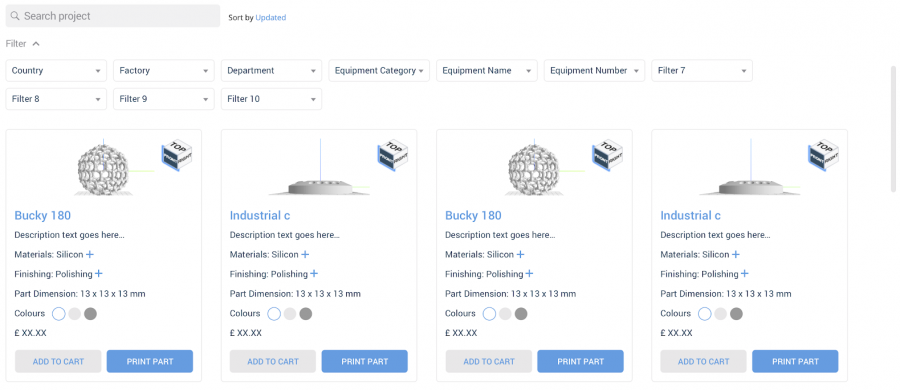
By storing design files in a centralized digital inventory, you can locate a part, retrieve all necessary data, and initiate production within minutes. An Additive MES consolidates inventory and order management, turning a multi‑click process into a single button action. This reduces warehousing costs and keeps operations lean and agile.
Related: 4 Ways Digital Inventory Can Support Your Additive Manufacturing Operations
2. Bringing Greater Control to Production Planning
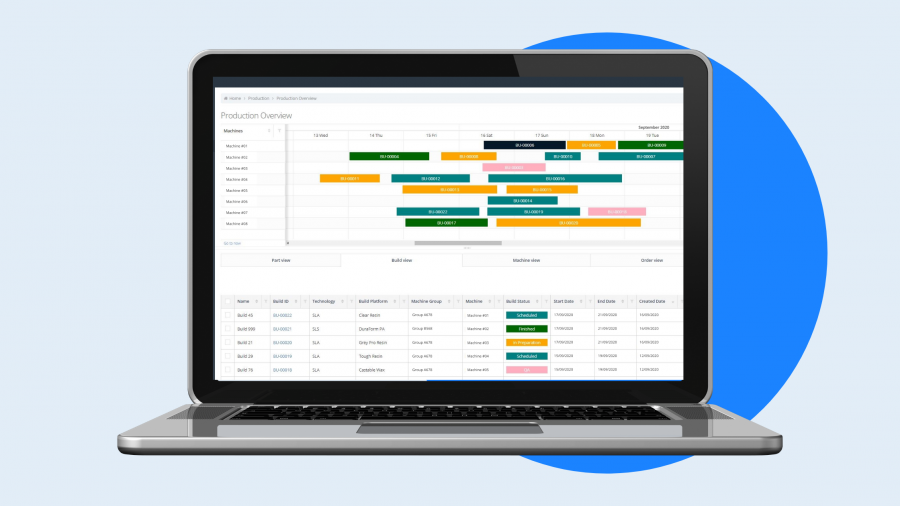
Automation is key to traceability and repeatability. MES software gives real‑time visibility into machine availability, enabling operators to optimize utilization, visualize capacity, and react swiftly to scheduling changes. Automatic job assignment based on material, priority, or delivery date further reduces human error.
Related: How Can MES Software Transform Production Planning for Additive Manufacturing?
3. Monitoring Machines to Boost Productivity
Advanced MES platforms integrate directly with AM hardware, capturing live data such as processing parameters, utilization rates, and failure incidents. This continuous data flow allows teams to pinpoint bottlenecks, anticipate quality issues, and fine‑tune processes, driving reliability and consistency.
Related: AMFG CEO Keyvan Karimi On The Importance Of Connectivity In The AM Workflow
4. Digitizing Post‑Processing and QA Management
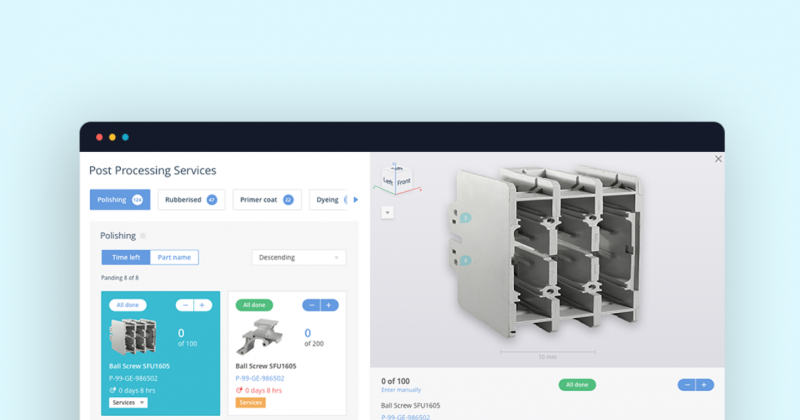
MES software links every stage of production, from printing to post‑processing and quality assurance. Operators can follow a clear sequence of operations, conduct checks at each step, and maintain a comprehensive audit trail that ties back to the original AM workflow.
5. Streamlining Outsourcing Through Supplier Integration
Instead of relying on fragmented emails and documents, MES enables secure data sharing and automated job routing with external partners. This eliminates downtime, reduces miscommunication, and keeps the entire supply chain synchronized.
Drive Efficiency in Spare Parts Production with Additive MES Software
Without automation, the complexity of on‑demand spare parts manufacturing can quickly become unmanageable. Investing in a dedicated MES ensures quality, timeliness, and streamlined workflows, ultimately saving time and boosting productivity.
Drive on‑demand spare parts manufacturing with AMFG’s MES
3D printing
- Building a Strong Business Case for MES in Additive Manufacturing
- Why an Additive Manufacturing Execution System Is a Game‑Changer for Rapid Prototyping
- Hybrid Additive & Injection Molding: A New Paradigm for Production Lifecycles
- The Internet of Things in Additive Manufacturing: What It Means for Customers, Data, and Operations
- Scaling Additive Manufacturing: How MES Software Drives Production Growth
- Overcoming the Top 10 Additive Manufacturing Challenges for Production in 2020 – Expert Insights
- Why Life‑Cycle Cost Analysis Delivers Tangible ROI
- Why 3D Printing Is Revolutionizing Modern Manufacturing
- Manufacturing Execution Systems (MES): The Key to Real-Time Production Control
- The American Manufacturing System: History, Techniques, and Impact