



Hybrid Additive & Injection Molding: A New Paradigm for Production Lifecycles
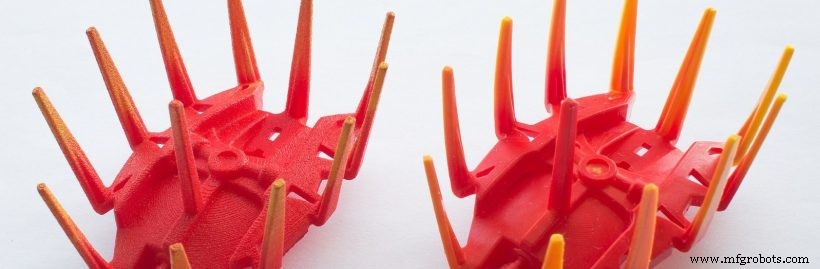
Manufacturers are increasingly turning to hybrid manufacturing—combining additive manufacturing (AM) with traditional methods—to achieve outcomes that neither can deliver alone. This shift is moving AM beyond a prototyping tool toward a staple of production workflows. While some predict AM will ultimately supplant subtractive processes, evidence suggests its true power lies in creating robust hybrid systems that seamlessly integrate into existing lifecycles.
Take automotive injection‑molded components as an example. Historically, the workflow has been: 1) use AM to generate one‑off prototypes; 2) switch to injection molding for high‑volume production. AM offers speed and low cost for iterative design, while injection molding delivers repeatable quality and economies of scale. Yet, each iteration traditionally required a new metal mold, which can take six weeks to fabricate and represent a significant capital outlay 1.
To address this bottleneck, manufacturers are now turning to 3D‑printed injection molds. By printing a mold in the same material as the final part—typically a high‑strength polymer or metal alloy—designers can produce functional prototypes that mirror production conditions. The main challenge is selecting a printable material that withstands the thermal and mechanical stresses of injection molding. For polymers, heat‑shrink and warping must be mitigated, and cooling time often extends project schedules. Additionally, a single plastic mold generally yields only about 50 parts before it degrades, compared with the thousands possible from a steel mold.
When production volumes justify it, metal molds remain the optimal choice. However, advances in metal AM, such as Direct Metal Laser Sintering (DMLS), enable the rapid fabrication of full‑specification metal molds. These printed molds can match the performance of conventional tooling while eliminating the lead time and capital cost associated with machining. For low‑volume runs, prototypes, or risk‑averse projects that require mold testing before mass production, 3D‑printed metal molds are increasingly attractive.
Implementing a hybrid workflow is more than plugging a printer into a legacy system; it demands a redesigned process that balances speed, cost, and quality. When executed properly, the approach offers several benefits:
- Prototype and production parts made from identical materials accelerate validation and reduce re‑work.
- On‑demand mold fabrication cuts inventory requirements and frees up storage space.
- Iterative testing of molds before large‑scale production lowers risk and improves final part performance.
Industries already adopting 3D‑printed molds span from medical device manufacturing—where strict regulatory compliance and rapid iteration are critical—to automotive components such as tire blocks and engine parts. Any sector that demands flexibility in part creation stands to gain from this hybrid strategy.
In short, additive manufacturing does not simply replace traditional techniques; it amplifies them. By weaving AM into established manufacturing chains, companies can mitigate each method’s weaknesses while harnessing their strengths, ultimately achieving faster time‑to‑market and lower total cost of ownership.
- McKinsey & Company, "Hybrid Manufacturing: Accelerating the Production Pipeline," 2024.
3D printing
- Building a Strong Business Case for MES in Additive Manufacturing
- Why an Additive Manufacturing Execution System Is Essential for Spare Parts Production
- 8 Key Challenges Additive Manufacturing Must Overcome for Mass Production
- Revolutionizing Additive Manufacturing: How MES & Workflow Software Optimize Production Planning
- Practical Design Strategies for Additive Manufacturing and Rapid Prototyping
- Optimizing Fixtures and Tooling for Additive Manufacturing
- PLASTICS Unveils ANSI B151.27‑2021: New Safety Standard for Robot‑Injection Molding Systems
- Mastering Draft Angles in Injection Molding: Design Principles & Proven Best Practices
- Integrating Additive and Subtractive Manufacturing for Optimal Production
- From Additive Manufacturing to Injection Molding: Seamless Transition for Production Success