



8 Key Challenges Additive Manufacturing Must Overcome for Mass Production

Since its inception in the 1980s, additive manufacturing (AM) has evolved from a rapid‑prototyping tool to a technology that can slash production costs, shorten lead times, enhance performance, and enable mass customisation at scale. Yet, scaling AM to full‑blown production still faces several critical hurdles. In this article, we dissect the eight main challenges and outline the industry’s responses.
1. Establishing a Compelling Business Case
Convincing decision‑makers that AM delivers a worthwhile return on investment remains a hurdle, especially when upfront capital is significant. The long‑term benefits are clear:
- Lower tooling costs
- Efficient production of complex geometries
- Cost‑effective customisation
Integrating AM into existing workflows often appears daunting, but the payoff can be decisive. “AM must compete not only with other additive solutions but with established methods such as investment casting, metal injection moulding, and CNC machining,” says Tim Weber, Global Head of HP Metal Jet. The industry is lowering barriers by partnering with 3D‑printing service bureaus, leveraging their expertise to pinpoint high‑impact applications and performing cost comparisons to traditional routes.
As the market matures, machine, material and operating costs are projected to fall, paving the way for AM’s entry into serial production.
2. Achieving Production Volumes
Mass production demands speed and scalability. Current AM systems, even as manufacturers push the envelope, still trail conventional methods in build throughput. Print time is only one factor; pre‑ and post‑processing steps also dictate overall cycle time.
Post‑processing, which often consumes 30–60 % of the total workflow, remains a bottleneck. Automating these stages—through robotics, streamlined support removal, or integrated post‑processing units—is essential. Companies such as PostProcess Technologies are already delivering solutions that reduce manual labor and increase consistency.
Optimising build times, integrating end‑to‑end automation, and minimising post‑processing are the cornerstones of scaling AM for larger volumes.
3. Ensuring Repeatability
Consistency is paramount for serial manufacturing. Even with identical settings, parts can vary due to factors such as build orientation, machine calibration, material quality, and removal technique. To guarantee repeatability, every process variable must be tightly defined and monitored.
Manufacturers are responding with in‑process monitoring and closed‑loop control systems that provide real‑time feedback, allowing operators to correct deviations before they propagate into defects.
4. Expanding Material Availability
While AM can now work with metals, ceramics, polymers, and composites, the palette of certified, ready‑to‑use materials is still limited. Proprietary formulations lock customers into specific vendors, and certification adds time and cost.
Open‑platform initiatives—such as those led by Ultimaker and HP—are encouraging third‑party material developers and large polymer suppliers to collaborate. This shift accelerates innovation and widens the selection of materials that meet industry standards.
“When major plastics companies join the conversation, they bring collective expertise that benefits everyone,” comments Ultimaker President John Kawola.
5. Protecting Security and Intellectual Property
As AM becomes integrated into Industry 4.0 ecosystems, cyber‑security threats loom. Digital blueprints can be stolen or tampered with, jeopardising intellectual property and product integrity.
Addressing these risks requires a holistic approach: secure data pipelines, authentication of digital assets, and tamper‑evident tracking. Emerging solutions—such as blockchain‑based provenance and secure cloud platforms—are being piloted by firms like AMFG and LEO Lane.
Robust security not only protects IP but also enhances traceability across the supply chain, building confidence in AM‑produced parts.
6. Developing Standards
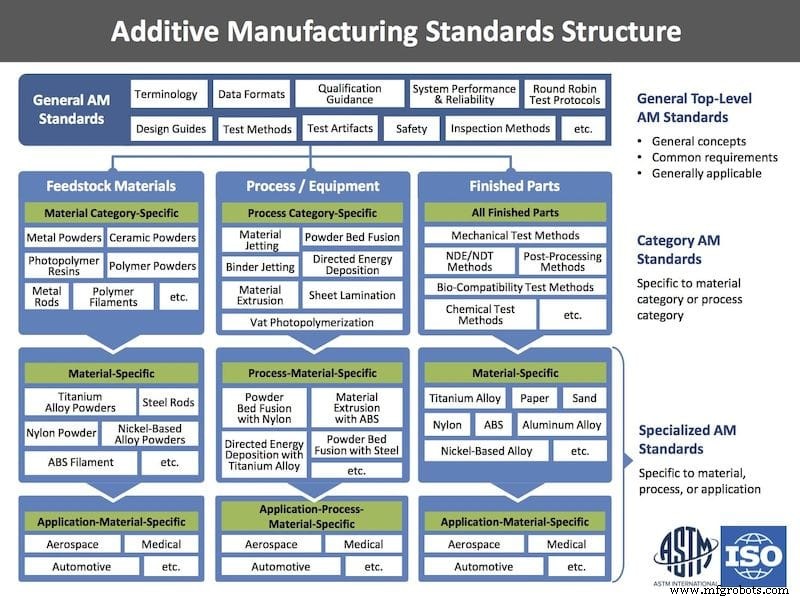
Without industry‑wide standards, manufacturers hesitate to adopt AM for critical applications. In regulated sectors—such as aerospace, defence, medical devices, and automotive—parts must meet stringent quality and safety criteria.
ISO, ASTM International and other standards bodies have begun drafting AM‑specific guidelines. As of the end of 2018, over 25 standards were approved and 19 more were under development. Continued collaboration between academia, industry and regulators is essential to finalize certification pathways.
7. Bridging the Training Gap
A 2016 Deloitte study found that 90 % of manufacturers struggle to recruit talent with AM expertise. Designing for additive manufacturing (DfAM) introduces concepts such as generative design, topology optimisation and material‑specific build strategies that differ from conventional engineering.
Investing in education—through workshops, certification programs and in‑house training—empowers teams to harness AM’s full potential and drives innovation.
8. Implementing End‑to‑End Workflows
Many companies still fragment the AM process across disparate software tools, creating inefficiencies and data silos. Unified workflow platforms that connect CAD, simulation, build planning, and post‑processing enable seamless hand‑offs, reduce errors, and improve traceability.
Workflow automation tools are emerging to orchestrate these stages, allowing manufacturers to focus on value‑adding activities while the platform manages routine tasks.
Looking Ahead
Additive manufacturing is advancing rapidly, but mass production will require continued cost reductions, broader material libraries, and a skilled workforce. As these obstacles are addressed, the adoption curve for AM is set to accelerate, unlocking new product possibilities and manufacturing paradigms.
3D printing
- How Automotive OEMs Overcome Additive Manufacturing Challenges with Digital Solutions
- Building a Strong Business Case for MES in Additive Manufacturing
- Hybrid Additive & Injection Molding: A New Paradigm for Production Lifecycles
- Scaling Additive Manufacturing: How MES Software Drives Production Growth
- Why Traceability is Critical for Additive Manufacturing Success
- Four Critical Questions Facing Additive Manufacturing in 2019
- Overcoming the Top 10 Additive Manufacturing Challenges for Production in 2020 – Expert Insights
- Scaling Additive Manufacturing from Prototyping to Production: Unlocking Design Flexibility and Cost Savings
- Leveraging Additive Manufacturing for Advanced Electric Vehicle Production
- Integrating Additive and Subtractive Manufacturing for Optimal Production