



Building a Strong Business Case for MES in Additive Manufacturing
Whether you’re using additive manufacturing for rapid prototyping or batch production of spare parts, or aiming for serial manufacturing, a robust production management strategy is essential for smooth, efficient operations. In this article we dissect how additive MES software can address challenges across every stage of your AM workflow, ensuring growth and operational excellence.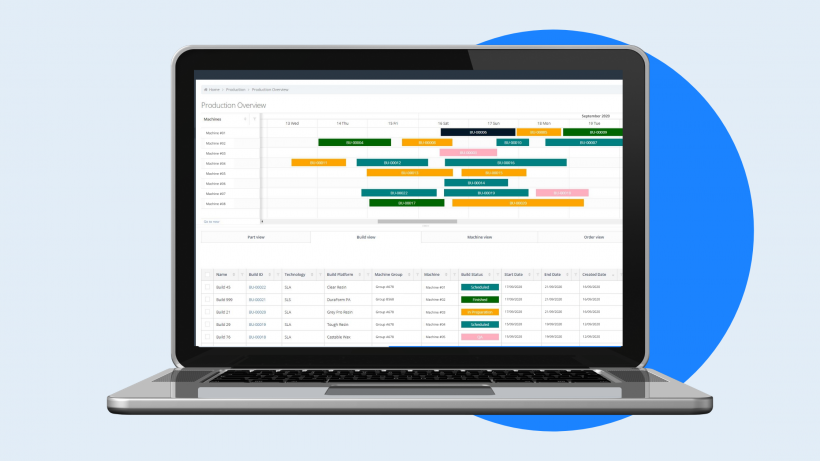
9 Key Challenges in Managing Additive Manufacturing Operations
1. Boosting Production Efficiency
The AM landscape demands agility, innovation, and relentless efficiency. Yet many manufacturers grapple with high inventory, manual processes, unplanned downtime, and limited visibility, all of which erode productivity.
Without an integrated system that aligns processes, AM firms struggle to unlock value from their technology investments.
2. Measuring AM System Productivity
Equipment performance is a critical determinant of ROI. If a machine operates below peak capacity, the investment cannot be justified.
Traditional tools—spreadsheets, paper, or siloed software—make productivity tracking cumbersome and opaque.
Disconnected tools fail to deliver the granular visibility required to optimize production.
3. Standardising Operational Processes
Consistency is the cornerstone of high performance. A lack of standardisation breeds inefficiency—orders may be routed through endless email threads, wasting time and increasing error rates.
4. Disorganised Request Management
Manual request submission via email, shared folders, and spreadsheets works for a few orders but collapses when scaling to hundreds or thousands of projects.
Missing or incorrect files, data gaps, and the sheer volume of requests become a liability for project managers.
5. Unclear Capacity Understanding
Accurate capacity insight is vital for production planning and scaling. Relying on siloed data leads to outdated forecasts and missed opportunities.
Real‑time visibility into capacity is essential for accurate demand planning.
6. Outdated Planning Technology
Legacy ERP modules are ill‑suited for AM scheduling. Manufacturers often resort to data manipulation tools that lack flexibility for unexpected priorities, making change management laborious.
7. Lack of Connectivity
Fragmented tools create a non‑interoperable ecosystem, preventing seamless workflow integration and locking real‑time performance data behind manual processes.
Without connectivity, manufacturers miss critical insights that could elevate efficiency.
8. Compliance and Traceability Demands
Industries such as aerospace and medical require rigorous traceability. Manual data collection introduces errors and hampers audit readiness.
Integrated control, electronic documentation, and audit trails are non‑negotiable for regulatory compliance.
9. Coordinating with Manufacturing Partners
Outsourcing post‑processing or other tasks is common, yet communication via phone or email, coupled with spreadsheets, is slow and error‑prone.
Project managers lose valuable time that could be devoted to higher‑value activities.
Solving Additive Manufacturing Challenges with the Right Technology
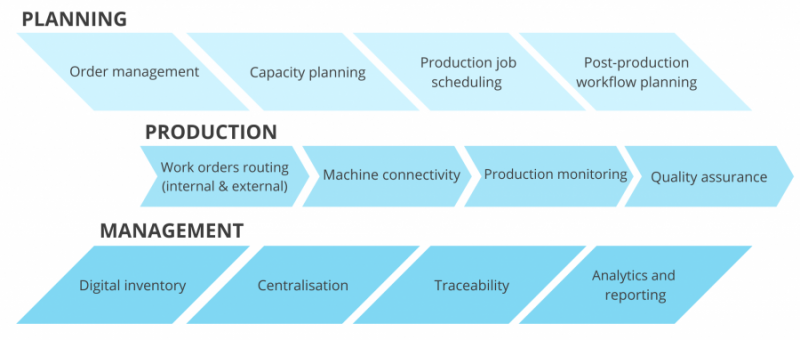
While many firms still wrestle with these issues, only a minority realize the competitive advantage that automation via an additive MES can deliver.
Additive MES software establishes a digital thread—from design import to scheduling, post‑processing, and revision control—enabling paperless, fully integrated operations.
Below are the five core MES pillars and how additive MES functions align with each:
- Planning & Scheduling: Real‑time dashboards display job progress, ensuring adherence to timelines.
- Process Repeatability: Defined workflows guarantee consistent execution across batches.
- Data‑Driven Continuous Improvement: Captured metrics expose hidden inefficiencies, fueling optimization.
- Visibility & Traceability: Cross‑functional data integration breaks silos, supporting audit readiness.
- Cost Reduction: Automation frees labor and optimizes resources, boosting ROI.
1. Streamlining Request Management
Advanced MES platforms offer a centralised request portal with an instant pricing engine. The portal can be pre‑configured to accept only approved CAD formats, materials, and technologies, ensuring that every submission meets internal standards before approval.
Users receive a personalised dashboard to monitor order status, reducing email back‑and‑forth and enhancing the overall experience for designers and engineers.
2. Simplifying Inventory Management with a Digital Part Catalogue
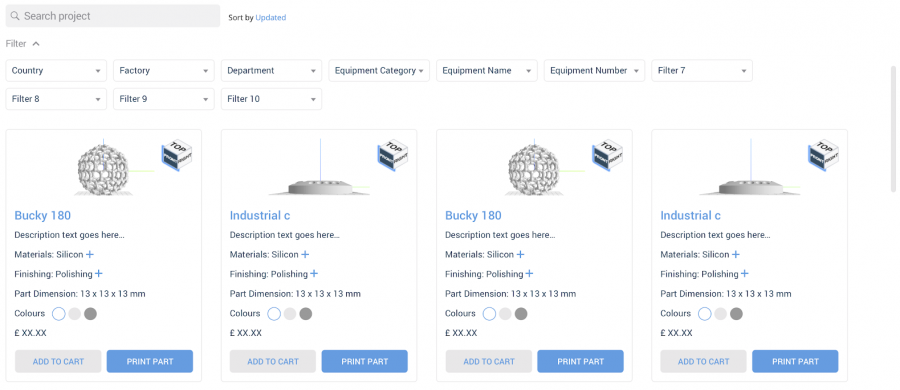
Digital inventories unlock on‑demand part production, particularly for low‑volume spare parts. An MES‑driven catalogue stores validated design files, process data, and material requirements in a single, accessible repository.
Click‑to‑order functionality speeds up order placement, while the unified system guarantees repeatable, compliant production.
3. Understanding Capacity and Planning Production
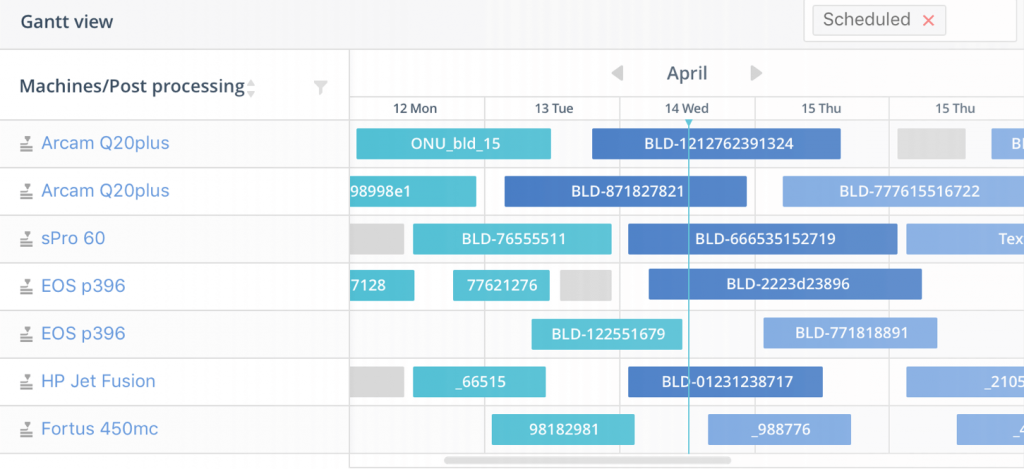
MES provides real‑time machine availability, enabling planners to optimise utilization and swiftly adjust schedules. Automated assignment of builds based on material, delivery date, or priority minimizes manual errors.
By visualising capacity and eliminating bottlenecks, manufacturers can positively influence the entire supply chain.
4. Integrating Machine Data to Optimise Production
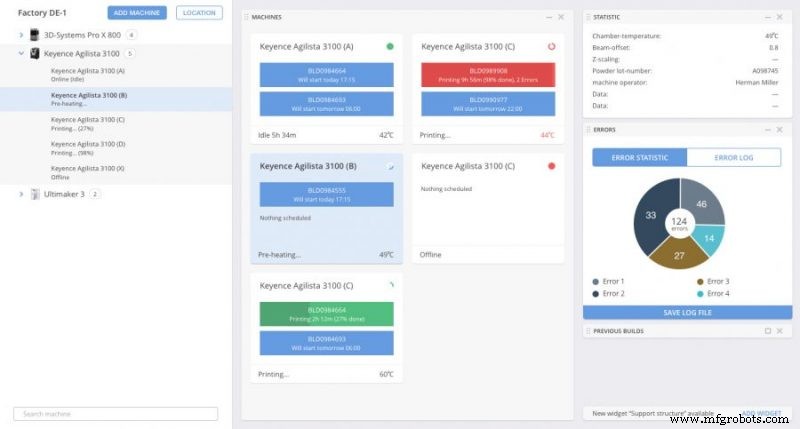
Direct machine connectivity delivers live dashboards of performance, allowing managers to spot under‑performance and intervene proactively.
Historical data on printing parameters and build outcomes informs continuous improvement, ensuring the highest quality results.
5. Coordinating Post‑Processing and Quality Management
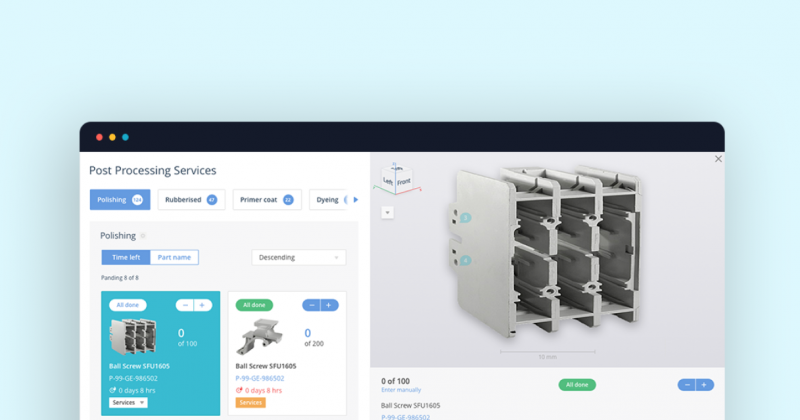
MES orchestrates post‑processing steps, ensuring operators follow the correct sequence. Integrated QA tools—including 3D viewers and sensor data import—enable precise inspection and rapid validation of specifications.
Linking post‑processing to the AM workflow supports scalable, end‑to‑end operations.
6. Connecting with Outsourcing Partners
MES automates job routing to external partners, facilitating secure data sharing without manual emails or spreadsheets.
This seamless integration eliminates communication delays and reduces the risk of human error across the supply chain.
Additive MES – Driving Growth and Scalability
Without an MES, manufacturers rely on disjointed ERP modules or ad‑hoc solutions that cannot scale. A comprehensive MES unlocks efficiency across quality, engineering, production, and beyond.
Start with the essentials, then expand as new opportunities arise—all within the same system that supports your growth trajectory.
See how you can improve efficiency and traceability to scale your AM production
3D printing
- Why an Additive Manufacturing Execution System Is Essential for Spare Parts Production
- Why an Additive Manufacturing Execution System Is a Game‑Changer for Rapid Prototyping
- Scaling Additive Manufacturing: How MES Software Drives Production Growth
- 8 Key Challenges Additive Manufacturing Must Overcome for Mass Production
- Why Life‑Cycle Cost Analysis Delivers Tangible ROI
- Why 3D Printing Is Revolutionizing Modern Manufacturing
- Manufacturing Execution Systems (MES): The Key to Real-Time Production Control
- Launching a Successful Manufacturing Startup in the U.S.: Expert Guidance
- Scaling Additive Manufacturing from Prototyping to Production: Unlocking Design Flexibility and Cost Savings
- Leveraging Additive Manufacturing for Advanced Electric Vehicle Production