



How MES Workflow Software Accelerates Growth for 3D Printing Service Bureaus
Every 3D printing service provider aspires to run like a Swiss watch: a request turns into an order in minutes, priorities are clear, machines operate at full capacity, parts are produced on schedule, and customers stay satisfied. Yet, for most providers, achieving such seamless coordination feels like juggling. In this article we identify the core challenges that 3D printing service bureaus face and present proven solutions that can elevate performance in an increasingly competitive market. 1. Attracting and Converting Leads Securing new customers and repeat business is essential, yet many bureaus struggle to convert inquiries efficiently and cost‑effectively. For a startup, rapid conversion can be the difference between survival and stagnation. Leveraging technology can mitigate risk and broaden reach. 2. Balancing Pricing and Operational Costs Successful bureaus must set competitive prices while covering costs. Blindly mirroring competitors or undercutting them without data can erode margins and lead to losses. 3. Predicting Capacity Uncertainty makes demand forecasting difficult. A clear capacity view prevents overcommitment and guarantees on‑time delivery. 4. Enhancing Customer Service High customer expectations demand rapid response, real‑time status, and intuitive interactions. Slow quotes or delayed updates risk losing clients to rivals. 5. Staying Competitive In 2021, the market saw OEMs offering in‑house services, a surge of new bureaus, and the rise of online manufacturing platforms. Differentiation through expertise is now more critical than ever. 6. Manual Pricing and File Verification Estimating costs and checking printability by hand is slow and error‑prone. Manual email exchanges add further friction. 7. Errors and Re‑work from Fragmented Processes Collecting order data across CRM, accounting, spreadsheets, and other tools invites duplication and mistakes. Siloed systems increase risk and reduce efficiency. 8. Lack of Visibility and Real‑Time Data Without a unified view, managers miss gaps and opportunities. Real‑time dashboards are essential for proactive decision‑making. 9. Ensuring Quality and Compliance Meeting industry standards—especially in medical, aerospace, and defence—requires robust quality systems and certifications such as ISO 13485. 10. Accountability Gaps Within Teams Task management is complex when orders pile up. Without synchronized prioritization and feedback loops, accountability erodes. Automation is the antidote to these pain points. Workflow automation software aligns people, processes, and data, delivering measurable gains. Manufacturing Execution Systems (MES) are engineered for additive manufacturing. They orchestrate real‑time processes—cost calculation, request standardization, printability analysis, and production scheduling—into a single, transparent platform. For a deeper dive, see Real Also: The Beginner’s Guide to Additive Manufacturing Execution Systems. 1. Instant Quotations Integrate an online quotation portal that applies your pricing models and branding. Clients receive real‑time quotes, place orders outside business hours, and experience a frictionless buying journey. Tracking portal activity allows you to re‑engage abandoned requests, boosting conversion rates. The result? Your team frees up time for high‑value tasks. See: How Instant Quote & Price Estimating Software Helps 3D Printing Service Businesses Compete 2. Automated Internal Cost Calculations For complex or repeat customers, route requests through the portal for internal review. A powerful pricing engine and automated repair tools ensure accurate, rapid estimates. “Our improved efficiency [with AMFG] means that we can also provide an enhanced, tailored service to customers who have more complex projects, or where they require additional downstream services. It’s a win, win!” Rupert Sleightholme, Projects Manager, ARRK Europe 3. Centralized Customer Communication Consolidate all interactions in one platform. Automate status‑update emails, create templates, and offer a customer dashboard that displays real‑time order progress and history. Learn more: Why 3D Printing Businesses Should Automate Their Request & Order Management Processes 4. Accountability Through Prioritization Assign and rank requests within the workflow, eliminating inbox overload and enabling teams to focus on critical tasks. 5. Production Management & Scheduling Link order prioritization to production. Visualize builds on a Gantt chart to assess capacity and machine availability. Connect printers to capture utilization, job status, and process parameters, driving continuous improvement. Read: How MES Software Transforms Production Planning for 3D Printing Services 6. Seamless Integrations Integrate with ERP, PLM, and other core systems. A unified data flow offers unprecedented visibility and control across the entire printing lifecycle. “Our turnover has increased by 20%+ year‑on‑year over the last three years. In the last year alone, we’ve generated over £50,000 in revenue just through AMFG’s quotation tool… This allows us to handle growing enquiry volumes without compromising service.” Jonathan Warbrick, Business Development Manager, Graphite Additive Manufacturing Demand for 3D printing services will only rise. IDC’s recent research projects 2022 spending at $4.8 billion, signalling robust growth. To capitalize, service bureaus must automate front‑end activities—quoting, order entry, and customer service—while MES and workflow software provide the backbone for operational excellence. Ready to elevate your 3D printing business with MES workflow software?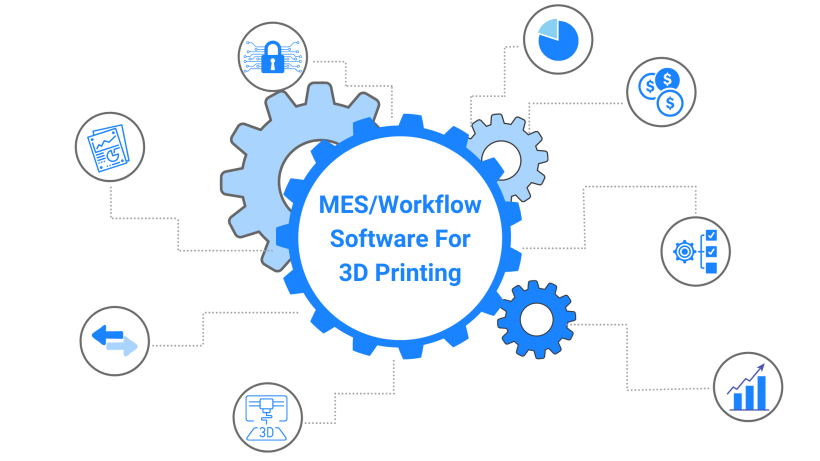
The 10 Key Challenges for 3D Printing Service Providers
Business Challenges
Operational Challenges
Solving the 3D Printing Business Challenges
What Is MES/Workflow Automation Software?
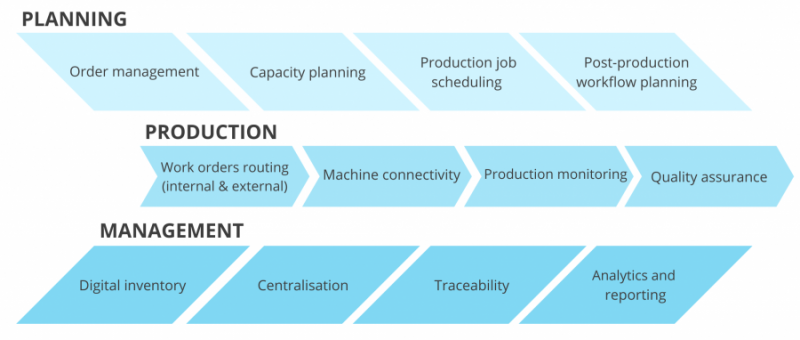
How MES Workflow Solutions Drive Efficiency
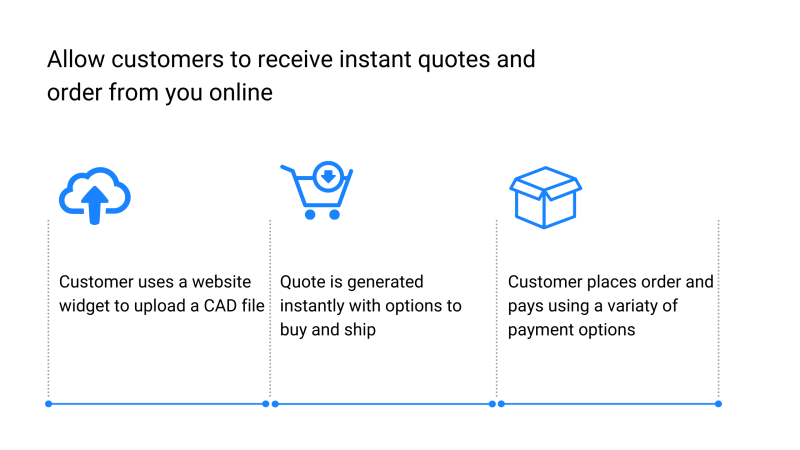
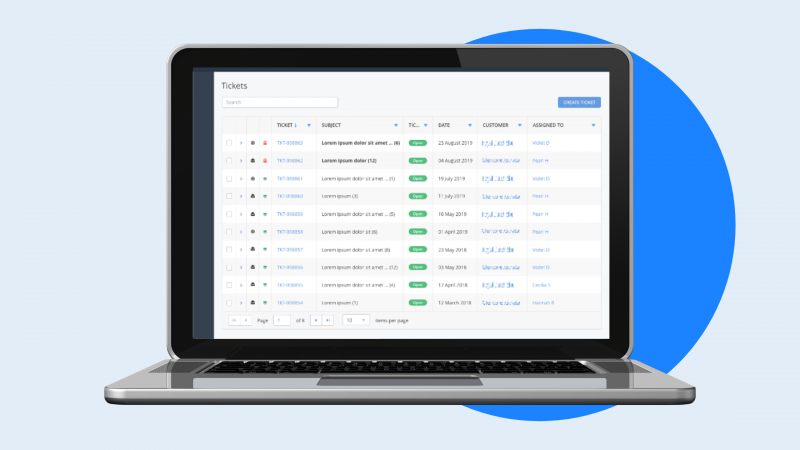
The Benefits of MES Workflow Software for 3D Printing Businesses
Automation Is the Future of 3D Printing Service Businesses
3D printing
- Why 3D Printing Businesses Must Automate Request & Order Management
- How MES Software Can Revolutionize Production Planning for Your 3D Printing Service
- Why Automation Is Essential for Scaling 3D Printing Service Bureaus
- 5 Clear Indicators Your 3D Printing Service Bureau Needs Workflow Software
- 10 Essential Features Every 3D Printing Workflow Software Should Offer
- Interview with Timm Kragl: Why Additive Manufacturing Execution Systems (MES) Drive Success in 3D Printing
- How 3D Printing and Software Drive Digital Transformation in Manufacturing
- Business Intelligence Explained: Why It Matters for Your Organization
- Choosing the Right 3D Printing Software: A Comprehensive Guide
- Security as a Service (SECaaS): A Strategic Advantage for Modern Enterprises