



Mapping Your Additive Manufacturing Automation Journey: 5 Maturity Stages & Practical Solutions

While additive manufacturing (AM) is celebrated as a digital manufacturing breakthrough, many operations remain manual and siloed.
Despite the promise of 3D printing, most companies still rely heavily on human labor and physical inventories. This article outlines the maturity spectrum of AM IT automation, highlights key areas for digitization, and showcases software solutions that can streamline your AM workflow.
5 Stages of Maturity in Additive Manufacturing Software Automation
Automation in AM evolves across five distinct stages, each adding value and complexity. Below we detail the characteristics of each stage and the benefits they bring.
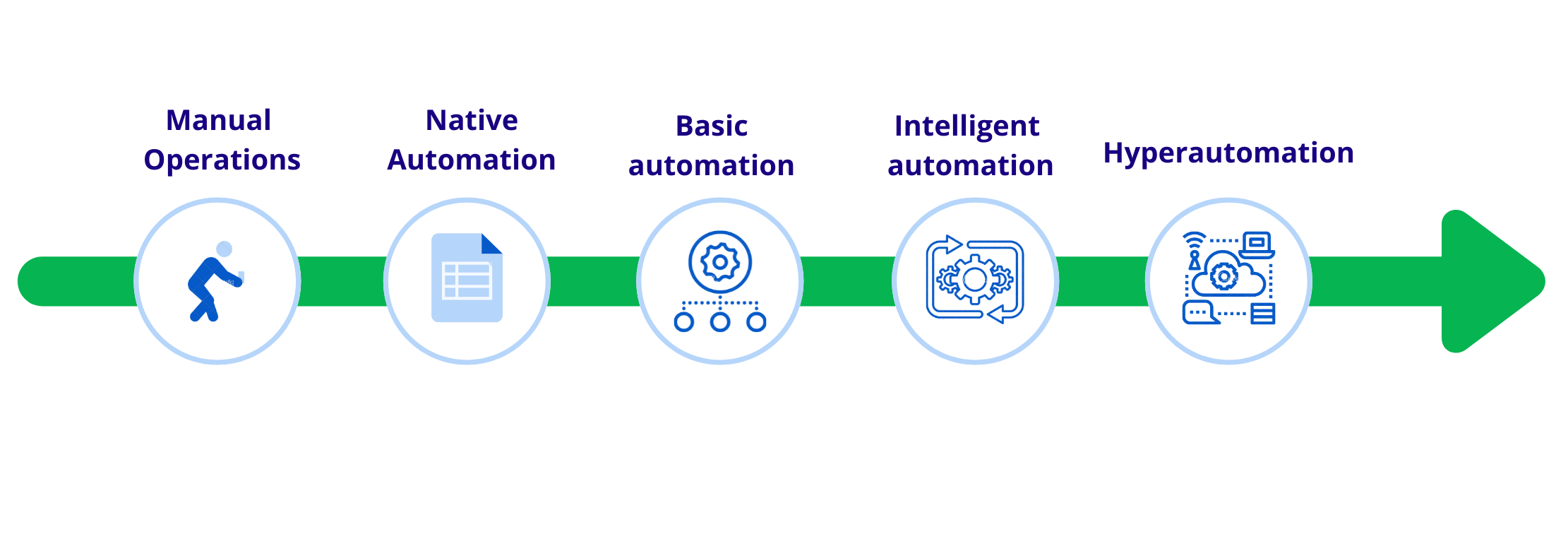
1. Manual Operations
In this initial phase, staff spend significant time on repetitive tasks such as:
- Data entry into systems
- Responding to customer inquiries
- Calculating and issuing cost estimates
- Transferring USB drives to AM machines for printing
- Visually inspecting machine status
2. Native Automation
Most AM firms are at the native automation level, supplementing manual work with simple tools like Excel and Zapier. These solutions can link disparate systems but often require human intervention and are not fully compatible with other platforms, leading to data silos and limited visibility.
When you encounter bottlenecks in processing print requests, file conversions, or status communications, consider moving beyond native automation.
3. Basic Automation
Basic automation tackles straightforward, repetitive processes through workflow software. For instance, L’Oréal’s 3D printing lab transitioned from email‑based ordering to a portal that automatically calculates costs and updates status. This reduces low‑value tasks and enforces repeatable, standardized workflows.
Read further: How L’Oréal Accelerates Time to Market with AMFG’s Workflow Software
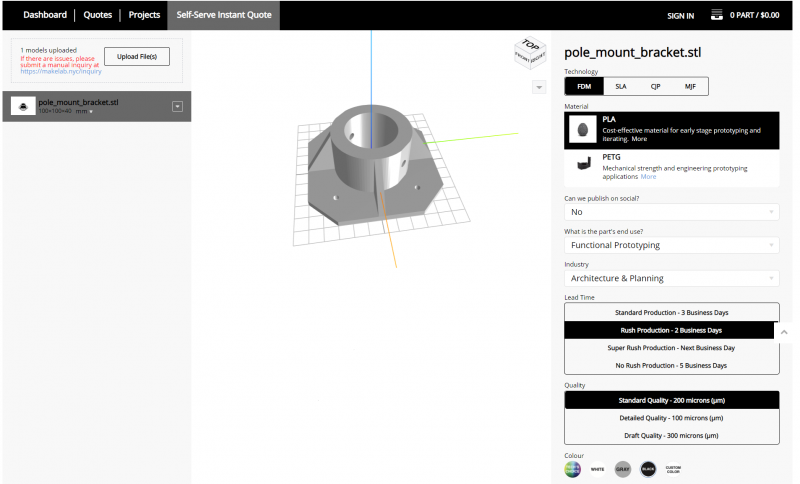
Basic automation can extend to production scheduling, where approved files are automatically assigned to the appropriate machines and queued for printing.
4. Intelligent Automation
Intelligent automation links end‑to‑end business processes, creating a seamless digital thread that enhances visibility and decision‑making. AMFG’s solutions integrate real‑time machine monitoring and direct routing of job orders, providing a unified environment that improves planning, traceability, and standardization.
Read also: How Can You Leverage 3D Printer Monitoring To Scale Additive Manufacturing?
5. Hyperautomation

Hyperautomation combines basic and intelligent automation with AI and machine learning, enabling software to learn and adapt from vast data sets. While highly customized, it is the ideal approach for large enterprises aiming to transform into smart, autonomous factories.
NextGenAM Project
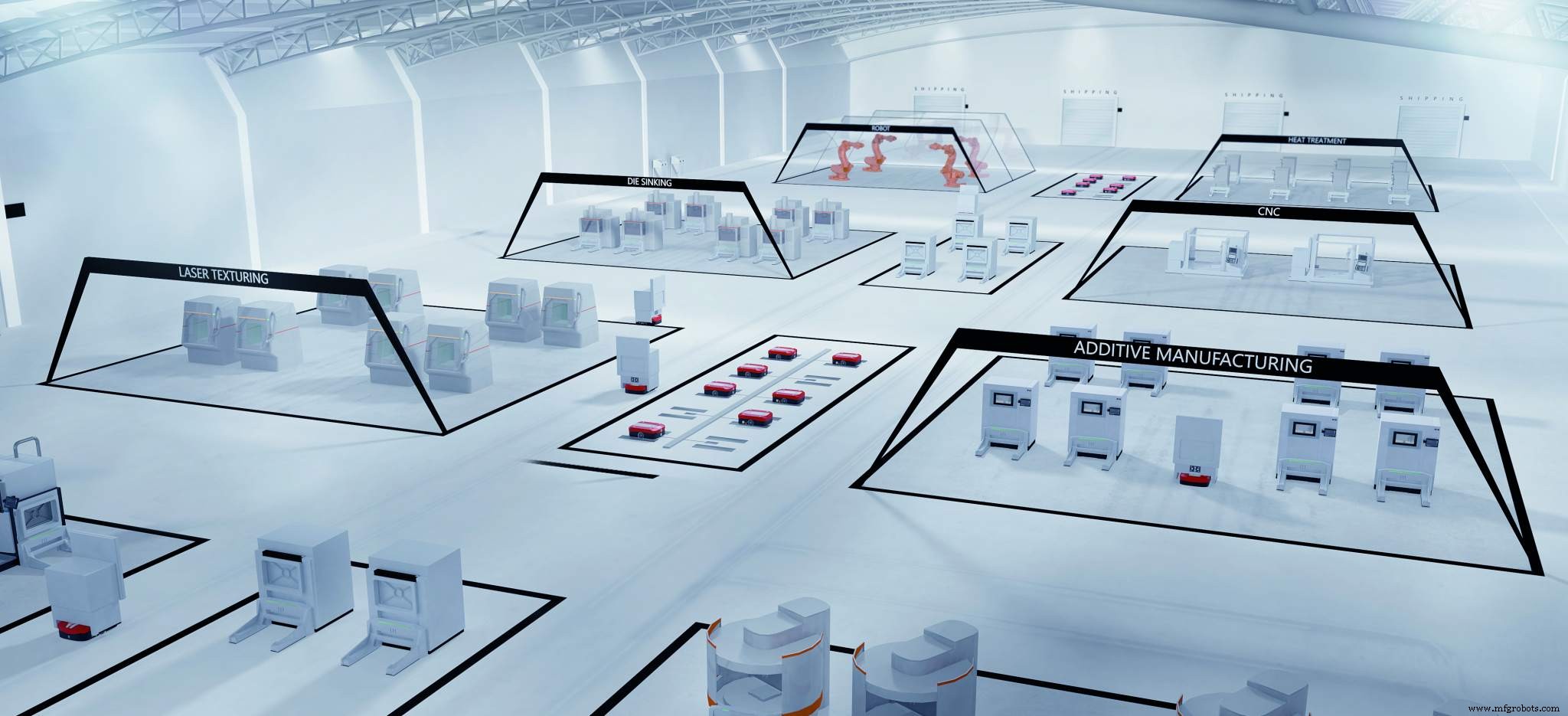
EOS, Daimler, and Premium AEROTEC launched the NextGenAM pilot in 2017, creating a fully automated serial 3D printing line. Key features include an EOS M 400‑4 quad‑laser system, driverless transport, robotics, and networked software. The line automatically prioritizes jobs, transports materials, prints, and monitors quality, then hands off parts for post‑processing—all without manual input.
The result: up to a 50% reduction in manufacturing costs compared to conventional metal AM systems.
Achieving Hyperautomation: The Interoperability Imperative
Successful hyperautomation hinges on selecting solutions that prioritize connectivity and interoperability. A platform that is user‑friendly, scalable, and compatible across your existing ecosystem will accelerate adoption and maximize ROI.
Challenges in Additive Manufacturing Automation
Despite clear benefits, many AM firms hesitate to invest in automation due to perceived costs and a lack of clear strategy. A well‑structured roadmap—defining which capabilities to purchase versus build—ensures that automation initiatives are purposeful and sustainable.
Choosing the right level of automation is critical: hyperautomation may be excessive for some, while others may achieve significant gains through a blend of basic and intelligent solutions.
Another hurdle is the closed AM ecosystem dominated by proprietary systems. However, the industry is increasingly adopting open APIs to enable seamless data flow. For example, HP’s open API now integrates Multi‑Jet Fusion machines with AMFG’s MES, allowing real‑time monitoring and data collection.
More on this: 4 Promising Automation Trends In Additive Manufacturing
Scaling Each Automation Stage with Advanced Workflow Automation Software
When embarking on digital transformation, invest in modular, flexible, and scalable solutions. AMFG’s workflow automation platform is designed for interconnectedness and security, integrating effortlessly with your IT environment and AM hardware.
Whether you’re just starting or are further along the journey, now is the optimal time to adopt new software capabilities that drive performance and sustainable growth.
Would you like to learn more about automation solutions for your additive manufacturing operations?
3D printing
- Why Automating Post-Production Planning Boosts Efficiency in Additive Manufacturing
- Industrialising Additive Manufacturing: Three Key Trends of 2021
- Four Emerging Automation Trends Shaping Additive Manufacturing
- 5 Proven Strategies to Drive Success with Additive Manufacturing
- Additive Manufacturing in Smart Factories: 5 Essential Success Factors
- Is Additive Manufacturing Right for You? A Practical Decision Guide
- Is Additive Manufacturing Right for Your Business? A Practical Decision Guide
- Additive vs Subtractive Manufacturing: Key Differences & Applications
- Mastering Your Automation Journey: A Roadmap to RPA Success
- Charting Success: A Professional Guide to Automation in Manufacturing