



Why Companies Should Embrace Distributed Additive Manufacturing: A Path to Agility, Sustainability, and Profitability
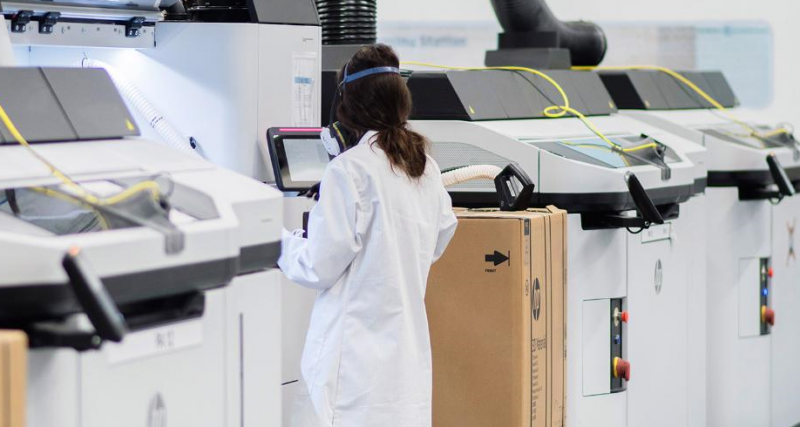
In recent decades, globalisation has reshaped the marketplace, compelling consumers and firms to adapt rapidly. Today, however, a counter‑trend is emerging: distributed, localised production. This shift demands that businesses rethink how they create and deliver value. Before we explore the advantages of distributed manufacturing, let’s define the concept. Often referred to as “decentralised” or “local” manufacturing, distributed manufacturing produces goods close to the point of use. This model has gained traction as energy costs climb, climate concerns intensify, and trade wars threaten traditional supply chains. During the COVID‑19 pandemic, localised production proved essential for business continuity, underscoring its resilience. According to HP’s Digital Manufacturing Trends Report, 52% of companies were exploring localised production in 2021. Distributed manufacturing offers unprecedented flexibility and agility compared to legacy high‑volume models. The conventional approach—centralised factories sourcing raw materials and shipping finished goods worldwide—has become increasingly ill‑suited to today’s demands for customisation, rapid delivery, and efficient supply chains. In contrast, distributed manufacturing relies on a network of small‑scale, geographically dispersed sites connected through digital technology. This proximity unlocks faster delivery, greater sustainability, and tailored support for regional markets. While large‑scale production will remain dominant in certain segments, distributed, small‑scale local manufacturing provides a sustainable alternative for many goods and services. Additive manufacturing (AM), or 3D printing, is a cornerstone technology for distributed manufacturing, working alongside the Internet of Things, robotics, and data analytics. AM’s fully digitised workflow—from CAD design to layer‑by‑layer printing—eliminates the need for moulds or cutting tools, enabling rapid production. AM dramatically shortens lead times in two ways: accelerated prototyping and immediate production of end‑use parts. Unlike mould‑based processes that can take weeks or months, AM typically delivers finished parts within hours or days, provided material and capacity are available. By shifting to a digital inventory of 3D designs, distributed facilities can eliminate physical warehousing. Designs are stored centrally, shared across sites, and printed on demand, reducing inventory costs and space requirements. Also read: 4 Ways Digital Inventory Can Support Your Additive Manufacturing Operations AM enables a true “make‑to‑order” model, replacing inefficient make‑to‑stock practices. Companies can produce exactly what the customer needs, when they need it, reducing the risk of unsold inventory and streamlining logistics. Read also: How 3D Printing is Transforming the Spare Parts Industry Transitioning to distributed manufacturing requires a robust digital foundation. Key capabilities include secure data management, cross‑facility connectivity, traceability, and automation. Without these, coordinating orders, processes, and personnel across multiple sites becomes chaotic. The COVID‑19 pandemic accelerated the urgency for distributed manufacturing. In 2021, companies should reassess long‑term strategies and adopt the tools that unlock this paradigm. Interested in learning how digital solutions can accelerate your shift to distributed additive manufacturing? Download our free resource to lay the foundation for rapid adoption.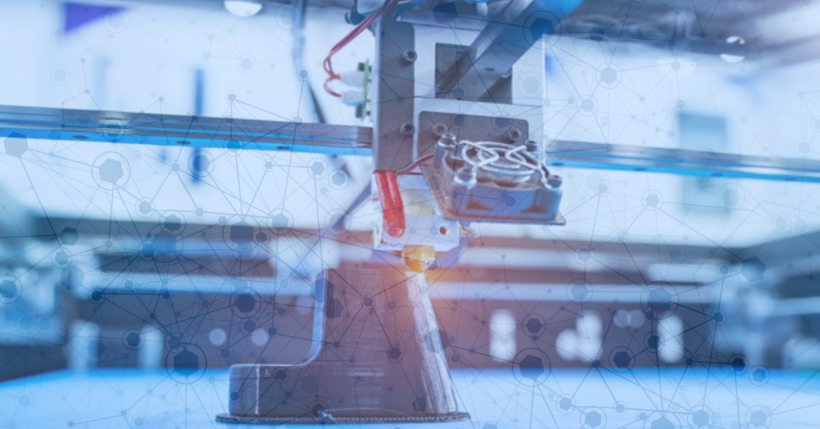
What Is Distributed Manufacturing?
Evolving Beyond Traditional Manufacturing
Additive Manufacturing Fuels Distributed Production
Faster Lead Times
Digital Warehouse
On‑Demand Manufacturing
Implementing Distributed Additive Manufacturing
3D printing
- Why Calibration Matters: Enhancing Accuracy, Quality, and Reliability in Manufacturing
- Additive Manufacturing Workflow Survey: Share Your Insights
- Why Traceability is Critical for Additive Manufacturing Success
- Why Optics Manufacturers Should Embrace Hybrid Manufacturing
- Discover 5 Key Advantages of Additive Manufacturing for Your Business
- 7 Compelling Reasons to Adopt Fusion 360’s Additive Manufacturing Workspace
- Distributed Manufacturing: The Future of Production Efficiency
- Four Essential Additive Manufacturing Applications for Modern Industry
- Additive Manufacturing: Driving Innovation and Cost Efficiency in Aerospace
- Additive vs. Subtractive Manufacturing: Unlocking the Future of Production