



Why Optics Manufacturers Should Embrace Hybrid Manufacturing
Central New York remains a global hub for optics and photonics, and our collaborations with local firms highlight this legacy.
Over the years, I have examined hundreds of 3D models from these companies, consistently impressed by the sheer complexity and precision required for internal optical components.
Complexity is Key
Most people picture clear lenses, but the real challenge for optics manufacturers lies in the intricate metal housings that secure lenses in precise alignment.
These components demand extreme precision, typically achieved through 5‑axis CNC machining or electric‑discharge machining (EDM). Both methods carry high hourly costs.
Engineers often lament EDM’s slow cycle times, yet it remains the only process that delivers the necessary surface finish and dimensional accuracy.
In production, extended machining times are acceptable, but during research and development, they become a bottleneck. New metal parts can stall prototyping, pushing companies to outsource—often at 5‑10× the raw‑material cost.
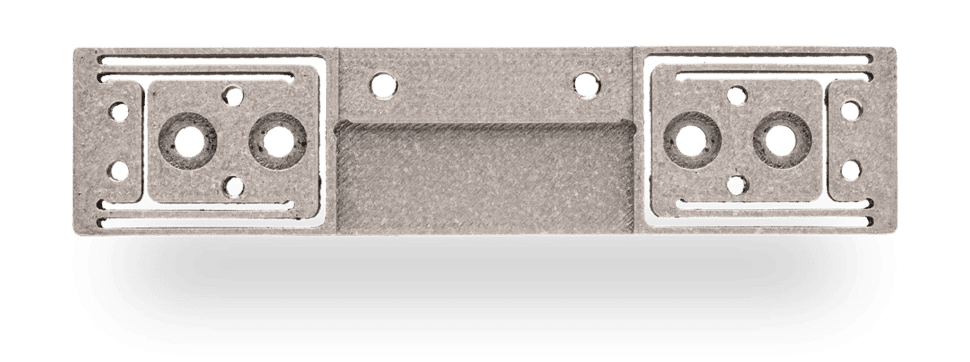
Hybrid Manufacturing Is Not Just for Optics
Hybrid manufacturing—combining metal additive manufacturing with subtractive finishing—offers a compelling solution. The process begins with a near‑net‑shape part produced by metal 3D printing, followed by a finishing operation such as 5‑axis machining or EDM to meet critical tolerances.
The goal is to offload time from expensive 5‑axis and EDM machines. Time on those machines is highly valuable; each hour can cost between $150 and $500.
Two Major Advantages of Reduced Machine Time
- Faster prototype turnaround – Companies typically face 2‑10 week lead times for prototypes. Hybrid manufacturing can shorten this window significantly.
- Dedicated production – By reducing prototype load on 5‑axis machines, production lines remain uninterrupted, safeguarding delivery schedules.
While hybrid manufacturing may not be suitable for every industry, it excels in sectors that require small, highly complex metal parts—such as optics and medical devices.
Key Take‑Aways
Leveraging metal 3D printing alongside traditional machining accelerates prototyping and cuts costs. Optics manufacturers are uniquely positioned to benefit from this strategy due to the complexity of the parts they produce.
To learn how metal 3D printing can streamline complex metal components, explore our case study from Alpha Precision Group (link).
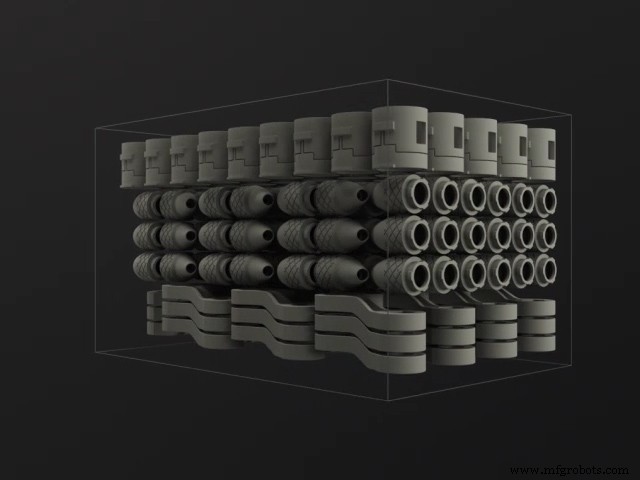
Is your business producing small or complex metal parts? Read about how Alpha Precision Group incorporated metal 3D printing to save 83% vs. their standard manufacturing costs.
Download The Report
3D printing
- Why Companies Should Embrace Distributed Additive Manufacturing: A Path to Agility, Sustainability, and Profitability
- Metal 3D Printing 101: How Additive Manufacturing Transforms Production
- Harnessing Hybrid Manufacturing: Integrating Metal Additive and Subtractive Technologies
- When to Outsource On-Demand Manufacturing for Optimal Results
- Three Key Techniques Metal Fabrication Companies Use for Custom Projects
- 5 Key Reasons Every Manufacturing Company Should Embrace Big Data
- Tracing the Evolution of Metal Manufacturing: From Ancient Tools to Modern Tech
- Hybrid Manufacturing: Merging Additive & Subtractive Processes for Advanced Production
- Sheet Metal Manufacturing: Process, Materials, and Applications
- Metal Additive Manufacturing: Transforming Production for Aerospace and Beyond