



Accelerating Medical Device Market Entry with In‑House PolyJet Rapid Prototyping
In the highly competitive medical device market, speed is everything. The first company to deliver a clinically valuable product gains a decisive advantage over its rivals.
Through our partnership with dozens of manufacturers, we have witnessed how an in‑house PolyJet 3‑D printer can dramatically accelerate project timelines and lower costs.
In‑House Rapid Prototyping: A Game Changer for Medical Devices
Most firms we consult possess an internal prototyping setup. Unlike other sectors where a prototype can take 3–6 weeks, medical teams routinely receive functional parts within days—thanks to dedicated 3‑D printing lines.
However, high demand often overloads these resources, forcing teams to seek external solutions.
Outsourcing: Costly and Time‑Consuming
When internal capacity is maxed out, companies turn to third‑party services. We benchmarked six parts of varying shapes and sizes with three leading rapid‑prototyping providers, covering multiple materials and processes.
The results were stark: for each part, the service quote ranged from 5 to 10 times the raw material cost. Lead times hovered between 3 and 10 days, with an additional premium for urgent orders.
PolyJet 3‑D Printing: Speed, Detail, and Realism
PolyJet technology prints UV‑curable resin layer by layer through inkjet heads, enabling ultra‑fine resolution and smooth finishes. Resins can be blended to create full‑color, multi‑material models that accurately mimic final production parts.
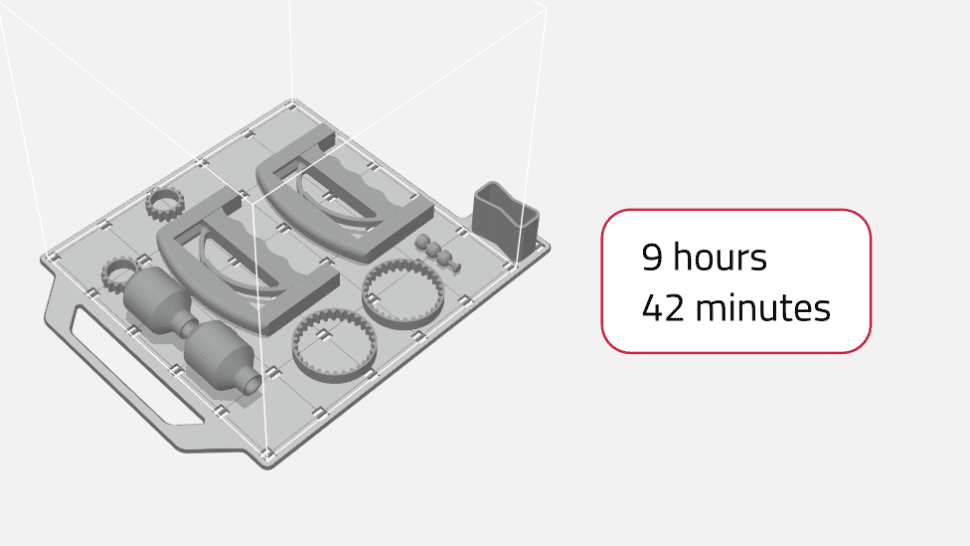
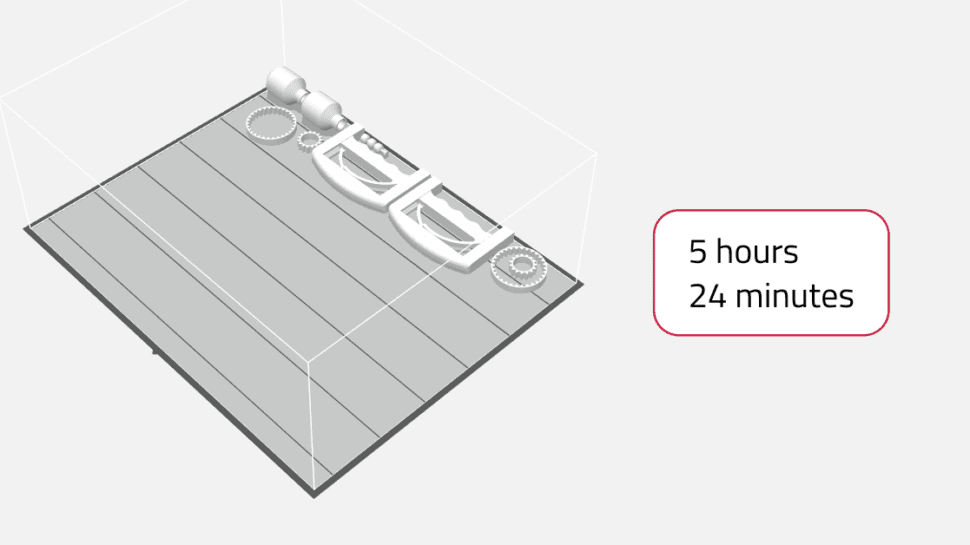
Consider the time difference when printing a tray of five small prototypes: an FDM printer (e.g., F120) requires significantly more build time than a PolyJet machine (e.g., J750). (See visual comparison below.)
One‑Stop Realism: Full Color and Multi‑Material Capabilities
Why Medical Device Manufacturers Choose PolyJet
Competitive pressure forces rapid product cycles. While most companies invest in in‑house 3‑D printers, demand can quickly saturate machine time, making parts unavailable for urgent projects.
Outsourcing is a tempting solution, but the high price tag—often unsustainable long term—must be considered.
PolyJet printers deliver parts in a fraction of the time, with a smooth finish, fine detail, and true‑to‑life color—mirroring the final device. Our case study with Arch Day Design illustrates how daily turnaround times are slashed, enabling faster clinical validation and regulatory submissions.
See How Arch Day Design Reduces Turnaround Time Every Day With PolyJet
3D printing
- How Digitisation Powers the Future of Medical 3D Printing
- 2020 3D Printing Hardware Market: Trends, Key Players, and Evolution
- Assessing the Sustainability of Industrial 3D Printing
- How Shukla Medical Uses 3D Printing to Deliver Surgical Tools Faster
- Accelerate 3D Printing: Faster Prints Without Compromising Quality
- How Quickly Can a 3D Printer Produce Parts? Understanding Print Speed Factors
- A Step-by-Step Guide to Launching Your 3D Printing Project
- Pad Printing Explained: Process, Materials, and Applications
- Beginner's Guide to 3D Printing: Start with Confidence
- Achieving High-Quality All-Metal Parts with 3D FDM Printing