



How Shukla Medical Uses 3D Printing to Deliver Surgical Tools Faster
In the high‑stakes world of surgery, every minute saved can improve patient outcomes. For medical companies, that means streamlining processes—from patient intake to the tools that surgeons use. 3D printing is transforming this landscape by allowing rapid, custom fabrication of surgical instruments.
Shukla Medical, a Florida‑based firm, designs and builds universal instrument sets tailored for orthopedic and spine surgeons. Their focus on revision surgeries—where implants must be removed and replaced—drives the need for reliable, quickly produced extraction devices.
Read our design guide for metal 3D printing
"We handle everything in‑house, and our success hinges on surgeon input," says Zack Sweitzer, Product Development Manager. "Their hands‑on feedback shapes every prototype, ensuring our tools perform when it matters most."
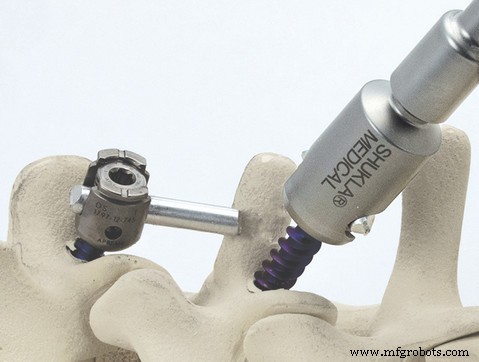
While many implant manufacturers provide off‑the‑shelf extraction tools, these often fall short in the operating room. Shukla Medical leveraged additive manufacturing to stay ahead, moving from prototype printing to full‑scale production on Markforged’s carbon‑fiber printers. The breakthrough came with the Metal X, which made metal 3D printing cost‑effective for rapid prototyping.
"Markforged’s Metal X lowered the barrier to metal printing, allowing us to prototype quickly and affordably," says Adam Gosik‑Wolfe, Mechanical Engineer. "It gave us the precision we need without the high upfront cost of traditional metal fabrication."
Their workflow starts with surgeon‑driven design briefs. Feedback drives initial prototypes, which are first printed in carbon‑fiber to validate form and fit. Once the plastic mock‑up is approved, the part is re‑printed on the Metal X to produce a near‑functional metal tool that surgeons can test directly in the OR. This dual‑material approach delivers both speed and relevance.
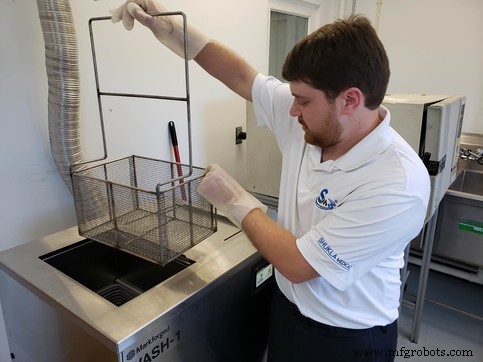
“Plastic prototypes help us assess geometry, but only the metal version can confirm mechanical performance,” explains Gosik‑Wolfe. "Giving surgeons a near‑identical tool dramatically improves feedback quality."
In the long run, Shukla Medical plans to blend metal 3D printing with traditional machining. CNC prototypes can take 7–40 days, whereas their in‑house Metal X process averages just 2.7 days—compared to 6.4 days for external vendors. "CNC machining requires extensive setup and programming; with 3D printing, you can print and move on," Sweitzer notes.
Request a Metal X demo
3D printing
- Metal 3D Printing 2024: Comprehensive Guide to Technologies, Applications, and Business Benefits
- Metal 3D Printing: Debunking 7 Common Misconceptions
- 10 Leading Innovators Transforming Metal 3D Printing Hardware
- Accelerating Medical Device Market Entry with In‑House PolyJet Rapid Prototyping
- Metal 3D Printing Applications: Advanced Use Cases – Part 2
- Metal 3D Printing Applications: Prototyping & Tooling – Part 1
- 3D Printing Trends 2019: Metal Innovation, Binder Jetting Breakthroughs, and Advanced Plastics
- Metal 3D Printing 101: How Additive Manufacturing Transforms Production
- Mastering Metal 3D Printing: A Comprehensive Guide
- Beginner's Guide to 3D Printing: Start with Confidence