



Additive Manufacturing in Smart Factories: 5 Essential Success Factors
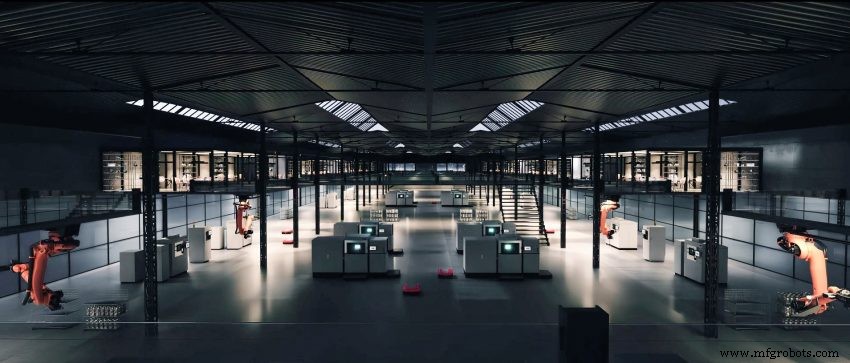
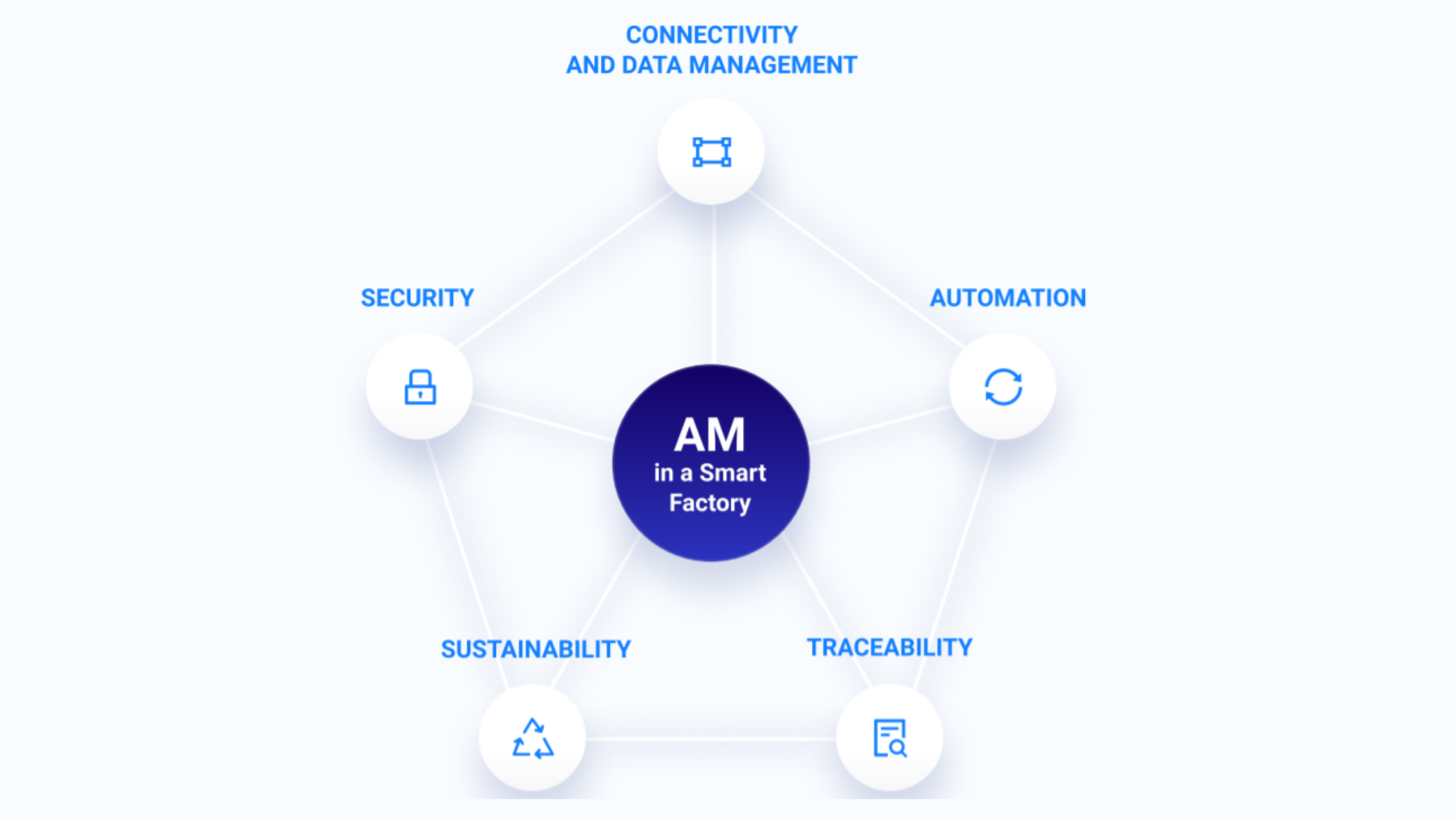
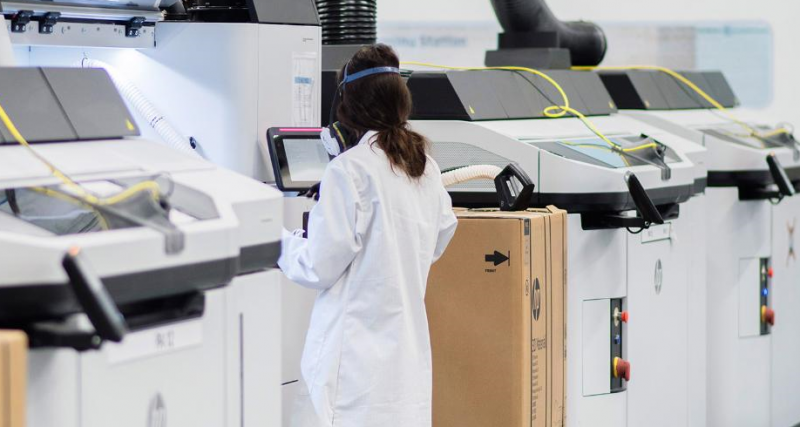
[Image credit: 3D Systems] The evolution of digital technologies has fundamentally reshaped manufacturing. Modern facilities are increasingly interconnected, creating the smart factories of tomorrow. Today, more than one‑third of production sites have already embraced smart factory concepts, and industry leaders forecast a 40% rise in adoption over the next five years. At the heart of this transformation is Additive Manufacturing (AM) – a truly digital manufacturing discipline that turns 3‑D CAD models into physical parts layer by layer. AM’s inherent digitisation makes it a natural fit for the smart factory, yet its integration presents distinct challenges. Without early attention to connectivity, automation, traceability, sustainability and security, manufacturers risk bottlenecks that will stifle scaling as operations grow. Below, we dissect the five core requirements for embedding AM in a smart factory and provide actionable insights to accelerate your journey to full‑digital production. Nearly 70% of manufacturers are already on a digital‑transformation path, according to a recent Capgemini report. AM, driven by software control and real‑time data, is rapidly becoming the linchpin of that evolution. Unlike conventional methods that rely on molds or cutting tools, AM uses only a 3‑D printer and digital files, enabling rapid iteration, on‑demand production and design freedom. Yet many organisations still under‑utilise AM because of gaps in connectivity, automation and security that prevent it from scaling across a smart factory. Below are the five pillars that underpin a robust AM strategy within a smart manufacturing environment. AM generates continuous data streams—from hardware sensors to material logs, from CAD models to ERP and PLM systems. To convert this raw information into actionable insights, every device and data source must be networked. The Industrial Internet of Things (IIoT) eliminates data silos by embedding sensors, transmitters and networking software directly into 3‑D printers. This creates a seamless, real‑time data flow between operational technology (OT) and information technology (IT). However, many manufacturers still rely on disconnected systems and manual processes, which hamper real‑time data access. A dedicated Manufacturing Execution System (MES) bridges that gap by unifying AM machines with ERP, PLM and other enterprise applications. With MES, operators gain dashboards that track key performance indicators such as Overall Equipment Effectiveness (OEE), machine utilisation, production output and mean time to repair. This visibility drives optimisation of production planning and ensures the AM workflow stays aligned with broader factory objectives. See also: AMFG Collaborates With HP To Drive System Connectivity For AM Human labour remains the biggest cost driver for repetitive AM tasks. True smart‑factory value emerges when the entire AM pipeline—design, build, post‑processing and logistics—is automated. Automation spans from design tools that generate support structures and run topology‑optimisation, to MES‑driven scheduling that replaces manual order handling. Advanced 3‑D printers now incorporate sensors that enable remote diagnostics and predictive maintenance, preserving high OEE. Post‑processing, historically the least automated stage, is transforming with automated cleaning, depowdering, support removal and dyeing systems. Robots and automated guided vehicles (AGVs) further streamline part handling and load/unload operations. Traceability is paramount for quality assurance, regulatory compliance and supply‑chain transparency. It means recording every step—from raw material receipt to final shipment—so that each part can be audited and verified. Traceability becomes critical when reusing materials, such as recycled metal powder in powder‑bed fusion. Software solutions now log powder origin, recycling cycles and build history, ensuring that critical parts are built with verified material quality. Batch traceability, coupled with robust data analytics, allows rapid root‑cause analysis when a part fails, thereby preventing costly rework and reinforcing quality management. Implementing MES with integrated traceability modules creates a digital thread that preserves design intent, material provenance and process parameters throughout the product lifecycle. See also: 5 Ways Real-Time Production Visibility Advances Your AM Operations Smart factories reject the linear ‘take‑make‑dispose’ model in favour of a circular economy that maximises material utilisation and minimizes waste. AM naturally supports sustainability by enabling lightweight, lattice‑structured designs that use less material. Yet its environmental footprint—particularly energy consumption and metal powder handling—requires deliberate management. Key sustainability levers include: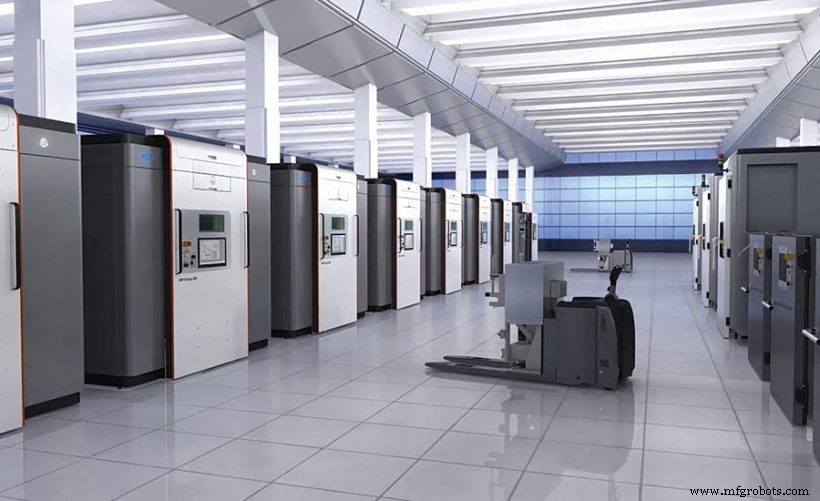
How Does AM Fit Into a Smart Factory?
5 Keys to Successfully Integrating AM into a Smart Factory
1. Connectivity and Data Management
2. Automation
3. Traceability
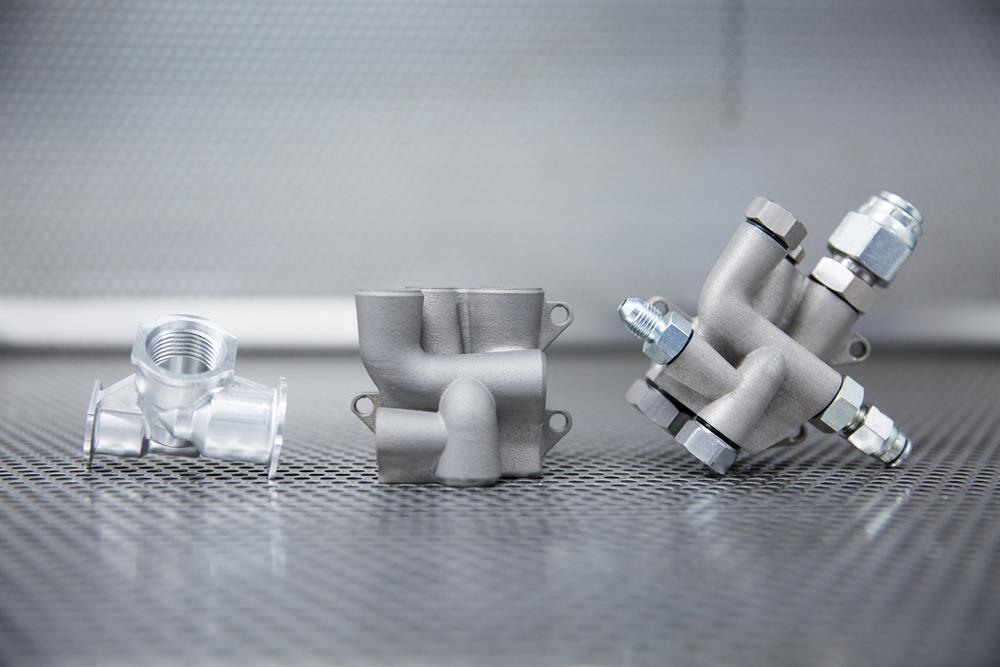
4. Sustainability
Innovations such as UniMelt by 6K (formerly Amastan Technologies) turn machining scrap into high‑quality powder, closing the loop and reinforcing circularity.
5. End‑to‑End Security
Digital manufacturing introduces new cyber‑security risks. A single compromised CAD file can expose proprietary design details, enabling counterfeit production.
Security must encompass data integrity, confidentiality and access control across the AM ecosystem—from design software to cloud‑based MES and external partners.
Key measures include:
- Encrypting design files and enforcing role‑based access controls.
- Adopting secure file formats such as .3mf, which embed metadata protection.
- Procurement of AM hardware that incorporates built‑in security features like secure boot and firmware signing.
Ongoing staff education on cyber‑threats and robust authentication protocols further harden the AM workflow.
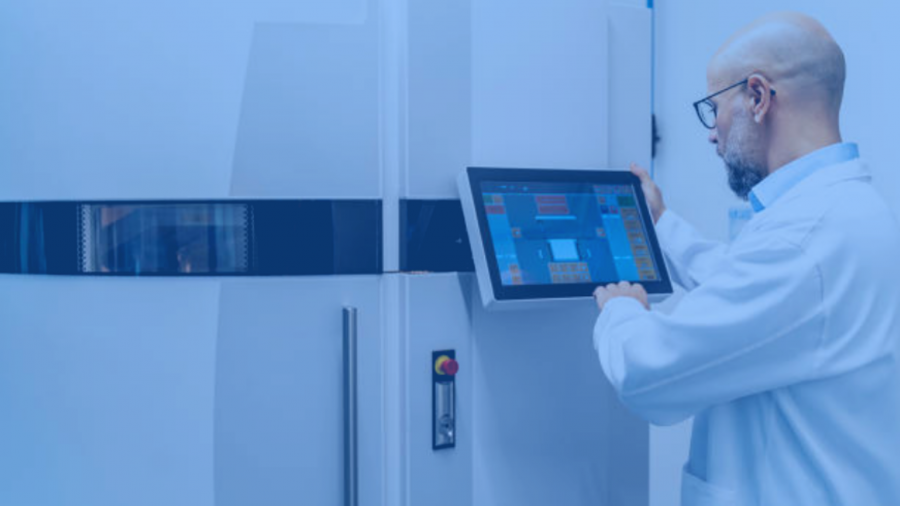
Tips for Securing AM in a Smart Factory
Securing AM requires a layered approach:
- Educate Employees: Continuous training reduces accidental data leaks.
- Manage Access: Use encryption and multi‑factor authentication.
- Adopt Secure Formats: Replace legacy .stl files with secure .3mf.
- Prioritise Security in Procurement: Choose printers with embedded security firmware.
Scaling AM with the Right Tools
The COVID‑19 crisis underscored the need for adaptable supply chains. Digital solutions like AM, when integrated with MES and IIoT, provide the flexibility and resilience smart factories demand.
MES tailored for AM unifies planning, scheduling and execution into a single digital thread, delivering end‑to‑end visibility and best‑practice workflows.
Only with a clear strategic vision, combined with the right technology stack, can manufacturers build a sustainable, secure and scalable AM ecosystem that powers the factory of the future.
3D printing
- Industrialising Additive Manufacturing: Three Key Trends of 2021
- Mapping Your Additive Manufacturing Automation Journey: 5 Maturity Stages & Practical Solutions
- Four Emerging Automation Trends Shaping Additive Manufacturing
- Building a Smart Factory: 7 Essential Criteria for Manufacturing Software
- How Industrial Leaders Leverage Ecosystems to Drive Smart Manufacturing Success
- Data-Driven Manufacturing: Overcoming Challenges in IoT, Industry 4.0, and Smart Factory Adoption
- How IIoT Drives Efficiency in Smart Factories
- Additive Manufacturing: Driving Innovation and Cost Efficiency in Aerospace
- Additive vs. Subtractive Manufacturing: Unlocking the Future of Production
- Enhancing Smart Manufacturing Through Process Optimization