



Building a Smart Factory: 7 Essential Criteria for Manufacturing Software
Industry 4.0 is reshaping manufacturing, creating factories that operate autonomously—self‑organizing and capable of resolving faults without human intervention.
The foundation of a smart factory is the intelligence embedded in every machine, product, and process, delivered through specialized software. By continuously evaluating the machine’s context—every data point that could influence its behavior—the software can decide which actions to take or initiate in each situation. This contextual assessment relies on the vast streams of production and machine data already generated in today’s manufacturing environments.
Translating Expert Knowledge into Software
Manufacturing experts possess the deep understanding of which actions are required in each scenario. When these processes and rules are captured in software, machines can execute them autonomously. This translation is evolutionary: as production methods evolve and tasks become more complex, new knowledge must be continuously added to the software. Over time, this iterative learning turns static procedures into adaptive, real‑time decision‑making.
The Vital Role of Human Expertise
The vision that machines will replace humans is a misconception. In the smart factory, people become the architects and overseers of automation. They design the digital twins, monitor interfaces between hardware and software, and refine rules as new challenges arise. Their intimate knowledge of machine behavior—recognizing critical states and interpreting parameters—remains irreplaceable. Consequently, manufacturing associates will lead the continuous optimization of output, quality, and cost.
Software Designed for Manufacturing Experts
Most manufacturing specialists are not programmers, yet they are adept at modeling rules and processes. The key to accelerating smart manufacturing is providing tailored software that empowers these experts to translate their knowledge without deep coding expertise.
Source: Bosch.IO
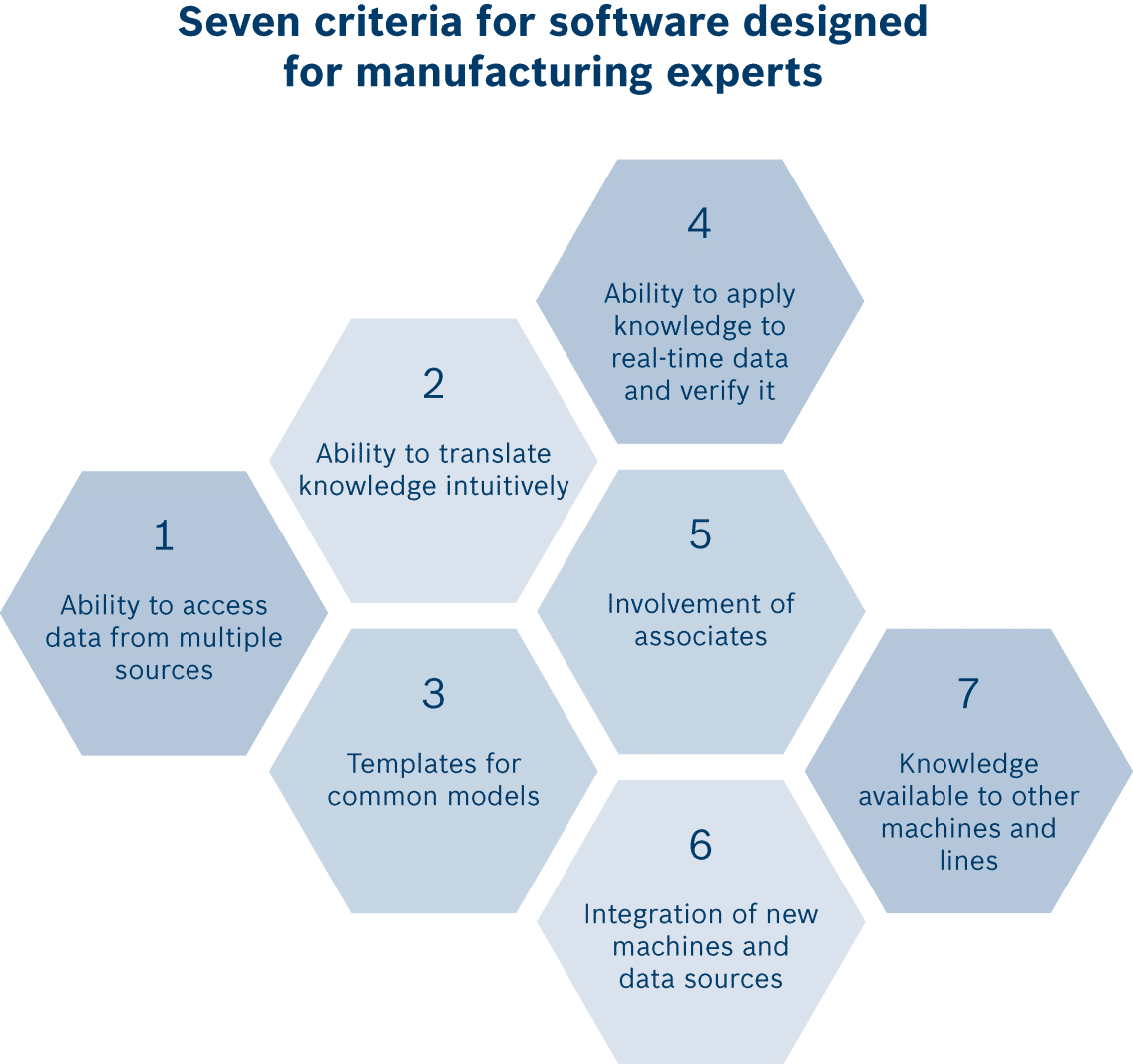
Seven Criteria for Manufacturing‑Expert Software
Effective tools must meet the following seven criteria to support experts in turning expertise into actionable software:
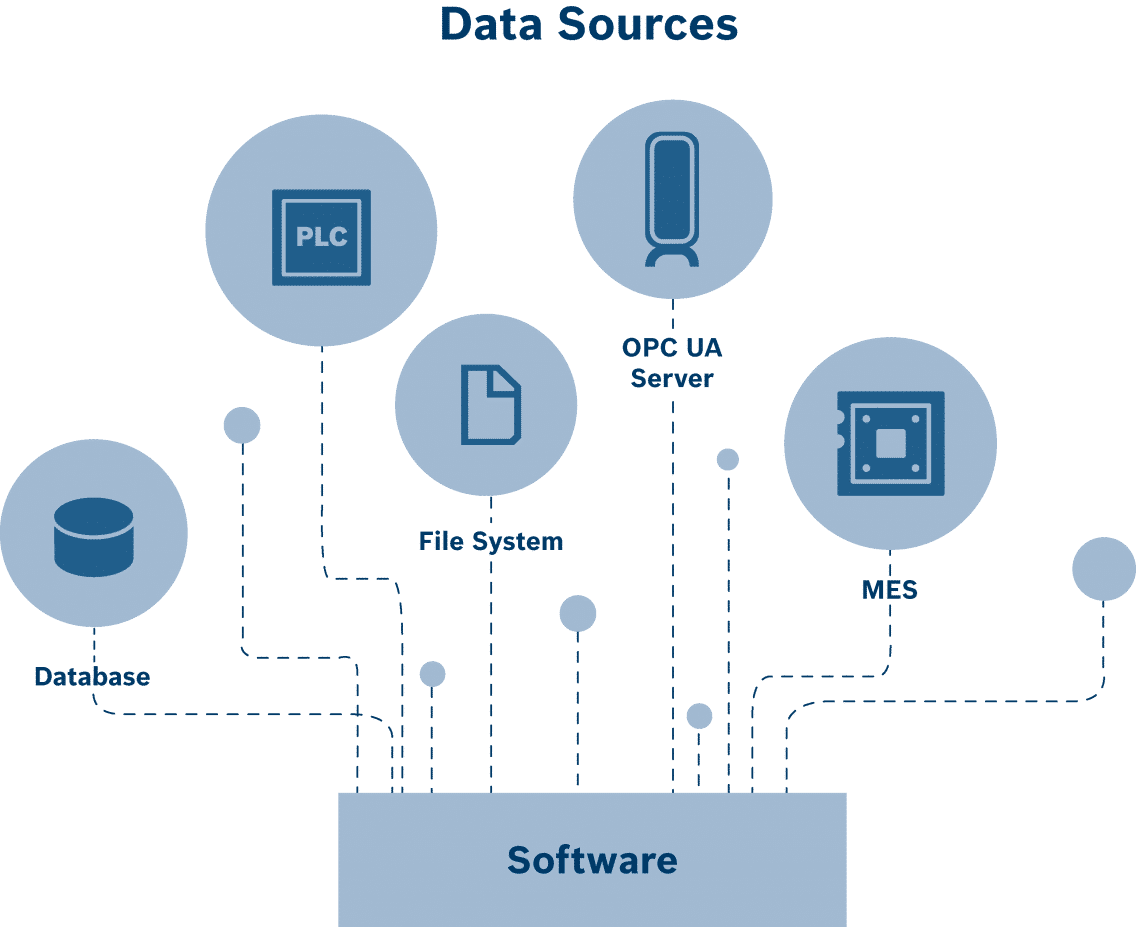
1. Seamless Access to Multiple Data Sources
Production environments generate massive volumes of data daily. Software should aggregate and interpret this data to assess quality compliance, output feasibility, and machine health.
Source: Bosch.IO
2. Intuitive Knowledge Translation
Translating expert insight into code should be intuitive. Tools that allow experts to author rules directly, test them, and deploy without extensive programming accelerate adoption.
3. Templates for Common Models
Industry‑specific templates for anomaly detection, trend forecasting, and test data evaluation help experts apply best practices consistently across the plant.
4. Real‑Time Data Application & Verification
Once rules are coded, they must run against live data streams. Immediate feedback lets experts validate outcomes and refine logic on the fly.
5. Inclusive Collaboration
Automation should enhance, not replace, human control. Software must keep stakeholders informed and engaged throughout development and operation.
6. Easy Integration of New Machines & Sensors
Smart factories evolve. Tools that allow rapid onboarding of new equipment and data sources support continuous growth without overhauling existing systems.
7. Knowledge Reusability Across Lines
Validated rules should be transferable to other machines, lines, or plants, fostering a culture of shared learning and reducing duplicated effort.
To design the factory of tomorrow, manufacturing experts need software that speaks their language. Download our free white paper, “Rule‑Based Analysis of Production Data – Manufacturing Experts at the Heart of Industry 4.0,” for deeper insights into:
- How to make your factory smart
- The human role in this transformation
- Detailed criteria for manufacturing‑expert software
- Benefits of rule‑based production data analysis
Industrial Technology
- Smart Manufacturing 2021: 10 Emerging Trends Reshaping Production
- Data-Driven Manufacturing: Overcoming Challenges in IoT, Industry 4.0, and Smart Factory Adoption
- How IoT is Revolutionizing Smart Factory Operations
- How Smart Manufacturing Software Is Shaping the Future of Production
- Why 5G is Essential for Modern Smart Manufacturing
- Maximizing ROI in Smart Manufacturing: Payback & Data-Driven Success
- Hardware-Independent Software: Key Benefits for Smart Factories
- Software Interconnection: Key Benefits for Smart Factories
- Top Manufacturing Software for Small Businesses: Boost Efficiency & Cut Costs
- Top 5 Essential Software Systems for Manufacturing Companies